
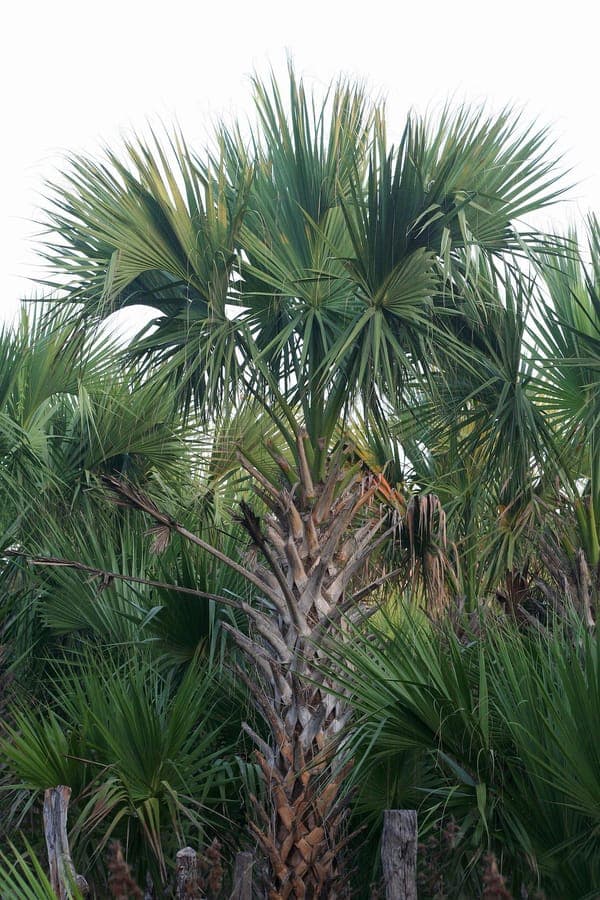
Whitney Cranshaw, Colorado State University, United States / CC BY 3.0 us, via Wikimedia Commons
Sabal mexicana: complete guide
Sabal mexicana
Want to see Sabal mexicana: complete guide in your garden?
1 minute, no credit card
Overview
Sabal mexicana, commonly known as Texas palmetto or Rio Grande palmetto, is an impressive palm species native to southern North America and Central America. This stately palm has become increasingly popular in Europe, particularly in warmer regions and as a container plant that you can bring indoors. In its natural habitat, the tree grows extremely tall, but with proper care you can achieve beautiful results in a garden even further north.
Sabal mexicana is not just visually striking - this palm fits perfectly into modern garden designs. Its architectural form and restful green color immediately create a tropical atmosphere in any front yard or terrace. With the right location and care, this palm can last for decades.
Appearance and bloom
The Texas palmetto grows as a tall tree with an upright trunk. The leaves are large, grayish-green, and have a beautiful fan-like shape. They grow on elongated leaf stalks that emerge from the top of the tree. This characteristic growth pattern gives the palm its distinctive silhouette.
The flowers are small and yellowish-white and appear in long, drooping flower clusters. They typically bloom in spring and summer. After flowering, small black fruits form that attract birds. The flower display is subtle yet elegant.
Ideal location
The Sabal mexicana loves plenty of sunlight. Place it in a spot where it receives at least 6 to 8 hours of direct sunlight per day. A south or southwest-facing location is ideal. The palm will also thrive with slightly less sun, as long as you water it regularly.
Wind can be problematic - strong gusts can damage the leaves. Choose a location where the palm is somewhat sheltered, such as against a wall or surrounded by other shrubs. In a container setting, this gives you the flexibility to move the palm to a protected spot when storms approach.
Maintain at least 2 to 3 meters of distance from other trees and structures, so the palm can grow to full size. This palm can become considerably wider than you might initially think.
Soil type
The Texas palmetto grows best in well-draining, nutrient-rich soil. A balanced mix of sand, humus, and clay creates the ideal base. Make your own mixture of 40% garden soil, 30% coco peat or peat, 20% perlite, and 10% composted bark. This ensures sufficient drainage while retaining nutrients.
In containers, loose, nutrient-rich potting mix is essential. Ensure drainage holes at the bottom of the pot. Poorly draining soil almost inevitably leads to root rot. If your soil is heavily clay-based, increase the sand content to 50%.
The pH should be neutral to slightly alkaline (pH 6.5 to 7.5). Check this annually and add lime if needed. A layer of sawdust on the surface helps prevent moisture loss.
Watering
The Texas palmetto prefers regular moisture, but not waterlogged conditions. During the growing season (April to October), water at least 2 to 3 times per week. Always check that the soil feels dry 2 to 3 centimeters below the surface before watering - this prevents water poisoning.
In winter (November to March), significantly reduce watering. Water only when the soil feels noticeably dry. A bottom-watering system helps: place container palms on a saucer with water, let them drink for up to 30 minutes, and remove the water tray afterward.
Mist the leaves once a week with pure water - this keeps them clean and increases humidity. Use lukewarm water, never ice-cold tap water. This avoids shocking the plant.
Free design
Want to see Sabal mexicana: complete guide in your garden? Make a free design now.
Pruning
The Sabal mexicana requires little pruning. Generally, remove dead and wilted leaves. Cut these off about 5 centimeters from the base. Also remove weak side shoots that are not growing healthily.
Never cut off healthy green leaves - this slows growth and weakens the plant. However, yellowed or brown leaf tips can be carefully trimmed yourself if they are larger than 1 centimeter.
Infection risk is minimal, but use clean tools and disinfect cuts with a small amount of wound sealant. Pruning is best done in early spring, before the growing season begins.
Maintenance calendar
March: Check for insects and mildew. Carefully repot container plants if needed. Begin moderate watering.
April-May: Start intensive watering and feeding (every 2 weeks). Move container palms outdoors. Check soil moisture regularly.
June-August: Maintain intensive watering. Mist leaves regularly. Follow feeding schedule.
September-October: Gradually reduce watering. Stop feeding mid-October. Clean and prepare for winter storage.
November-February: Minimal care. Water only when soil is dry. Move container palms to warm shelter (minimum 5 degrees Celsius). Check weekly for water damage.
Winter hardiness
The Sabal mexicana is only moderately winter hardy. In areas with frost, you need to protect the plant. The lower temperature limit is around -5 to 0 degrees Celsius. In northern Europe, two strategies work well:
First, you can bring container palms indoors for winter - a bright conservatory, window room, or sunny room suffices. Provide adequate light (at least 4-5 hours per day). Keep temperatures between 10 to 18 degrees Celsius.
Second, container palms can overwinter outdoors with protection. Wrap the trunk in climate film or burlap. Cover the top part with straw or leaves. Make sure water cannot collect under the insulation - this causes rot. Carefully remove protection in March.
In southern regions, young specimens can remain outdoors overnight if protected. Older, established palms are hardier.
Companion planting
The Texas palmetto works well with other heat-loving plants. Combine it with low groundcovers such as Sedum or Delosperma at the base. This creates volume and interesting texture contrasts.
Japanese bamboo Semiarundinaria fastuosa forms a nice vertical contrast without competing with the palm for space. Their deep roots don't interfere.
Smaller, lower trees like Acer palmatum (Japanese maple) fit well. They don't shade each other but fill in visually. Also combines well with silver-leaved shrubs like Artemisia or Santolina for color contrast.
Low bloomers like Saxifraga seguieri (an alpine saxifrage) can bloom under the palm if you keep it in containers. Their fine texture contrasts nicely with the palm leaves.
Final thoughts
The Sabal mexicana is an investment in years of tropical enjoyment. With attention to drainage, regular watering, and winter protection, you'll achieve beautiful results. This palm is not difficult, but it does require consistency.
Want to give your front yard a Mediterranean flair? Visit local garden centers for healthy specimens. Online retailers like gardenworld.app can also provide advice. Enjoy growing your Texas palmetto!
Want to see Sabal mexicana: complete guide in your garden? Make a free design now.
Upload a photo, pick a style, and get a photorealistic design with plant list in under a minute.
No credit card required


Similar plants
Needle palm: complete guide
Rhapidophyllum hystrix
Everything about the needle palm: the world's hardiest palm, suitable for gardens in temperate climates down to USDA zone 7b.
Saw palmetto: complete guide
Serenoa repens
A complete guide to saw palmetto (Serenoa repens), the iconic fan palm from Florida and the southeastern United States, prized for its toughness.
Puerto Rican hat palm: complete guide
Sabal causiarum
Grow Puerto Rican hat palm successfully. A majestic fan palm with tropical presence suited to sheltered Mediterranean-style gardens.