
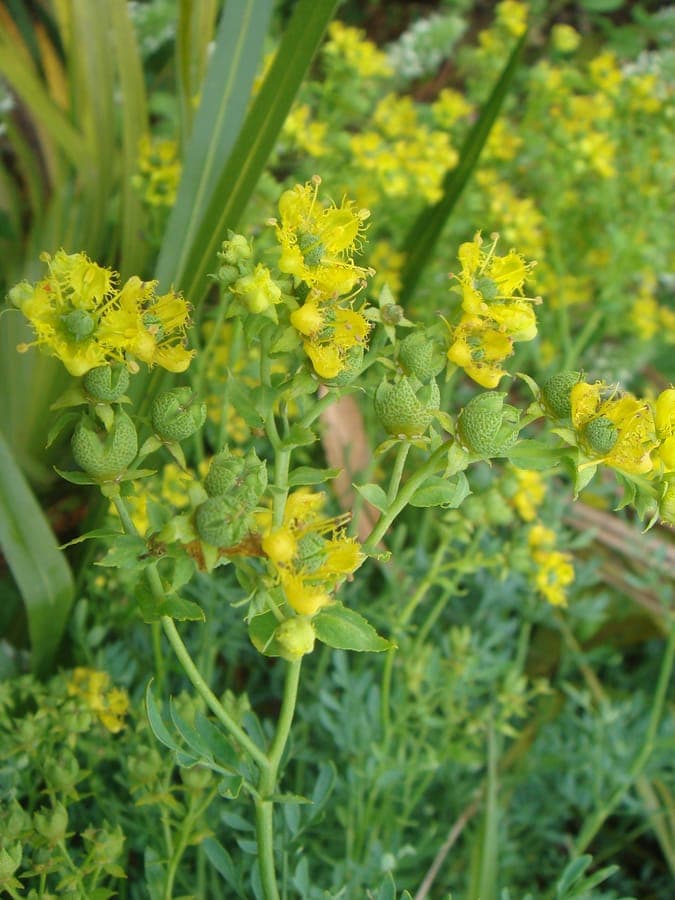
Xemenendura / CC BY-SA 4.0, via Wikimedia Commons
Ruta chalepensis: complete guide
Ruta chalepensis
Want to see Ruta chalepensis: complete guide in your garden?
1 minute, no credit card
Ruta chalepensis: Complete Guide
Overview
Fringed Rue (Ruta chalepensis L.) is an attractive Mediterranean plant from the Rutaceae family. This compact aromatic shrub is renowned for its pungent fragrance and stunning yellow blooms. With native ranges spanning North Africa to the Middle East, this plant is perfectly adapted to hot, dry conditions. The plant has naturalized in warm climates worldwide and remains a favorite among gardeners who appreciate Mediterranean plants.
Appearance and Bloom
Ruta chalepensis is a compact subshrub typically reaching 30-60 cm in height. The plant develops a dense, bushy growth pattern with fine, feathery leaves that emit a distinctive sharp-spicy fragrance when touched. The foliage is green with a waxy texture. The flowering period extends from May to July, when small yellow flowers appear in dense clusters at the stem tips. These flowers attract bees and other pollinators. After blooming, small seed capsules develop, allowing for seed collection and propagation.
Ideal Location
Select a spot in your garden with full sun, receiving at least 6-8 hours of direct sunlight daily. This plant thrives in areas with hot, sunny conditions. In northern climates, placing the plant near a wall or in a heated greenhouse may be beneficial. The plant tolerates wind well and is therefore suitable for exposed locations. Avoid shaded areas where the plant will perform poorly.
Soil
Ruta chalepensis prefers lean, well-draining soil. The plant actually performs better in poor soil than in nutrient-rich soil. Ensure well-draining soil with a pH between 7.5-8. Add sand or small pebbles to heavy clay soil to improve drainage. The plant tolerates salt in the soil, making it suitable for coastal areas. Prevention of waterlogging is essential.
Watering
Once established, Ruta chalepensis requires minimal water. Water only when the soil is completely dry. During the growing season (spring and summer), provide moderate watering but prevent waterlogging. In winter, dramatically reduce watering. Overwatering is the biggest enemy of this plant and can cause root rot. During rainy periods, supplemental watering may be completely unnecessary.
Free design
Want to see Ruta chalepensis: complete guide in your garden? Make a free design now.
Pruning
Ruta chalepensis responds well to pruning. Regularly cut back after flowering in July-August to maintain a compact, bushy form. This also encourages more foliage and flowers for the next season. Remove dead or damaged branches as you notice them. Avoid heavy pruning in autumn as this can increase frost sensitivity. Wear gloves when pruning as some people may develop sensitivity to the sap.
Maintenance Calendar
March-April: Begin the growing season with light pruning. Gradually increase watering. May-July: Monitor flowering. Apply light monthly fertilization if desired. Water regularly but moderately. August-September: Prune after flowering. Reduce watering. October-February: Minimal care. Water only sparingly. Protect from snow and frost in cold regions.
Winter Hardiness
Ruta chalepensis is reasonably winter-hardy in mild areas. The plant tolerates temperatures down to approximately -5 to 0 degrees Celsius, but grows better in warmer climates. In temperate zones, the plant cannot tolerate severe frost. In cold regions, the plant is best grown in a container that can be moved indoors during winter. A protective mulch layer around the base can provide protection in milder areas.
Companion Plants
Ruta chalepensis combines well with other Mediterranean plants requiring similar growing conditions. Good neighbors include lavender, rosemary, sage, and thyme. Together these plants create a harmonious composition in colors and textures. Small-growing cedars and cypress trees also make beautiful background plants. Avoid pairing with heavy water drinkers.
Closing Remarks
Ruta chalepensis is a fascinating Mediterranean plant that fills your garden with texture, fragrance, and yellow color. With the right growing conditions (sun, good drainage, and careful watering), this plant is easy to maintain. Visit gardenworld.app for more information about Mediterranean garden plants and design advice. Or check gardenworld.app for more garden inspiration!
Want to see Ruta chalepensis: complete guide in your garden? Make a free design now.
Upload a photo, pick a style, and get a photorealistic design with plant list in under a minute.
10,000+ gardens designed already
No credit card required


Similar plants
Thamnosma montana: complete guide
Thamnosma montana
Everything about Thamnosma montana, the aromatic turpentine broom from the Mojave Desert. Location, soil, care and companion planting explained.
Narrow-leaved fringed rue: complete guide
Ruta angustifolia
Everything about Ruta angustifolia: location, soil, watering, pruning and winter care for this Mediterranean subshrub.
Mountain rue: complete guide
Ruta montana
A complete guide to Ruta montana: best location, soil, watering, pruning and overwintering of this aromatic Mediterranean subshrub.