
Qgroom / CC0, via Wikimedia Commons
Shore dock: complete guide
Rumex rupestris
Want to see Shore dock: complete guide in your garden?
1 minute, no credit card
Rumex rupestris, known as Shore Dock or Rocky Sorrel, is a small, rare plant native to southwestern Great Britain, France, and northwestern Spain, particularly in coastal areas. This small dock belongs to the sorrel family and is known for its preference for stony, well-drained soils typical of coastal habitats. Learn everything about cultivating this fascinating wild plant.
Overview and Distribution
Rumex rupestris is a highly specialized plant, treasured for its preference for stony, saline soils typical of coastal shores. The plant is quite rare and much sought by botanists and wildflower enthusiasts. In its natural habitat it grows on rocky banks and coastal cliffs.
Appearance
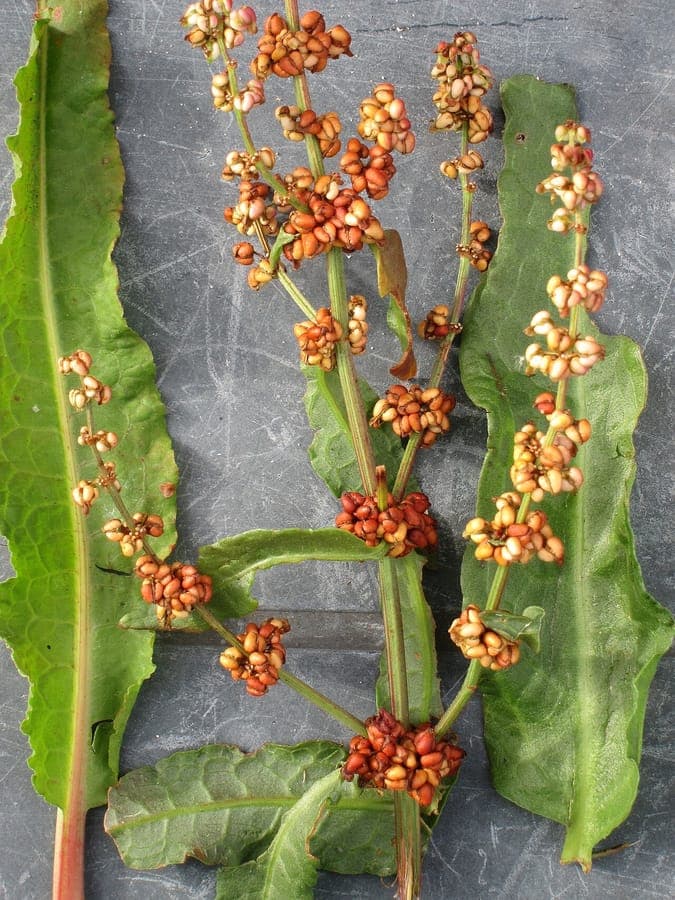
This is a compact, low-growing plant, usually 15-30cm tall. Leaves are small, linear to lanceolate, often with blue-green tint. Flowers are small and inconspicuous, greenish, blooming July-August-September. The seed heads are highly decorative, triangular, coloring deep red-brown in autumn.
Ideal Location
Rumex rupestris loves sunny locations. Minimum 6-7 hours sun daily is ideal. The plant tolerates full sun well. Protection from strong western winds is welcome. Plant in rocky, stony locations where other plants struggle. Good air circulation is essential.
Soil and Moisture Management
Well-drained soil is crucial for success. This plant tolerates poor, acidic to neutral soil (pH 6.5-7). Add sand, gravel, and small stones to planting hole to enhance drainage. This plant is stronger in poor soil than nutrient-rich soil. Avoid organic matter like compost. The plant enjoys slightly saline groundwater, so garden locations near the sea are ideal. Feeding is usually unnecessary.
Watering
Once established, this is a very drought-tolerant plant. Water regularly the first growing season until deep roots establish. Thereafter water only in extreme drought. Excessive watering is poor for this plant. Good drainage around the plant is critical.
Pruning and Maintenance
Minimal maintenance needed. Remove dead leaves in spring. Seed heads can remain in autumn for decoration. Seed drop can be prevented by drying or removing seed heads before they scatter. This plant requires virtually no pruning.
Maintenance Calendar
Spring (April-May): Check plant health, remove last year's dead leaf. Summer (June-August): Little maintenance, moisture management in very dry periods. Fall (September-October): Leave seed heads decorative or harvest. Winter (November-March): Quiet period, no maintenance.
Winter Hardiness
Rumex rupestris is hardy in temperate climates. The plant is adapted to British and French winters. Protection is usually unnecessary. In very harsh winters the plant may suffer but will usually recover.
Propagation
The plant propagates via seeds. Collect seed in autumn and dry. Sow on dry sand-gravel mixture in spring. Seeds germinate well with cold (vernalization helps). Cuttings won't work here.
Applications
In rock gardens: Excellent between stones. In difficult locations: Poor soil where others won't grow. For seed collection: Beautiful seed heads for dried arrangements. In bird-friendly gardens: Seed attracts birds.
Companion Plants
Pair with other coastal plants like sea pink, sea plantain, and thrift. Also suitable with other dock species in rock gardens. Fine plants like sedums make beautiful backgrounds.
Conclusion
Rumex rupestris is a fascinating plant for special situations and specialists. This is for true lovers of wild and delicate flora. Available from native plant nurseries. Read more plant guides at gardenworld.app.
Want to see Shore dock: complete guide in your garden? Make a free design now.
Upload a photo, pick a style, and get a photorealistic design with plant list in under a minute.
No credit card required


Similar plants
Crosby's wild buckwheat: complete guide
Eriogonum crosbyae
Full guide to growing Eriogonum crosbyae: ideal site, soil, watering, winter hardiness and companion plants for this rare western wild buckwheat.
Spreading buckwheat: complete guide
Eriogonum effusum
Full guide to growing Eriogonum effusum: ideal site, soil, watering, winter hardiness and companion plants for this prairie subshrub from the American West.
Tall woolly buckwheat: complete guide
Eriogonum elatum
Full guide to Eriogonum elatum: siting, soil, watering, pruning and companion plants for this elegant white-flowered buckwheat from the western United States.