
Bjoertvedt / CC BY-SA 4.0, via Wikimedia Commons
Rumex lunaria: complete guide
Rumex lunaria
Want to see Rumex lunaria: complete guide in your garden?
1 minute, no credit card
Overview
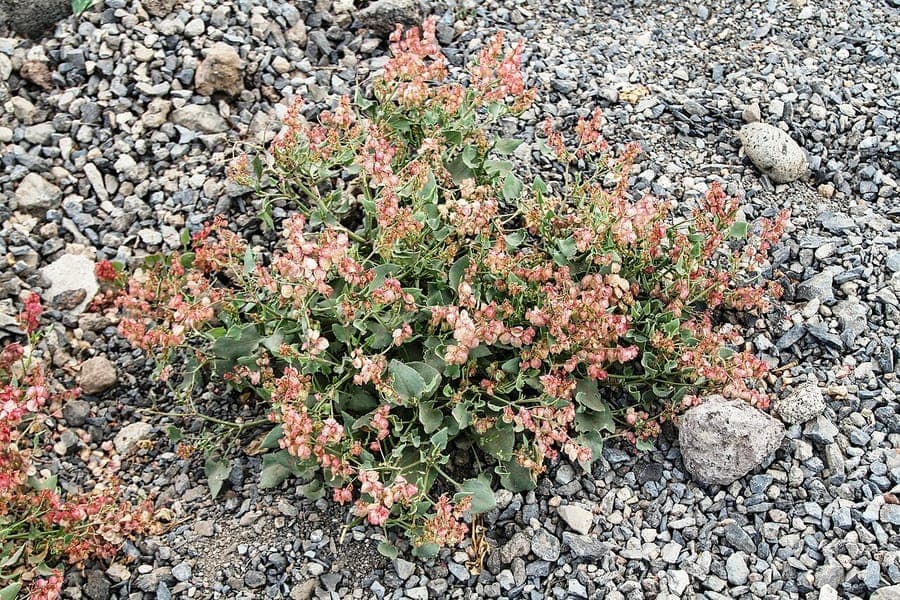
Rumex lunaria, commonly known as Canary Island sorrel or moon dock, is a fascinating and relatively uncommon perennial endemic to the Canary Islands. This member of the Polygonaceae family stands out for its distinctive foliage exhibiting a striking lunulate (moon-shaped) pattern. Long overlooked by horticulturists, this species has gained renewed interest among sophisticated gardeners seeking distinctive foliage specimens.
Unlike many common Rumex species, this plant offers refined appeal through form and texture rather than showy flowers. Its unique architectural qualities make it perfect for contemporary garden designs that prioritize structural interest and visual subtlety.
Appearance and Foliage
Canary Island sorrel grows as a shrubby perennial, typically reaching 16 to 24 inches in height. The distinctive feature is its foliage: leaves are notably green and often display a remarkable lunulate pattern on their surface. Lower leaves reach 8 inches in length, gradually diminishing in size upward along the stems.
Flowers are small, inconspicuous green-yellow structures appearing in narrow racemes. Many gardeners remove these flowers as they contribute little to ornamental value. The true decorative merit lies in the distinctive foliage pattern and the plant's architectural form.
Ideal Location
Canary Island sorrel thrives in full sun to partial shade locations. In Mediterranean climates, afternoon shade prevents leaf scorch. In cooler temperate regions, full sun is preferred. The plant tolerates wind exposure exceptionally well, even in exposed coastal settings.
Position this plant where its distinctive form is clearly visible, ideally against neutral backgrounds (dark walls, dark-foliaged shrubs) to maximize the visual impact of its foliage pattern.
Soil
Canary Island sorrel has specific soil preferences. It thrives in well-draining, only moderately fertile soils. In overly rich, highly nitrogenous soils, the plant tends toward excessive vegetative growth at the expense of structural integrity. Sandy soils with moderate fertility are ideal.
Prefer slightly alkaline pH (6.5-7.5). Heavy clay soils must be amended with 30 to 40 percent peat moss and coarse sand to improve drainage. Avoid fertilizer; fertility should remain modest.
Free design
Want to see Rumex lunaria: complete guide in your garden? Make a free design now.
Watering
Once established, Canary Island sorrel is remarkably drought-tolerant. Mature plants in Mediterranean climates typically require no supplemental water beyond rainfall. In continental climates, occasional watering during extreme droughts is beneficial.
Young plants need consistently moist (not wet) soil to develop strong root systems. Water regularly during the first growing season. Once established, avoid routine watering; the plant dislikes persistent moisture and is susceptible to root rot in overly wet conditions.
Pruning
Pruning is straightforward: remove dead foliage and stems in spring. Trim discolored leaf tips. Remove flowers since they contribute little to ornamental appeal. Lightly prune to maintain compact form and structural integrity.
Remove spent portions in autumn. In very cold winter regions, all above-ground parts may be cut back, though the plant often persists at ground level.
Maintenance Calendar
March: Remove dead material. Check drainage. May-August: Water only during extreme drought. September-October: Reduce watering. Remove spent flowers. November-February: Minimal water. Protect in very cold winters.
Winter Hardiness
Canary Island sorrel is not as cold-hardy as many perennials. In warm-temperate zones (USDA zones 8-10), it overwinters outdoors without protection. In colder climates (UK, northern France), protection is beneficial.
In cold regions, many gardeners grow this plant in containers that can be moved to protected locations during winter. Alternatively, plantings in very dry, well-draining soils can overwinter with mulch protection in moderately cold areas.
Companion Plants
Canary Island sorrel combines intriguingly with:
With succulents (Sedum, Echeveria): contrasting foliage forms create visual interest. With lavender: fragrant flowers contrast with this plant's subtle appeal. With Artemisia: silver foliage contrasts beautifully against green leaves. With Penstemon: delicate flowers provide complement above supporting foliage.
Closing
Canary Island sorrel offers a refreshing addition for gardeners seeking to differentiate their landscapes with uncommon plants. Drought tolerance combined with distinctive foliage make it perfect for xeriscapes and modern minimalist designs. Plant today and enjoy year-round foliage interest.
Find specialist suppliers at gardenworld.app for unique perennial selections!
Want to see Rumex lunaria: complete guide in your garden? Make a free design now.
Upload a photo, pick a style, and get a photorealistic design with plant list in under a minute.
No credit card required


Similar plants
Crosby's wild buckwheat: complete guide
Eriogonum crosbyae
Full guide to growing Eriogonum crosbyae: ideal site, soil, watering, winter hardiness and companion plants for this rare western wild buckwheat.
Spreading buckwheat: complete guide
Eriogonum effusum
Full guide to growing Eriogonum effusum: ideal site, soil, watering, winter hardiness and companion plants for this prairie subshrub from the American West.
Tall woolly buckwheat: complete guide
Eriogonum elatum
Full guide to Eriogonum elatum: siting, soil, watering, pruning and companion plants for this elegant white-flowered buckwheat from the western United States.