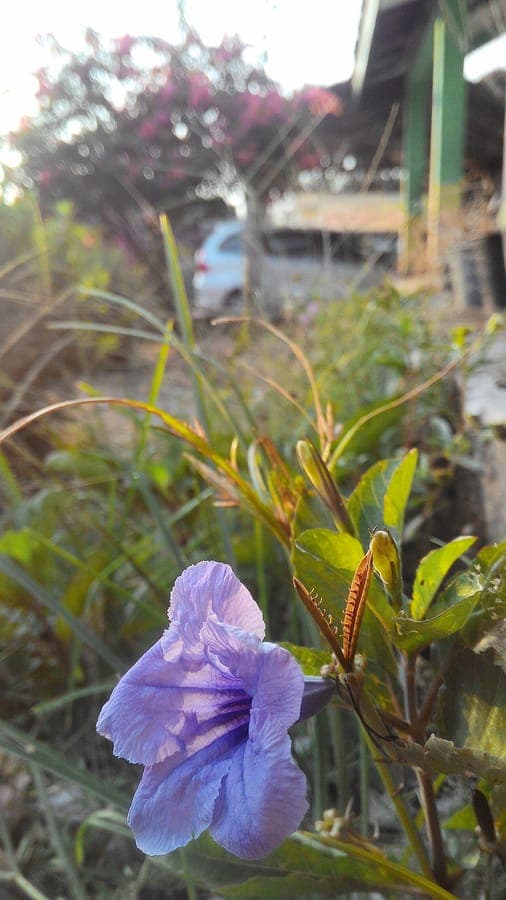
Aris riyanto / CC BY-SA 4.0, via Wikimedia Commons
Minnieroot: complete guide
Ruellia tuberosa
Want to see Minnieroot: complete guide in your garden?
Full design in HD: €7.99
Look after your Minnieroot with the GardenWorld app
Identify plants with your camera and get a care calendar with reminders for this plant.


Overview
The minnieroot (Ruellia tuberosa), also known as chandelier flower and fever root, is an interesting plant from Mexico and the Caribbean. This plant is known for its tuberous roots and bright flowers.
This plant is unique because it has both decorative and practical value. The tuberous roots make it botanically intriguing, while its flowers are bird-friendly.
Appearance and Bloom
The minnieroot grows as a compact shrub 0.5 to 1 meter tall with decorative leaves. The leaves are oval, dark green and leathery. The plant forms interesting tuberous structures below ground level.
Flowers appear in summer and fall in blue to violet tones, sometimes with white centers. They are small but numerous and very attractive to insects and birds. The plant blooms easily and provides a long blooming period.
Ideal Location
The minnieroot grows best in warm, sunny or partially shaded location. At least 4-5 hours of sunlight daily. In full shade it grows slowly.
This is not a hardy plant for cold climates, so consider planting it in warm, sheltered spots in the garden or in containers.
Soil
The minnieroot prefers well-draining, slightly acidic to neutral soil (pH 5.5-7). Heavy clay soils need to be improved with sand and compost.
Good drainage is essential. Stagnant water causes root rot.
Free preview
Want to see Minnieroot: complete guide in your garden? Make a free preview of your design.
Watering
After planting, water regularly, especially during the growing season. Once established it can tolerate moderate drought.
Water more in warm seasons. Reduce watering in winter.
Pruning
Pruning can be kept minimal. Remove only dead branches. The plant grows naturally beautiful.
Light form pruning in spring can help.
Maintenance Calendar
May-October: Active growth and bloom, regular watering. November-April: Rest period, less water, less feeding.
Winter Hardiness
The minnieroot is frost-sensitive. Hardy to about 0-5°C in sheltered conditions. In true frost zones consider container culture or provide protection.
In milder climates it can overwinter outdoors with mulch protection.
Companion Plants
The minnieroot grows well with other warm-loving plants. Combine with crinum, clivia or other tropical greenery.
Closing
For those seeking a unique, flowering plant with tropical character, minnieroot is perfect. In warmer regions it can grow permanently outdoors. Elsewhere consider container culture. Find young plants at specialized nurseries.
[More tropical choices? Visit gardenworld.app for personalized designs!]
Frequently asked questions about Minnieroot
Is Minnieroot winter hardy?
The minnieroot is frost-sensitive. Hardy to about 0-5°C in sheltered conditions.
When and how do you prune Minnieroot?
Pruning can be kept minimal. Remove only dead branches.
How much water does Minnieroot need?
After planting, water regularly, especially during the growing season. Once established it can tolerate moderate drought.
Where does Minnieroot grow best?
The minnieroot grows best in warm, sunny or partially shaded location. At least 4-5 hours of sunlight daily.
What soil does Minnieroot need?
The minnieroot prefers well-draining, slightly acidic to neutral soil (pH 5.5-7). Heavy clay soils need to be improved with sand and compost.

See it in your garden
See Minnieroot in your garden
One photo of your garden and a few questions. You see the result in about a minute.
Try it with a photoIdentify this plant in your own garden. Identify a plant
Similar plants
Nerve plant: care guide
Fittonia albivenis
How to grow the nerve plant (Fittonia albivenis): light, humidity, watering, potting mix and cuttings for this terrarium favourite with white or red-veined leaves.
Polka dot plant: care guide
Hypoestes phyllostachya
How to grow the polka dot plant (Hypoestes phyllostachya): light, watering, pinching, cuttings and sowing for this pink, red or white-spotted houseplant. Safe for pets.
Limestone wild petunia: complete guide
Ruellia strepens
Ruellia strepens is a long-blooming perennial native to central and eastern North America, with lavender trumpet flowers from June to September.
