
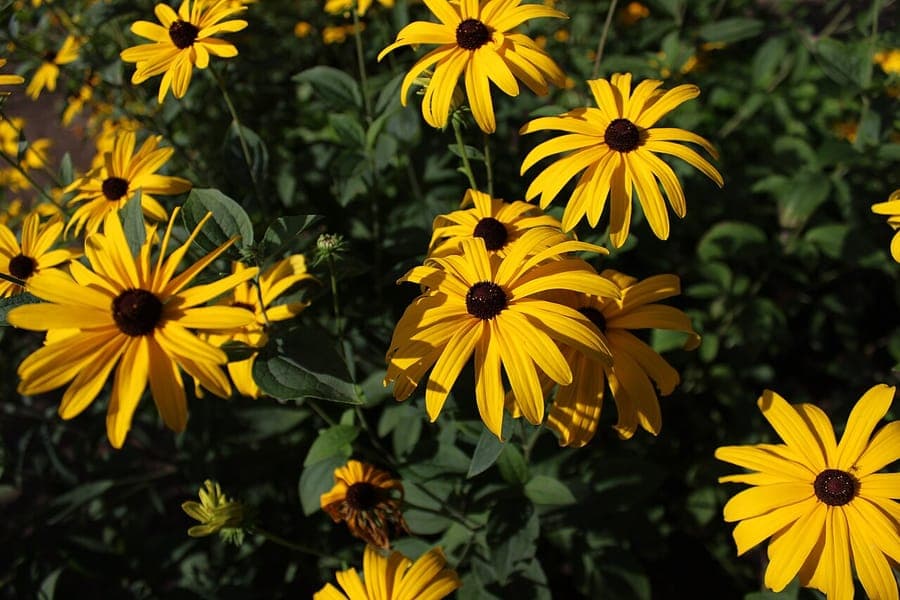
AfroBrazilian: Aleksandrs Balodis / CC BY-SA 4.0, via Wikimedia Commons
Rudbeckia subtomentosa: complete guide
Rudbeckia subtomentosa
Want to see Rudbeckia subtomentosa: complete guide in your garden?
1 minute, no credit card
Overview
Rudbeckia subtomentosa, commonly known as sweet coneflower or prairie rudbeckia, is a magnificent perennial native to central and eastern North America. This member of the Asteraceae family stands out for its brilliant yellow flowers with a prominent dark brown to black center disk. First cultivated in European botanical gardens in the early 1800s, it has become a beloved fixture in modern landscape design across temperate climates.
The common name "sweet coneflower" refers to the plant's finely hairy stems and foliage. This is an exceptionally hardy perennial that adapts beautifully to various climate conditions, including the temperate zones of Northern Europe. Beyond its ornamental appeal, Rudbeckia subtomentosa serves as a vital nectar source for bees and butterflies throughout summer months.
Appearance and Bloom
Sweet coneflower grows 24 to 36 inches tall, forming dense, branching mounds covered with abundant flowers. The stems are densely clothed in fine hairs, giving the plant a soft, velvety appearance. Foliage is linear to lance-shaped, dark green, and notably rough-textured.
Flowers emerge in July and continue blooming through October. Each bloom features 12 to 16 golden-yellow ray florets arranged radially around the dark brown disk florets. The disk flowers are small, numerous, and pleasantly fragrant, particularly noticeable on warm afternoons. Individual plants produce hundreds of flowers per season, creating sustained color from mid-summer through autumn.
Ideal Location
Sweet coneflower is a true sun worshipper, requiring a minimum of 6 to 8 hours of direct sunlight daily for optimal flowering. In intensely hot climates, afternoon shade may be beneficial, though not essential. The plant tolerates exposed, windy sites well, though severe gusts may cause stem breakage in cultivated varieties.
For visual impact and ecological benefit, plant Rudbeckia subtomentosa in groups of 3 to 5, spacing plants 18 inches apart. This spacing allows good air circulation while creating massed color effects. Tall cultivars may require staking in windy locations or rich soils that promote excessive stem elongation.
Soil
Prairie rudbeckia is notably undemanding regarding soil composition, thriving in nearly any well-draining medium. Heavy clay soils benefit from amendment with 20 to 30 percent peat moss or aged compost. The ideal pH range is 6.0 to 7.0, though the plant accepts slightly alkaline conditions.
Amend planting holes with 4 to 6 inches of mature compost to improve soil structure and fertility. Poor sandy soils benefit from regular organic matter addition throughout the growing season. Excellent drainage is essential; prolonged waterlogging causes root rot and decline. The plant evolved in prairie environments with naturally well-draining soils and does not tolerate boggy conditions.
Free design
Want to see Rudbeckia subtomentosa: complete guide in your garden? Make a free design now.
Watering
While more moisture-tolerant than many prairie plants, established Rudbeckia subtomentosa prefer dry to moderately moist soils. Newly planted specimens require regular watering during their first season to encourage deep rooting.
Once established, mature plants need water only when the top inch of soil becomes dry. Rainfall normally provides sufficient moisture; supplemental watering is typically unnecessary except during extended drought. Water deeply but infrequently to encourage deep rooting. Avoid overhead watering, which can promote fungal issues.
Pruning
Pinching encourages bushy, floriferous growth. Remove the top 1 inch of stems in mid-spring (May) to promote branching. Deadheading spent flowers extends the bloom season and increases flower production. This can continue through October. Cut flowers last 7 to 10 days in arrangements, and cutting encourages additional blooms.
In late autumn (November), cut the entire plant back to 6 inches above ground level. This promotes vigorous regrowth the following spring. Alternatively, leave stems standing through winter; they provide seeds and shelter for beneficial insects. Remove dead growth in early spring before new growth emerges.
Maintenance Calendar
Follow this simple schedule for best results:
March: Remove dead material. Add 2 to 3 inches of compost around plants. May: Pinch stem tips to encourage branching. July-October: Deadhead regularly. Water during droughts. November: Cut back to 6 inches or leave standing for wildlife. December-February: Minimal care required.
Winter Hardiness
Rudbeckia subtomentosa is extraordinarily hardy, surviving temperatures to -13 degrees Fahrenheit (-25C) without damage. In temperate regions from the Netherlands to southern Scandinavia, this perennial overwinters reliably without protective measures. The plant dies back to its underground rhizome each autumn, protecting the crown from freeze-thaw damage.
Excessive winter wetness poses greater risk than cold. Ensure excellent soil drainage. In unusually wet winters, apply sand or gravel around plant bases to improve water movement away from the crown.
Companion Plants
Sweet coneflower combines beautifully with other summer perennials. Try these combinations:
With Echinacea: creates a striking duo of purple and yellow blooms flowering simultaneously. With Monarda: violet-red flowers provide striking color contrast against golden Rudbeckia. With ornamental grasses: Miscanthus and Panicum provide graceful movement behind flowers. With Sedum: combining needle-like foliage textures with abundant flowers creates visual interest.
Closing
Sweet coneflower is an essential plant for gardens designed to support pollinators. Thanks to its toughness, low maintenance requirements, and extended bloom season, it suits both experienced and novice gardeners. Add Rudbeckia subtomentosa to your landscape today and enjoy months of glowing golden color while supporting local bee and butterfly populations.
Available at garden centers and online retailers. Visit gardenworld.app to connect with professional designers who can incorporate prairie rudbeckia into your custom landscape plan!
Want to see Rudbeckia subtomentosa: complete guide in your garden? Make a free design now.
Upload a photo, pick a style, and get a photorealistic design with plant list in under a minute.
No credit card required


Similar plants
Calendula stellata: complete guide
Calendula stellata
Complete guide to Calendula stellata, the star-flowered marigold from Sicily: location, soil, watering and companion planting tips.
Korean chrysanthemum: complete guide
Chrysanthemum x rubellum
Chrysanthemum x rubellum is a hardy autumn perennial with single pink to copper flowers from August to November. Care and combinations.
Helianthus divaricatus: complete guide
Helianthus divaricatus
Helianthus divaricatus is a North American woodland sunflower with yellow summer blooms, ideal for naturalistic borders and shady edges.