
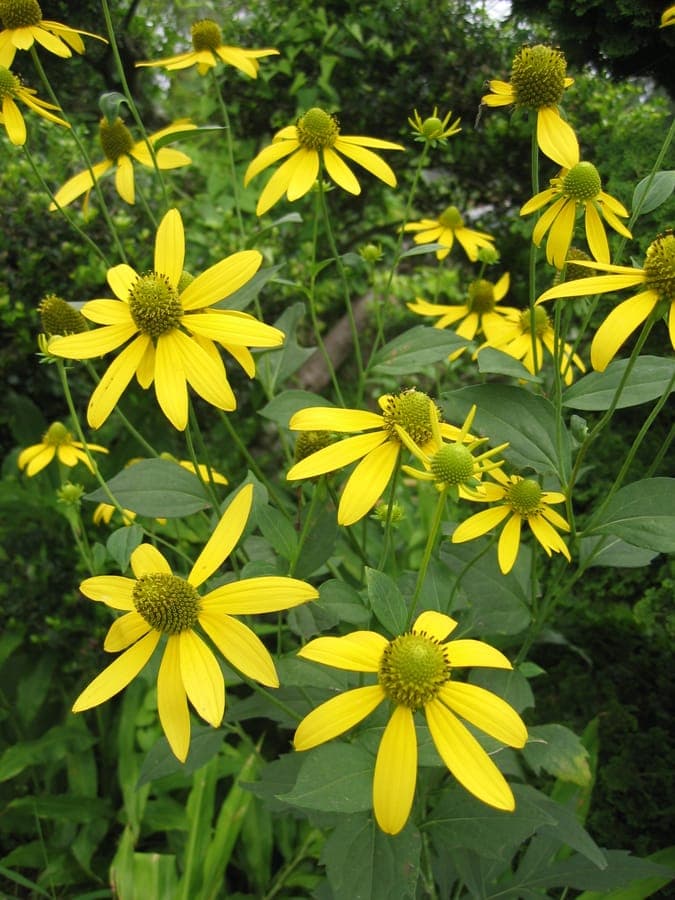
Σ64 / CC BY-SA 3.0, via Wikimedia Commons
Tall coneflower: complete guide
Rudbeckia laciniata
Want to see Tall coneflower: complete guide in your garden?
1 minute, no credit card
Overview
Rudbeckia laciniata, commonly known as tall coneflower, is a bold, late-summer bloomer native to moist woodlands and stream banks across eastern and central North America. Reaching heights of up to 200 cm, this herbaceous perennial stands tall in borders, naturalistic plantings, and pollinator gardens. It belongs to the Asteraceae family and features deeply dissected leaves and airy, pale yellow flowers that bloom from July through October.
Unlike the more compact Rudbeckia hirta, R. laciniata has a looser, more graceful habit, making it ideal for the back of the border. It's not just ornamental-bees, butterflies, and hoverflies rely on its nectar in the late growing season. On gardenworld.app, you can design a planting scheme that uses tall coneflower as a structural anchor in high-performing, wildlife-friendly borders.
Appearance & bloom cycle
The foliage of tall coneflower is striking-deeply cut, fern-like leaves with narrow, sharply pointed lobes give the plant a light, airy texture. The stems are upright and hollow, supporting single flowers that can reach 7–9 cm in diameter. Blooms are pale yellow to creamy white with a prominent, cone-shaped central disk that starts green and matures to brown.
Flowering begins in mid-July and continues into early October, depending on climate. In USDA zones 4–9, peak bloom is typically August to September. Each plant produces multiple stems, especially when cut back in early summer. Though not long-lasting as cut flowers, the blooms add soft texture to arrangements and bring vertical interest to the garden.
This species spreads by seed and short rhizomes, but it's not invasive in most garden settings. Deadheading helps control self-seeding, especially in fertile soil.
Ideal location
Tall coneflower thrives in full sun to light shade-rate it an 8 out of 10 for light preference. For the sturdiest growth and most abundant flowering, plant in at least 6 hours of direct sun. In heavy shade, stems stretch and flop, requiring staking.
It's perfect for cottage gardens, native plantings, or damp areas near ponds and rain gardens. Given its height, place it at the back of borders or in groups of three to five for visual impact. Use gardenworld.app to model spacing and height in your garden layout, ensuring shorter plants aren't shaded out.
Soil requirements
Moist, humus-rich soil is ideal, but this species adapts well to clay, loam, or sandy soils as long as moisture is consistent. The pH range should be between 4.5 and 7-slightly acidic to neutral. Avoid dry, fast-draining sandy patches unless amended with compost.
When planting, mix in a generous amount of compost or well-rotted manure. This boosts organic content and helps young roots establish. Once mature, the plant is moderately drought-tolerant but performs best with steady moisture.
Free design
Want to see Tall coneflower: complete guide in your garden? Make a free design now.
Watering
Keep the soil consistently moist, especially during the first growing season. Water deeply 2–3 times per week in spring and early summer. After establishment, weekly watering is sufficient unless experiencing prolonged drought.
Mulching in spring with leaf mold or composted bark helps retain moisture and suppress weeds. In hot summers, unmulched plants may show stress-yellowing leaves or reduced flowering. Avoid overhead watering to prevent fungal issues on dense foliage.
Pruning
Pruning isn't mandatory, but cutting back by one-third in early June promotes bushier growth and reduces flopping. This delays bloom by 10–14 days but results in sturdier stems. Pinch or shear stems evenly across the plant.
After flowering, leave seed heads intact through winter to feed birds and provide shelter for beneficial insects. Cut back old stems to 15–20 cm in late winter or early spring before new growth emerges.
Maintenance calendar
- March–April: Clear old debris. Apply a 5 cm layer of compost around the base.
- May–June: Water regularly. Consider a soft prune in early June for compact growth.
- July–October: Peak bloom. Deadhead if self-seeding is a concern.
- November–February: Leave standing for wildlife. Cut back in late winter.
- Anytime: Divide large clumps every 3–4 years in early spring to rejuvenate.
Winter hardiness
Tall coneflower is hardy in USDA zones 4–9. In zone 7 and above, it reliably returns each spring without protection. Roots die back in winter but survive freezing temperatures.
In areas with heavy, wet winters, improve drainage to prevent crown rot. Raised beds or berms help in clay soils. Snow cover provides natural insulation-avoid removing mulch too early in spring.
Companion plants
Pair tall coneflower with late-blooming perennials to extend seasonal interest. Good companions include Eutrochium maculatum (spotted joe-pye weed), Verbesina alternifolia (wingstem), and Symphyotrichum novae-angliae (New England aster). Grasses like Panicum virgatum add movement and contrast.
Avoid aggressive spreaders like goldenrod unless kept in check. Instead, aim for balanced plantings where each species has room to breathe. On gardenworld.app, you can test combinations digitally before planting.
Closing
Tall coneflower is a dependable, low-maintenance perennial that brings height, texture, and late-season colour to the garden. It's tough, adaptable, and a magnet for pollinators when other flowers fade.
Plant in full sun, keep soil moist, and consider a mid-summer trim for better form. Buy potted plants from local garden centres or grow from seed. With thoughtful placement and care, Rudbeckia laciniata becomes a backbone of the late-season garden. Plan your layout on gardenworld.app to maximize impact and harmony.
Want to see Tall coneflower: complete guide in your garden? Make a free design now.
Upload a photo, pick a style, and get a photorealistic design with plant list in under a minute.
No credit card required


Similar plants
Calendula stellata: complete guide
Calendula stellata
Complete guide to Calendula stellata, the star-flowered marigold from Sicily: location, soil, watering and companion planting tips.
Korean chrysanthemum: complete guide
Chrysanthemum x rubellum
Chrysanthemum x rubellum is a hardy autumn perennial with single pink to copper flowers from August to November. Care and combinations.
Helianthus divaricatus: complete guide
Helianthus divaricatus
Helianthus divaricatus is a North American woodland sunflower with yellow summer blooms, ideal for naturalistic borders and shady edges.