
Daderot / Public domain, via Wikimedia Commons
Tibetan raspberry: complete guide
Rubus thibetanus
Want to see Tibetan raspberry: complete guide in your garden?
1 minute, no credit card
Overview
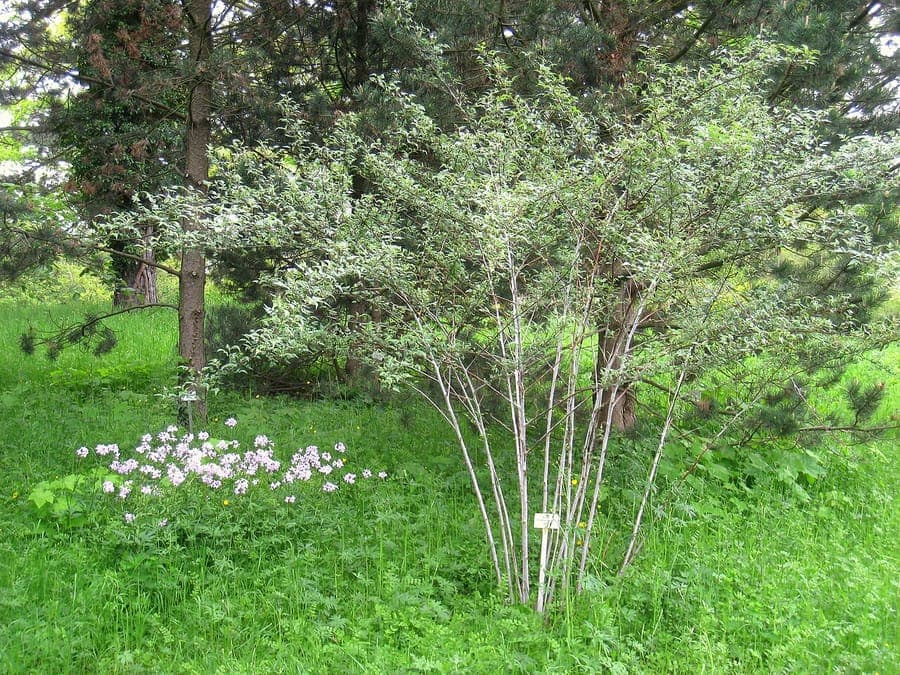
Tibetan raspberry (Rubus thibetanus) is a frost-hardy shrub from the rose family originating from Tibet and central China. This exceptional specimen is particularly renowned for its spectacular silver-white coloured stems that can dominate the garden landscape in winter and early spring. This is not a plant for brambles, but rather a true decorative ornament for year-round gardens.
Appearance and bloom
Tibetan raspberry grows into a shrub of 1.5 to 2 metres tall with thin, whiplike branches. The most striking feature is the stems, which are covered with a dense layer of silver-white bloom that appears almost luminescent in sunlight. This bloom gives the plant its spectacular winter appearance.
In June and July, small, relatively inconspicuous pink flowers appear. The fruits are red raspberries that ripen in August and are edible, though small in size. The leaves are compound and remain green until autumn.
In autumn and winter, when most gardens become dull, Tibetan raspberry is at its most beautiful with silver-white stems that appear almost luminous in low winter sunlight.
Ideal location
Tibetan raspberry grows best in a location with plenty of sunlight. This helps the silver bloom on the stems shine most prominently. A location with late afternoon light from the northwest or west is ideal.
The plant tolerates full sun to partial shade, but the silver-white effects are most dramatic in full sun. In deep shade, the plant will grow but loses much of its decorative value.
Soil
Tibetan raspberry is undemanding for soil type. The plant grows on virtually all soil types as long as drainage is good. Heavy clay can be tolerated as long as it is not permanently waterlogged.
The plant prefers slightly acidic to neutral soils and also grows on poor, stony soils. Adding compost when planting helps in the first seasons.
Watering
Once well established, Tibetan raspberry is highly drought tolerant. Young plants require regular watering during their first growing seasons. Once established, the plant independently seeks moisture sources.
During very dry summers, supplementary watering may help, but the plant thrives with average annual rainfall. This plant tolerates both wet and dry conditions reasonably well.
Free design
Want to see Tibetan raspberry: complete guide in your garden? Make a free design now.
Pruning
Tibetan raspberry must be pruned annually to maintain the best effect. The stems lose their silver-white bloom after the second year. In early January or February, cut all one-year-old stems back to ground. This promotes the growth of new, silvery-gleaming shoots.
The result is that the plant retains its spectacular winter appearance for years. This pruning regime requires more effort than other shrubs, but the results justify this.
Maintenance calendar
- October-November: Plant reaches its full winter splendour with silver stems.
- December-January: The stems are at their most beautiful in winter sunlight.
- January-February: Perform pruning work; cut everything back to ground.
- March-April: New shoots appear with silvered appearance.
- May-June: Flowers appear; growth continues into summer.
- July-August: Red raspberries ripen; still decorative.
- September: Plant expands; rest season begins.
Winter hardiness
Tibetan raspberry is fully winter hardy to -18degC and tolerates more extreme cold. This makes it suitable for all Dutch and Belgian gardens. No winter protection is needed.
Companion plants
Tibetan raspberry combines beautifully with other winter decoratives such as silver birch (Betula pendula), red dogwood (Cornus alba) and purple holly. This combination creates a very attractive winter garden.
Place Tibetan raspberry where winter sunlight can play with the silver stems. In combination with dark green evergreens as background, the effect is spectacular.
Conclusion
Tibetan raspberry is an indispensable plant for those who want to create winter gardens that remain interesting even in the bleak months. This is a plant that is completely different from standard raspberries and offers much more decorative value. Seek out this exotic species from specialized tree nurseries. For more inspiration, visit gardenworld.app to transform your winter gardens into a fairytale landscape.
Want to see Tibetan raspberry: complete guide in your garden? Make a free design now.
Upload a photo, pick a style, and get a photorealistic design with plant list in under a minute.
No credit card required


Similar plants
Hard bramble: complete guide
Rubus stereacanthos
Discover Rubus stereacanthos, a robust European bramble species with white flowers. Perfect for dense hedging and wildlife habitat in northern gardens.
Bear-comb bramble: complete guide
Rubus thalassarctos
Discover Rubus thalassarctos, a rare native Dutch bramble species. Ideal for natural hedge arrangements and wildlife-friendly gardens.