
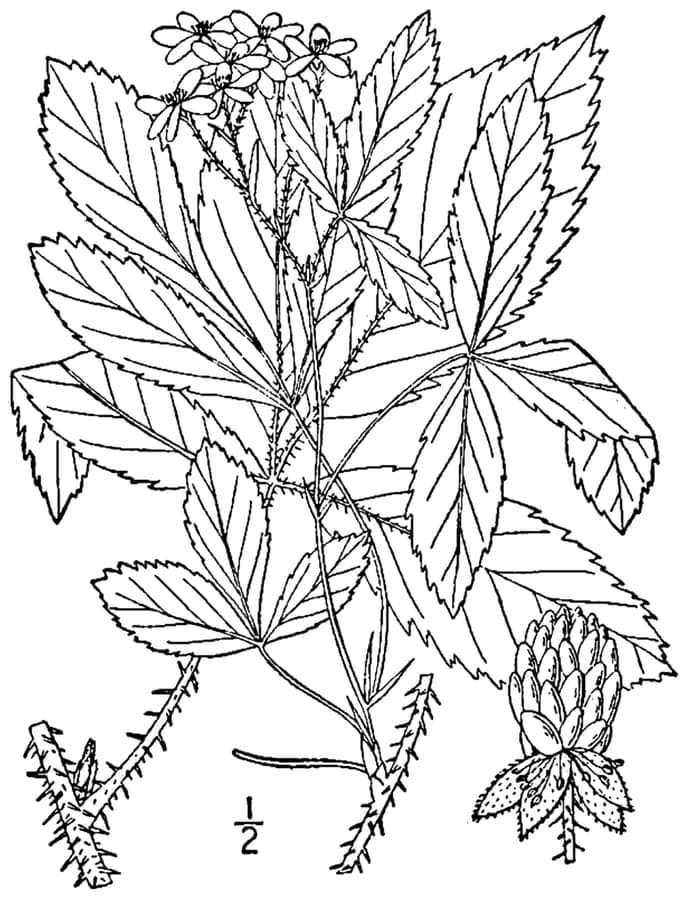
Britton, N.L., and A. Brown. 1913. An illustrated flora of the northern United States, Canada and the British Possessions. 3 vols. Charles Scribner's Sons, New York. Vol. 2: 279. Provided by Kentucky Native Plant Society. Scanned by Omnitek Inc. / Public domain, via Wikimedia Commons
Bristly Blackberry: complete guide
Rubus setosus
Want to see Bristly Blackberry: complete guide in your garden?
1 minute, no credit card
Overview
The bristly blackberry (Rubus setosus), also known as setose blackberry, is a North American native species from eastern Canada to North Carolina. This relatively compact bramble is an interesting transatlantic addition and thrives in temperate climates.
This bramble is known for its stiff, upright growth and delicate flowers. It offers a more elegant appearance than many other brambles and suits smaller gardens well.
Appearance and Bloom
The bristly blackberry grows as a compact shrub about 0.8 to 1.5 meters tall. The branches grow more vertically than horizontally, giving a neat, organized form. The thorns are numerous but not excessively long.
The leaves are bright green, three-parted and relatively small. They give fine texture to the plant. Flowers appear May to June in white to pale pink tones, growing in loose clusters. After blooming come black berries.
Ideal Location
The bristly blackberry grows best in full sun to partial shade. At least 5-6 hours sun daily leads to optimal blooming. In lower light it still grows well, but flowers are less abundant.
Its compact growth makes it perfect for small spaces, borders and even as a low screen. A spot where it doesn't crowd other plants is ideal.
Soil
The bristly blackberry is flexible regarding soil type but prefers well-draining earth. It accepts sandy, clayey and humus-rich soils alike.
Slightly acidic to neutral pH (6 to 7) is ideal. Adding some compost when planting helps growth. Heavy, permanently waterlogged soils avoid.
Free design
Want to see Bristly Blackberry: complete guide in your garden? Make a free design now.
Watering
After planting, watering during dry periods is important, especially in the first growing season. Once established it is quite drought-tolerant.
In normal summers usually no extra water needed. Only during extreme drought (more than 4 weeks) apply water.
Pruning
Pruning can be kept minimal. Remove only dead branches. If you prefer a more compact form, pruning in March works well.
The plant likes to grow freely, so avoid aggressive pruning.
Maintenance Calendar
February-March: Light pruning, check health. April-May: Growth and bloom period. June-July: Flowers and berries. August-October: Summer rest, water during drought. November-January: Winter preparation.
Winter Hardiness
The bristly blackberry is reasonably cold-hardy, down to about -10 to -15°C. In most regions no problems. In severe winters some leaf drop can occur, but the plant recovers in spring.
Companion Plants
The bristly blackberry grows well with similarly-sized shrubs. Combine with other North American natives or European wild greenery.
Closing
For those seeking a compact bramble with elegant growth, the bristly blackberry is a good choice. Find young plants at local nurseries or garden centers.
[Want more plant choices? Visit gardenworld.app for custom garden design!]
Want to see Bristly Blackberry: complete guide in your garden? Make a free design now.
Upload a photo, pick a style, and get a photorealistic design with plant list in under a minute.
10,000+ gardens designed already
No credit card required


Similar plants
Siberian crab apple: complete guide
Malus x robusta
Complete guide to the Siberian crab apple (Malus x robusta): location, soil, pruning, winter hardiness and the best companion plants for your garden.
Chinese flowering crabapple (Malus x spectabilis): complete guide
Malus x spectabilis
Meet the Chinese flowering crabapple (Malus x spectabilis): a classic spring bloomer with carmine buds and pink blossom.
Potentilla crassinervia: complete guide
Potentilla crassinervia
Potentilla crassinervia, the Corsican cinquefoil, grows wild on Corsica and Sardinia's peaks. Discover how to grow this hardy alpine rock garden gem.