
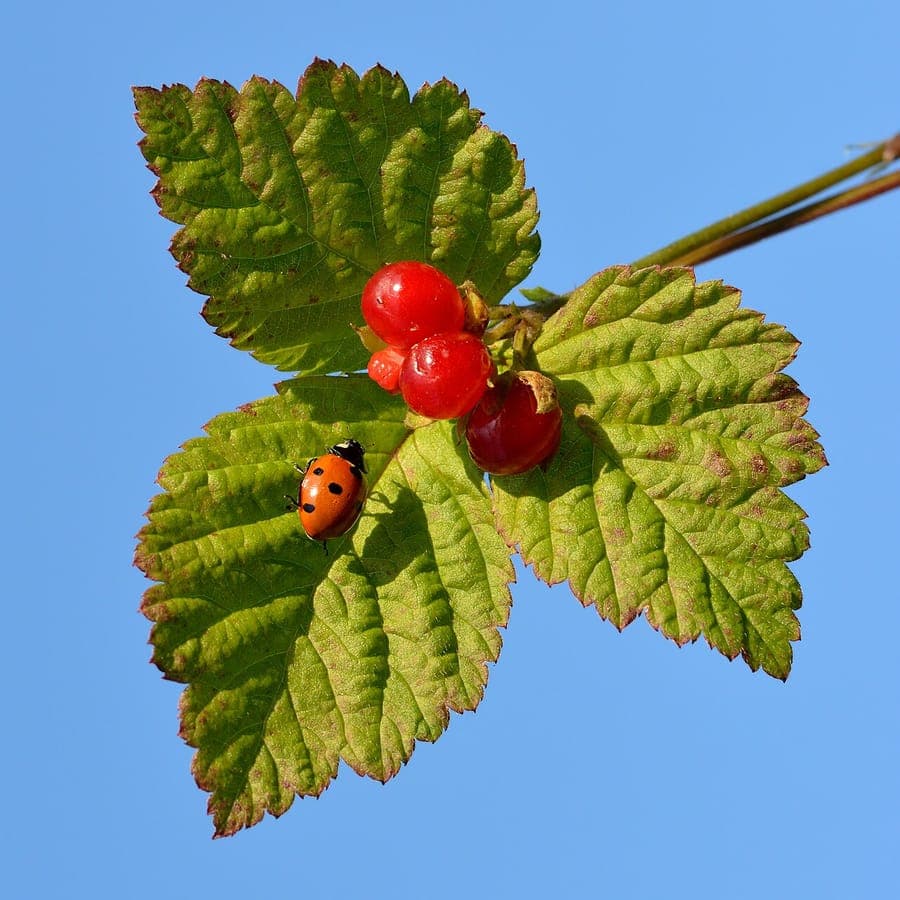
Ivar Leidus / CC BY-SA 4.0, via Wikimedia Commons
Stone bramble: complete guide
Rubus saxatilis
Want to see Stone bramble: complete guide in your garden?
1 minute, no credit card
Overview
Stone bramble, or Rubus saxatilis, is a quiet performer in the garden world – not flashy, but dependable. Unlike its thorny, invasive cousins, this member of the Rosaceae family behaves itself. It forms a neat, spreading patch, rarely exceeding 60 cm in height, with trailing stems reaching up to 1.2 meters. Native to rocky woodlands across Central and Eastern Europe, it's adapted to poor soils, partial shade, and well-drained conditions.
Hardy to USDA zone 4 (-34°C), it tolerates cold winters and thrives in temperate climates. It's not a fruiting bramble like the common blackberry, and its small red berries are more ornamental than edible. Still, the plant brings charm with its delicate white flowers in late spring and a tidy growth habit that fits well in structured yet natural-looking borders.
On gardenworld.app, you can design a planting scheme that integrates Stone bramble into shaded corners or rocky areas, balancing aesthetics with practicality.
Appearance & bloom cycle
The foliage is palmate, divided into three to five leaflets with serrated edges. The leaves are mid to dark green, slightly hairy underneath, and remain attractive through summer. In May, clusters of white flowers appear – usually three to five per cluster – each about 2 cm wide with five petals and a bright yellow center. They bloom through June and attract early pollinators like hoverflies, bees, and small butterflies.
After flowering, small, dry, red aggregate fruits may form, but they're not palatable. The plant doesn't sucker aggressively, so it won't take over your garden. Foliage persists into autumn, sometimes turning a soft yellow before dying back in late fall.
Ideal location
Aim for dappled shade to partial sun (light level 5/10). Full sun works only if the soil stays reliably moist, but too much sun in hot climates can scorch the leaves. A north- or east-facing slope, the base of a shrub hedge, or the edge of a woodland garden suits it best. It also performs well in rock gardens or between flagstones where its trailing stems can creep over edges.
Avoid south-facing, exposed spots unless you can provide afternoon shade. On gardenworld.app, use the sun mapping tool to pinpoint the ideal microclimate for your Stone bramble based on your garden's layout.
Soil requirements
This plant prefers neutral to slightly alkaline soil with a pH range of 7.0 to 7.5. It thrives in well-drained, rocky, or sandy loam. Heavy clay soils will need amending with grit, compost, and horticultural sand to improve drainage. Avoid acidic soils unless amended with lime.
It doesn't demand rich soil – in fact, overly fertile conditions may encourage leggy growth. A thin layer of leaf mold or compost in spring is sufficient for nutrient supply.
Free design
Want to see Stone bramble: complete guide in your garden? Make a free design now.
Watering
During the first growing season, water weekly to help establish roots. Once established, Stone bramble is moderately drought-tolerant. However, prolonged dry spells in summer may reduce flowering. Water deeply but infrequently during dry weeks, especially in sandy soils.
Avoid overhead watering if possible, as wet foliage can promote fungal issues. Morning watering at the base is best.
Pruning
Pruning is minimal. In early spring, before new growth starts, remove any dead, damaged, or overcrowded stems. You can trim back long runners to keep the plant within bounds, but it rarely requires hard cutting. Wear gloves – while the thorns are small, they can still snag skin.
No specific pruning technique is needed. Just tidy up as needed to maintain shape and airflow.
Maintenance calendar
- January: Dormant. No action.
- February: Check for winter damage. Remove any dead stems.
- March: Apply a light compost layer. No fertilizer needed.
- April: New shoots emerge. Watch for slugs.
- May: Flowering begins. Monitor for pests.
- June: Peak bloom. Support trailing stems if needed.
- July: Flowers fade. No further care required.
- August: Minimal growth. Water during dry spells.
- September: Foliage remains stable.
- October: Leaves may yellow slightly.
- November: Cut back any unsightly stems. Leave debris for winter insulation.
- December: Dormant. Protect container plants in harsh zones.
Winter hardiness
Hardy to USDA zone 4, Stone bramble survives freezing temperatures with ease. Top growth may die back in severe winters, but the plant reliably re-sprouts from the roots in spring. No winter protection is needed in-ground, though potted plants may benefit from mulch or a sheltered spot.
Companion plants
Pair with shade-tolerant groundcovers like Epimedium, Pachysandra, or barrenwort. It also works well with early spring bulbs such as snowdrops or bluebells. In a woodland setting, combine with ferns, Heuchera, or Tiarella. Avoid invasive spreaders like periwinkle or bishop's weed.
Space plants 40–50 cm apart to allow for natural spreading without overcrowding.
Closing
Rubus saxatilis is an underrated gem for low-maintenance, wildlife-friendly gardens. Its modest flowers, neat habit, and resilience make it ideal for slopes, rockeries, or underplanting shrubs. It's not found in every garden centre, but look for it in spring at local independent nurseries or online retailers. In the UK and US, check garden centres during the planting season.
With the right conditions and a bit of patience, Stone bramble becomes a subtle yet reliable presence in your garden. For layout inspiration, explore planting combinations on gardenworld.app tailored to native, rock, or woodland gardens.
Want to see Stone bramble: complete guide in your garden? Make a free design now.
Upload a photo, pick a style, and get a photorealistic design with plant list in under a minute.
No credit card required


Similar plants
Siberian crab apple: complete guide
Malus x robusta
Complete guide to the Siberian crab apple (Malus x robusta): location, soil, pruning, winter hardiness and the best companion plants for your garden.
Chinese flowering crabapple (Malus x spectabilis): complete guide
Malus x spectabilis
Meet the Chinese flowering crabapple (Malus x spectabilis): a classic spring bloomer with carmine buds and pink blossom.
Potentilla crassinervia: complete guide
Potentilla crassinervia
Potentilla crassinervia, the Corsican cinquefoil, grows wild on Corsica and Sardinia's peaks. Discover how to grow this hardy alpine rock garden gem.