
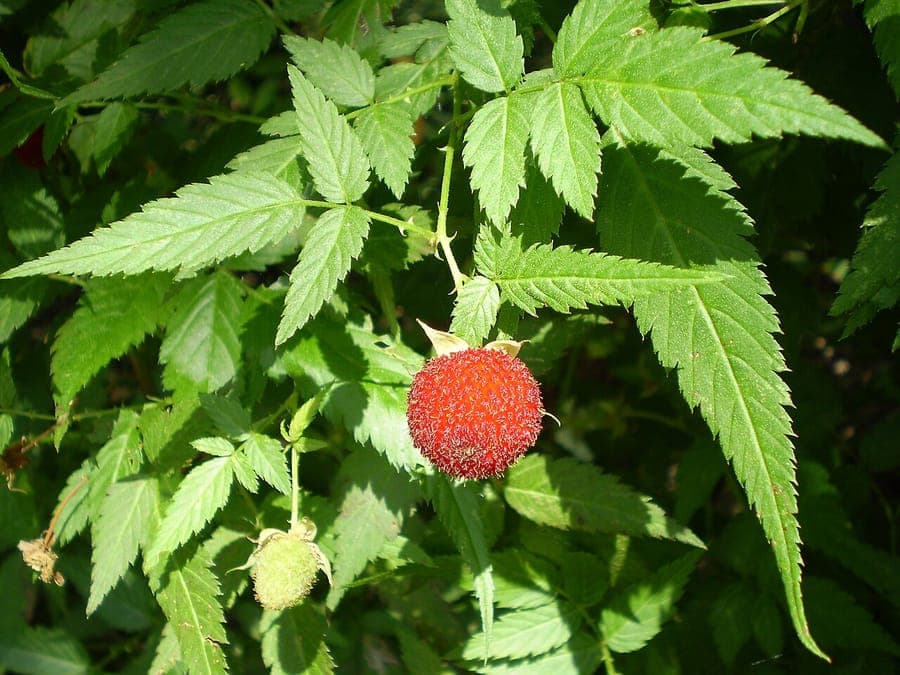
John Moss / Public domain, via Wikimedia Commons
Rubus rosifolius: complete guide
Rubus rosifolius
Want to see Rubus rosifolius: complete guide in your garden?
1 minute, no credit card
Overview
Rubus rosifolius, commonly known as Mauritius raspberry or rose-leaf bramble, is a fascinating ornamental shrub native to the tropical regions of Asia. This plant is renowned for its striking rose-red foliage and delicate, silky flowers in white to pink hues. In Northern Europe and beyond, this plant has become increasingly popular as an indoor specimen and feature plant for tropical garden design.
The plant grows as a compact shrub, reaching heights of 60 to 150 centimeters. Its rapid growth and ornamental foliage make it an interesting choice for plant enthusiasts seeking unconventional specimens. In warm climates, Mauritius raspberry can grow outdoors, but in cooler regions it thrives best in protected locations.
Appearance and Bloom
The most distinctive feature of Mauritius raspberry is its foliage. The leaves have a characteristic rose-red color, particularly on young shoots. As the leaves mature, the color transitions to deep green with red veining. The finely serrated leaf margins give the plant an elegant appearance.
Flowers appear in clusters from April through August. They measure approximately 2 centimeters in diameter with five white to soft pink petals and golden stamens in the center. After flowering, raspberry-like fruits develop in shades of red to black.
Ideal Location
Mauritius raspberry thrives in a bright location but prefers protection from direct sun during the hottest hours. A spot with dappled shade is ideal. In its native habitat, the plant grows in the understory of tropical forests. In the garden, choose a location where the plant receives sun in the morning or evening.
Ensure the plant is sheltered from strong winds, which can damage the delicate foliage. A protected spot against a wall or beneath larger plants is recommended.
Soil
Mauritius raspberry requires nutrient-rich, well-draining soil. A mixture of garden soil and compost works perfectly. The soil pH should range between 5.5 and 6.5. Keep the soil consistently moist but not waterlogged. Potting soil is excellent if you wish to grow the plant in a container.
Avoid waterlogging, as this leads to root rot. If you have heavy clay soil, add sand or perlite for improved drainage.
Free design
Want to see Rubus rosifolius: complete guide in your garden? Make a free design now.
Watering
Mauritius raspberry requires regular watering. During the growing season (May to October), keep the soil evenly moist. Ensure the plant is never standing in water but also never completely dries out. In winter, reduce watering, especially if the plant is in cooler conditions.
Regularly check soil moisture by inserting your finger 2 centimeters deep. If it feels dry, it's time to water. Preferably use rainwater rather than tap water, as tap water may contain lime unsuitable for this plant.
Pruning
Mauritius raspberry grows fairly compact and requires minimal pruning. In spring, remove dead or damaged branches. After flowering, you can lightly shape the plant, but avoid aggressive pruning. The plant draws much of its strength from its foliage, so excessive pruning can hinder growth.
Regularly remove spent flowers to encourage the plant to direct energy toward new blooms and growth.
Maintenance Calendar
March/April: Inspect for pests and diseases. Position in bright location. Increase watering.
May to August: Water regularly. Feed biweekly. Remove spent flowers.
September: Gradually reduce watering. Check plant health.
October to February: Minimal watering. No feeding. Protect from cold.
Winter Hardiness
Mauritius raspberry is not winter hardy in cool climates. The plant must be overwintered indoors or in a protected greenhouse environment. Potted specimens can be easily moved indoors before winter. Maintain minimum temperatures of 10-15 degrees Celsius.
If you place the plant outdoors in summer, bring it inside around late September before the first frosts arrive.
Companion Plants
Mauritius raspberry looks lovely combined with other tropical plants such as Hibiscus and Abutilon. In mixed borders under glass, combine this plant with other ornamental shrubs and ferns. The rose-red foliage creates a beautiful contrast with silver-white foliage of plants like Plectranthus.
Conclusion
Mauritius raspberry is a stunning plant for enthusiastic gardeners who love tropical beauty. With proper care and attention, this plant will provide years of ornamental value. Visit your local garden center or explore gardenworld.app for design inspiration and tropical garden ideas.
Want to see Rubus rosifolius: complete guide in your garden? Make a free design now.
Upload a photo, pick a style, and get a photorealistic design with plant list in under a minute.
No credit card required


Similar plants
Siberian crab apple: complete guide
Malus x robusta
Complete guide to the Siberian crab apple (Malus x robusta): location, soil, pruning, winter hardiness and the best companion plants for your garden.
Chinese flowering crabapple (Malus x spectabilis): complete guide
Malus x spectabilis
Meet the Chinese flowering crabapple (Malus x spectabilis): a classic spring bloomer with carmine buds and pink blossom.
Potentilla crassinervia: complete guide
Potentilla crassinervia
Potentilla crassinervia, the Corsican cinquefoil, grows wild on Corsica and Sardinia's peaks. Discover how to grow this hardy alpine rock garden gem.