
Nadiatalent / Public domain, via Wikimedia Commons
Rubus parvifolius: complete guide
Rubus parvifolius
Want to see Rubus parvifolius: complete guide in your garden?
1 minute, no credit card
Rubus parvifolius, commonly known as Japanese raspberry or small-leaf bramble, is an elegant East Asian bramble species native to Japan, China, Korea, and surrounding regions. This charming shrub distinguishes itself from many other bramble types through its compact growth habit, fine foliage, and pleasantly colored fruit, making it far more garden-suitable than its North American relatives.
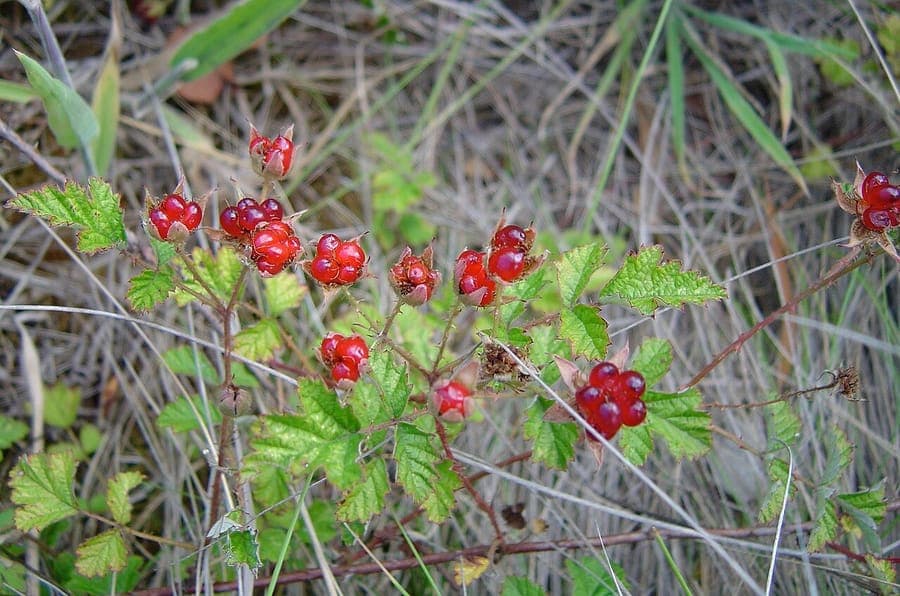
The plant forms a compact, densely branched trailing shrub normally reaching 50 to 100 centimeters in height with a spread of 1 to 1.5 meters. Unlike many other Rubus species, the stems of Rubus parvifolius are sparsely armed, featuring fine hooks rather than large thorns, making pruning and maintenance significantly safer and more pleasant. The leaves are small, narrow, and remain green throughout the growing season in temperate climates.
The flowers are small, pink to white, and appear in May-June along all stems. Following pollination, the plant produces numerous small fruits in June-August. Each fruit is diminutive, approximately 0.5 to 1 centimeter in diameter, yet extraordinarily abundant. The unripe fruits are red to orange, ripening to deep purple or nearly black. The flavor is mild, slightly tart, and very pleasant, lacking the assertive aromatic character of many bramble varieties. The fruits attract birds and are edible.
Rubus parvifolius thrives in zones 5 to 9 (USDA), meaning it grows excellently throughout the Netherlands, Belgium, and southern Germany. In zone 4, the plant may suffer winter damage during severe freezes, though it typically regenerates from root crowns in spring. Following hard winters, temporary damage may occur, but complete recovery is normal.
The plant prefers partial shade to full sun, requiring at least 3 to 4 hours of direct sunlight daily for good flowering and fruiting. It tolerates poor to moderately fertile, well-drained soils and even thrives on impoverished sandy soils. Excessive fertilization can promote excessive foliage growth and diminish fruiting. The plant is highly drought-tolerant once established.
Watering is particularly important for young plants, requiring at least 2.5 centimeters weekly during establishment periods. Once naturalized, the plant sustains itself on rainfall in central and northern Europe. In dry summers during July-August, supplemental watering can enhance fruit quality.
Light pruning can occur in April to remove winter-damaged foliage, though aggressive cutting is unnecessary. The plant responds well to moderate pruning following bloom if size containment is desired. Removing some of the oldest canes every three years stimulates vigorous new growth.
Rubus parvifolius combines beautifully with other Asian ground covers such as Vinca, Asarum, Liriope, and small Hostas. The delicate leaf forms also work effectively as a backdrop for small flowering plants in the foreground.
Nederland offers limited availability of Rubus parvifolius in retail garden centers, as emphasis typically focuses on North American bramble cultivars. However, specialized nurseries in Belgium and the Netherlands maintain this ornamental regularly in stock. Major chains may occasionally source suppliers through special order.
Rubus parvifolius proves exceptionally suited for Japanese gardens, rock gardens, and shaded plantings where larger bramble species would prove overly aggressive. With compact growth, refined foliage, pleasant fruit, and bird value, it represents an excellent ornamental alternative to standard blackberry and raspberry cultivars.
Want to see Rubus parvifolius: complete guide in your garden? Make a free design now.
Upload a photo, pick a style, and get a photorealistic design with plant list in under a minute.
No credit card required


Similar plants
Siberian crab apple: complete guide
Malus x robusta
Complete guide to the Siberian crab apple (Malus x robusta): location, soil, pruning, winter hardiness and the best companion plants for your garden.
Chinese flowering crabapple (Malus x spectabilis): complete guide
Malus x spectabilis
Meet the Chinese flowering crabapple (Malus x spectabilis): a classic spring bloomer with carmine buds and pink blossom.
Potentilla crassinervia: complete guide
Potentilla crassinervia
Potentilla crassinervia, the Corsican cinquefoil, grows wild on Corsica and Sardinia's peaks. Discover how to grow this hardy alpine rock garden gem.