
Walter Siegmund (talk) / CC BY-SA 3.0, via Wikimedia Commons
Thimbleberry: complete guide
Rubus nutkanus
Want to see Thimbleberry: complete guide in your garden?
1 minute, no credit card
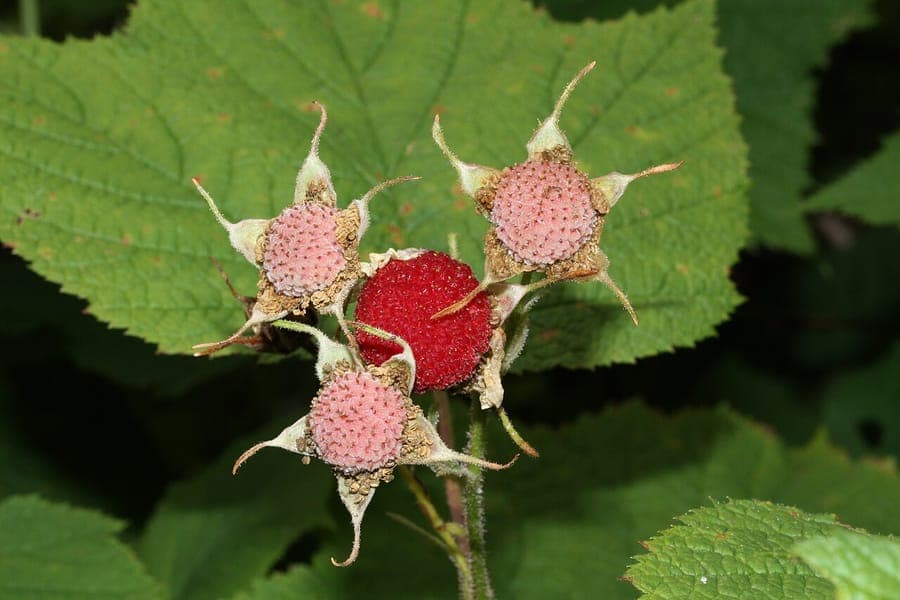
Rubus nutkanus, known as thimbleberry, western thimbleberry, or sparse-flowered thimbleberry, is a native North American shrub ranging from Alaska to western and eastern USA and northern Mexico. This plant is celebrated for its spectacular large flowers and delicious red edible berries. The plant spreads via rhizomes, easily forming clumps and providing wildlife habitat.
Overview and Heritage
Rubus nutkanus is named after the Nutka Indians of Vancouver Island. The plant grows as a fast-growing subshrub with rhizomatous root systems. The beautiful white flowers and juicy red fruits have made this plant valuable to indigenous peoples and now to modern gardeners. The species has naturalized in Europe where it occasionally escapes cultivation.
Appearance and Blooming
This is a beautiful plant featuring large, broadly palmately-lobed leaves and very distinctive flowers. Blooms reach 5cm across, pure white with yellow stamens, highly ornamental. Flowering is profuse from May through July. After blooming, red fruits form resembling raspberries, very tasty and nutritious, ripening in August-September.
Ideal Location
The plant thrives in full sun to half-shade. Minimum four hours daily sun needed for good flowering. Protection from intense afternoon sun in hot climates is welcome. The plant tolerates moisture-rich environments well. Ensure good air circulation to prevent fungal diseases. Plant where you can manage the spreading growth via rhizomes.
Soil and Nutrition
Rubus nutkanus is undemanding and grows in nearly all soils from acidic to neutral (pH 4.8-7.2). Well-draining soil promotes healthy growth. Prefers soil that is moist but not waterlogged. Add compost or peat at planting. Annual spring fertilizing with balanced fertilizer or specific bramble fertilizer enhances productivity. Organic mulch around plant aids moisture retention.
Watering and Moisture Management
Provide regular water, especially during dry summer months. The plant prefers moist soil surface but not soggy conditions. Deep watering less frequently beats shallow daily watering. Mulch aids moisture retention and regulates temperature. In rainy years supplemental water may not be needed. Regular monitoring for excessive moisture around base is recommended.
Pruning and Formation
Pruning aids structure and health. Prune in late winter (January-February) before growth begins. Remove all dead, damaged, or weak wood. Thin old canes by cutting to ground level. This stimulates strong new growth. After two years canes can be shortened for more compact plants. Leave fruit-bearing branches intact during the season.
Maintenance Calendar
Spring (March-April): New growth emerges, fertilize, monitor for disease. Summer (May-August): Bloom and fruit-set, water regularly, optionally deadhead. Fall (September-October): Fruit harvest, reduce water, prepare for winter. Winter (November-February): Prune, no water or feeding needed.
Winter Hardiness
Rubus nutkanus is very hardy, withstanding temperatures to -20 degrees Celsius. This makes it suitable for northern regions. Bare canes after severe winters are normal; new growth will emerge. The plant may partially freeze in very harsh winters but regrows from roots.
Fruits and Harvesting
The red fruits are delicious eaten fresh directly from the plant. They ripen when deeply red, approximately August through September. Harvest carefully as fruits are delicate. Berries can be eaten fresh, cooked into jam, or frozen. The plant produces abundantly in well-lit sunny locations.
Companion Plants
Pairs well with other berry-producing shrubs like elderberry and sea buckthorn. In bird-friendly gardens add seed-producing plants like sunflowers and teasels. Lower-growing combinations include sedum, marjoram, and lavender.
Conclusion
Rubus nutkanus provides far more than flowers: bird food, fruit harvest, and erosion control through rhizomatous growth. For gardeners seeking ornamental and productive plants, this is a unique native option. Available from specialized nurseries. Design your garden with gardenworld.app and include this berry shrub. More plant guides at gardenworld.app.
Want to see Thimbleberry: complete guide in your garden? Make a free design now.
Upload a photo, pick a style, and get a photorealistic design with plant list in under a minute.
No credit card required


Similar plants
Siberian crab apple: complete guide
Malus x robusta
Complete guide to the Siberian crab apple (Malus x robusta): location, soil, pruning, winter hardiness and the best companion plants for your garden.
Chinese flowering crabapple (Malus x spectabilis): complete guide
Malus x spectabilis
Meet the Chinese flowering crabapple (Malus x spectabilis): a classic spring bloomer with carmine buds and pink blossom.
Potentilla crassinervia: complete guide
Potentilla crassinervia
Potentilla crassinervia, the Corsican cinquefoil, grows wild on Corsica and Sardinia's peaks. Discover how to grow this hardy alpine rock garden gem.