
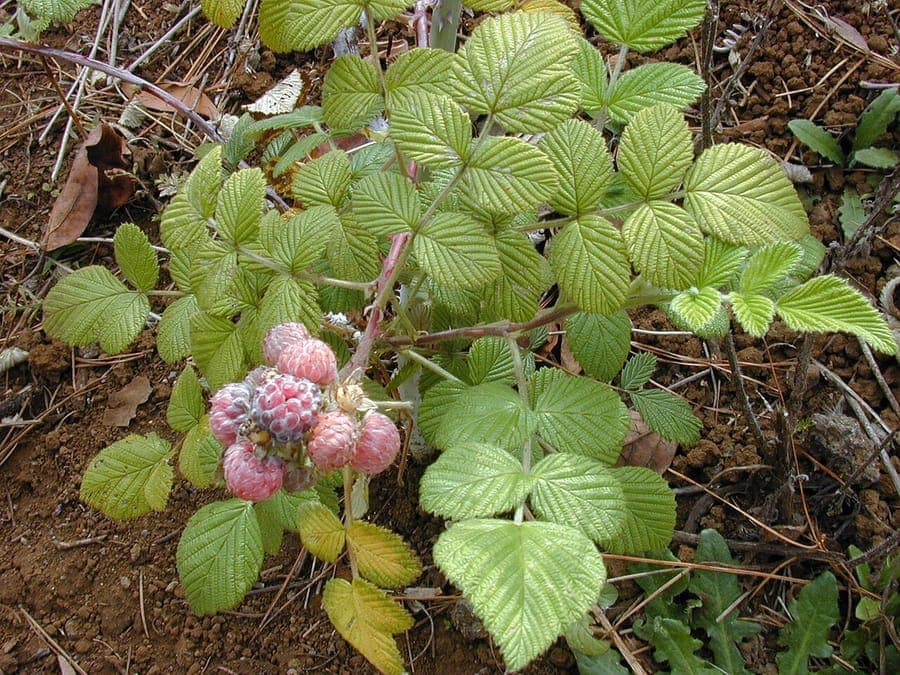
Forest & Kim Starr / CC BY 3.0, via Wikimedia Commons
Hill raspberry: complete guide
Rubus niveus
Want to see Hill raspberry: complete guide in your garden?
1 minute, no credit card
Overview
Rubus niveus, commonly known as hill raspberry, is a resilient subshrub from the Rosaceae family that thrives in temperate climates. Native to mountainous regions across South and Southeast Asia - including Nepal, India, Myanmar, and parts of China - it's a surprisingly adaptable plant for UK and North European gardens. Unlike traditional raspberries, this species forms dense, arching canes up to 3 meters tall, with a semi-trailing habit perfect for natural fencing or softening boundaries. It's not widely available yet, but its hardiness and productivity make it a hidden gem for gardeners seeking edible, low-effort plants.
On gardenworld.app, you can design a planting plan that integrates hill raspberry into a productive wildlife hedge, balancing structure and seasonal interest.
Appearance & bloom cycle
Hill raspberry features compound, glossy green leaves with a soft, whitish underside, giving foliage a subtle two-tone effect. From April to June, clusters of small white flowers, about 2–3 cm wide, appear along the canes. These attract bees, hoverflies, and other pollinators. By July, elongated red to deep purple berries, 2–3 cm long, begin to ripen. They're juicy with a sweet-tart flavour - excellent fresh, in jams, or baked into tarts. Unlike cultivated raspberries, the fruit matures over an extended period, offering harvests from midsummer through early autumn.
The plant follows a biennial fruiting pattern: canes grow vegetatively in year one and produce fruit in year two before dying back. This cycle means careful pruning is essential to maintain yields.
Ideal location
Plant hill raspberry in full sun to partial shade. For best fruiting, aim for at least 6 hours of direct sunlight daily. It thrives when trained against wooden fences, wire mesh, or trellises. Space plants 1.5 meters apart to allow airflow and reduce fungal risks. It's ideal for the back of borders, woodland edges, or as a soft barrier along property lines.
In smaller gardens, grow it in a large container (at least 40 cm wide) using a soil-based compost. Support the canes with a bamboo frame or small trellis. On gardenworld.app, see how it pairs with other bramble fruits in compact edible garden layouts.
Soil requirements
It tolerates a range of soils but performs best in moist, well-drained loam with a pH between 5.5 and 6.8. Avoid waterlogged clay unless amended with grit and compost. At planting, mix in a bucket of well-rotted manure or garden compost to boost fertility. A mulch of leaf mould or compost applied in spring helps retain moisture and suppress weeds.
Free design
Want to see Hill raspberry: complete guide in your garden? Make a free design now.
Watering
During the first growing season, water deeply twice a week in dry spells - about 10 litres per plant. Once established, it's moderately drought-tolerant but benefits from weekly watering during prolonged dry periods, especially when fruiting. Always water at the base to prevent foliar diseases like mildew.
Pruning
Prune immediately after fruiting in autumn (October–November). Cut down all canes that have borne fruit to 10–15 cm above ground level. These won't fruit again. In early spring (March), thin out weak or crowded new canes, leaving 5–7 strong ones per plant. This improves air circulation and encourages larger berries. Wear thick gloves - the stems have small thorns that can scratch.
Maintenance calendar
- January: inspect for winter damage, remove broken stems
- February: apply slow-release organic fertiliser if soil is poor
- March: thin new canes, check for pests
- April: flowering begins, watch for aphids
- May: peak bloom, support tall canes
- June: fruit sets, maintain consistent moisture
- July: first harvest, check for birds and fruit rot
- August: ongoing harvest, water during dry spells
- September: final picking, prepare for pruning
- October: cut back fruited canes, clear fallen leaves
- November: mulch root zone with compost or straw
- December: dormant period, no action needed
Winter hardiness
Hill raspberry is hardy in USDA zones 8–10. In most of the UK and western Europe (zone 8b), it survives winter without protection. In colder microclimates or exposed sites, mulching the base helps protect the crown. Top growth may die back in harsh winters, but the plant usually regrows from the roots in spring. Potted plants should be moved to a sheltered spot or insulated.
Companion plants
Grow hill raspberry alongside other brambles like blackberry or loganberry for a productive fruiting hedge. Underplant with chives, oregano, or comfrey - their presence deters pests and enriches soil. Avoid planting near aggressive spreaders like mint, which can crowd out young canes. It also combines well with flowering perennials such as echinacea or verbena bonariensis, adding pollinator appeal.
Closing
Rubus niveus is a low-maintenance, high-reward plant that brings beauty and bounty to the garden. With proper pruning and a sunny spot, you'll enjoy years of harvests and natural screening. Its subtle elegance and resilience make it a smart choice for modern edible landscapes. You can find hill raspberry at garden centres like those in the UK, and occasionally at specialist nurseries. Try it in a mixed fruit border - it's a conversation starter and a kitchen favourite. Look for it under 'Mysore raspberry' or 'hill raspberry' - and don't overlook its potential in your next garden redesign.
Want to see Hill raspberry: complete guide in your garden? Make a free design now.
Upload a photo, pick a style, and get a photorealistic design with plant list in under a minute.
No credit card required


Similar plants
Siberian crab apple: complete guide
Malus x robusta
Complete guide to the Siberian crab apple (Malus x robusta): location, soil, pruning, winter hardiness and the best companion plants for your garden.
Chinese flowering crabapple (Malus x spectabilis): complete guide
Malus x spectabilis
Meet the Chinese flowering crabapple (Malus x spectabilis): a classic spring bloomer with carmine buds and pink blossom.
Potentilla crassinervia: complete guide
Potentilla crassinervia
Potentilla crassinervia, the Corsican cinquefoil, grows wild on Corsica and Sardinia's peaks. Discover how to grow this hardy alpine rock garden gem.