
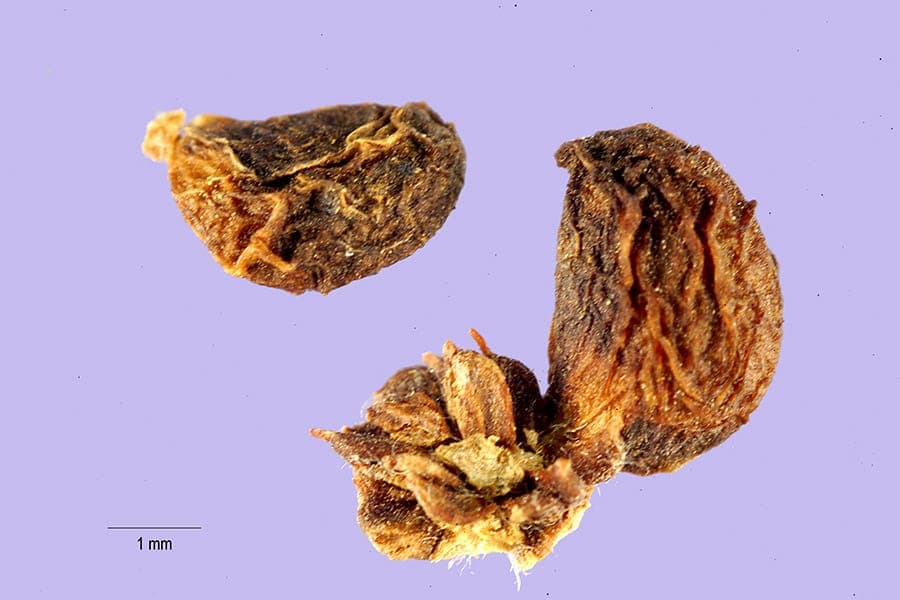
Tracey Slotta @ USDA-NRCS PLANTS Database / Public domain, via Wikimedia Commons
Largeleaf blackberry: complete guide
Rubus macrophyllus
Want to see Largeleaf blackberry: complete guide in your garden?
1 minute, no credit card
Overview
Rubus macrophyllus, commonly known as largeleaf blackberry, is a modest yet resilient subshrub native to woodlands across central and western Europe, including the UK. Unlike its thorny, sprawling cousins, this species spreads gently via underground rhizomes and forms low, dense patches in shady areas. It's perfect for gardeners wanting a naturalistic groundcover that supports local ecology without taking over. While not grown for commercial fruit, its presence attracts pollinators and offers late-summer food for birds.
On gardenworld.app, you can simulate how this plant fills in shaded corners of your garden, blending with ferns and wildflowers for a seamless woodland aesthetic. It's not flashy, but it's dependable - a quiet workhorse in ecological planting schemes.
Appearance & bloom cycle
True to its name, Rubus macrophyllus boasts some of the largest leaves in the Rubus genus, reaching up to 30 cm in length. The foliage is palmate with five to seven deep lobes, dark green on top, and covered in dense, silvery-white hairs underneath, giving it a soft, felt-like texture. In late spring to early summer (late May through June), loose clusters of small white flowers, about 2–3 cm wide, emerge. These are not fragrant but are highly attractive to pollinators like hoverflies and solitary bees.
By late August to September, the flowers develop into dark purple to black drupes, roughly 1.5 cm long. The berries are edible but bland compared to cultivated blackberries. Still, they're an important food source for birds such as thrushes and blackcaps. After fruiting, the plant gradually loses its leaves by late autumn.
Ideal location
This plant thrives in partial to full shade (light level 5/10), making it ideal for north- or east-facing borders, under deciduous trees like beech or hornbeam, or along woodland edges. Avoid full sun - it causes leaf scorch and stunts growth. Too much shade, however, reduces flowering and fruit set. A dappled light environment mimics its natural habitat and produces the healthiest growth.
It's also effective in urban gardens where paving or buildings create shaded microclimates. Use it to cover bare soil under shrubs or along shaded pathways. On gardenworld.app, you can visualize how this plant integrates into layered planting designs, especially in low-light zones where few others succeed.
Soil requirements
Largeleaf blackberry prefers moist, well-drained loam or clay-loam soils with a pH between 6.5 and 7.0. It tolerates mild acidity but performs best in neutral conditions. Avoid waterlogged soils - while it likes consistent moisture, stagnant water leads to root rot. Do not enrich the soil with heavy compost or manure; this plant evolved in moderately fertile woodland soils and responds poorly to high nitrogen levels, which promote weak, disease-prone growth.
If planting in sandy soil, amend with leaf mould or well-rotted garden compost to improve water retention. For heavy clay, add grit to enhance drainage. A 5–10 cm mulch of leaf litter in autumn helps maintain moisture and gradually feeds the soil.
Free design
Want to see Largeleaf blackberry: complete guide in your garden? Make a free design now.
Watering
During the first growing season (March to June), water weekly with 5–8 litres per plant, especially during dry spells. Once established (after year one), it becomes moderately drought-tolerant but still benefits from occasional deep watering in prolonged dry periods. Keep soil evenly moist in summer to support fruit development. Avoid overhead watering to reduce fungal disease risk.
Pruning
Pruning is minimal. In early spring (February–March), remove any dead, damaged, or overcrowded stems at ground level. Do not cut back healthy canes - they are biennial and fruit in their second year. Use clean, sharp secateurs to prevent disease spread.
If the plant spreads beyond its desired area, trim the outer edges in late winter. Avoid aggressive cutting; this species recovers slowly. Do not confuse it with invasive brambles - Rubus macrophyllus is well-behaved and non-thorny.
Maintenance calendar
- Jan: Check for rodent damage; no other action needed
- Feb: Remove dead stems; prepare for spring growth
- Mar: Plant new specimens in shaded, moist areas
- Apr: Watch for slugs - young shoots are vulnerable
- May: Plant begins flowering; monitor for pests
- Jun: Peak bloom; pollinators active
- Jul: Fruits developing; maintain moisture
- Aug: Berries ripen; reduce watering if rain is regular
- Sep: Fruit drops; clear fallen debris lightly
- Oct: Collect seed or propagate by division
- Nov: Leave leaf litter as natural mulch
- Dec: Dormant; no care required
Winter hardiness
Hardy in USDA zones 5–8, Rubus macrophyllus withstands winter temperatures down to -20°C. Above-ground stems may die back in harsh winters, but the plant reliably re-sprouts from rhizomes in spring. No winter protection is needed, even in wet conditions. A natural layer of fallen leaves offers sufficient insulation.
Companion plants
Pair with shade-loving perennials like Anemone nemorosa, Geranium phaeum, Dryopteris filix-mas, and Carex sylvatica. Avoid aggressive spreaders like Hedera helix or Gunnera. This plant fits well in woodland gardens, shaded slopes, or naturalized areas. Its subtle texture complements bold foliage and fine grasses.
Closing
The largeleaf blackberry isn't a headline plant, but a quiet achiever in ecological gardens. It asks for little, gives back much, and thrives where other plants struggle. Find it at garden centres across the UK in spring, typically sold in 1–2 litre pots. Be sure to check the label - it's sometimes mislabelled as Rubus pinnatus or Rubus caesius. With proper placement in shade and decent soil, it will persist for years with almost no upkeep. For design inspiration, visit gardenworld.app to map out a native, low-maintenance planting scheme centred around this understated gem.
Want to see Largeleaf blackberry: complete guide in your garden? Make a free design now.
Upload a photo, pick a style, and get a photorealistic design with plant list in under a minute.
No credit card required


Similar plants
Siberian crab apple: complete guide
Malus x robusta
Complete guide to the Siberian crab apple (Malus x robusta): location, soil, pruning, winter hardiness and the best companion plants for your garden.
Chinese flowering crabapple (Malus x spectabilis): complete guide
Malus x spectabilis
Meet the Chinese flowering crabapple (Malus x spectabilis): a classic spring bloomer with carmine buds and pink blossom.
Potentilla crassinervia: complete guide
Potentilla crassinervia
Potentilla crassinervia, the Corsican cinquefoil, grows wild on Corsica and Sardinia's peaks. Discover how to grow this hardy alpine rock garden gem.