
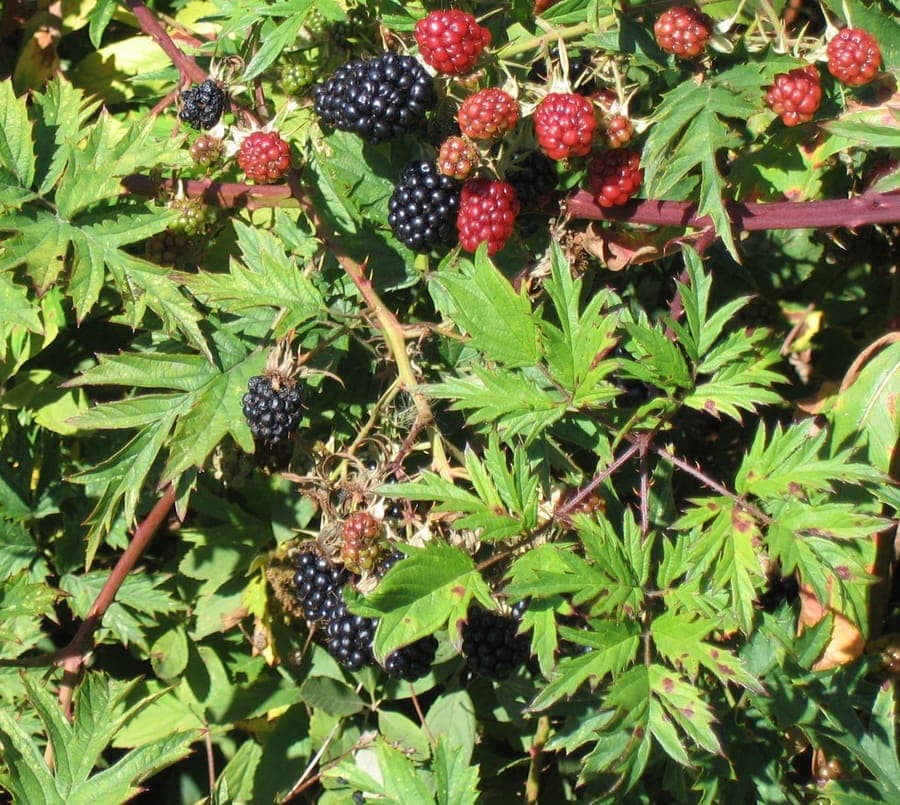
Meggar / CC BY-SA 3.0, via Wikimedia Commons
Cutleaf blackberry: complete guide
Rubus laciniatus
Want to see Cutleaf blackberry: complete guide in your garden?
1 minute, no credit card
Overview
Rubus laciniatus, commonly known as cutleaf blackberry, is a fast-spreading perennial in the Rosaceae family. It's not your average garden bramble - this plant has attitude. Native to parts of Europe and western Asia, it's now naturalised across much of North America and thrives in disturbed soils, forest edges, and neglected corners. In the garden, it can be a valuable asset if managed correctly, but left unchecked, it becomes a thorny problem.
The plant spreads through underground rhizomes and seed dispersal, often via birds that eat the berries. Each cane grows rapidly in its first year, reaching 2 to 3 metres in length. These first-year canes (primocanes) don't flower. In the second year, they become floricanes, producing flowers and fruit before dying back. Understanding this two-year cycle is crucial for effective care.
On gardenworld.app, you can map out exactly where to plant cutleaf blackberry so it doesn't invade your prized perennials. It's best suited for wild corners, boundary hedges, or as a natural screen.
Appearance & bloom cycle
The cutleaf blackberry earns its name from its deeply dissected, parsley-like leaves. Each leaf has 5–7 narrow, toothed lobes, giving it a lacy, almost ferny appearance. Young stems are green to purplish with stiff yellow prickles; mature canes turn woody and brown. The plant has an arching, scrambling habit and will climb over nearby shrubs or fences using its thorns.
Flowering occurs from May to July, depending on climate. The flowers are white, about 2–3 cm wide, with five petals and a cluster of golden stamens. They attract bees, hoverflies, and other pollinators. After pollination, green berries form and ripen to a glossy black from late August to September. The berries are edible but often drier and less sweet than commercial blackberries.
Birds love them, and so do adventurous foragers. Just wear thick gloves when harvesting - the thorns are no joke.
Ideal location
Cutleaf blackberry thrives in full sun to partial shade. For best fruiting, plant in a spot with at least 6 hours of direct sunlight daily. In heavy shade, it becomes leggy and produces fewer flowers. It's ideal for the back of a border, along a property line, or tucked behind a mixed shrub hedge.
Give it space to roam - at least 1.5 metres clearance from other plants. It's not a specimen for small cottage gardens unless tightly controlled. Use it to stabilise banks or cover an old fence. Avoid planting near climbing roses or delicate perennials.
On gardenworld.app, you can simulate its growth over three years and see how it interacts with neighbouring plants. This helps avoid future headaches.
Soil requirements
This bramble isn't picky. It grows in sandy, loamy, or clay soils, as long as drainage is decent. Ideal pH ranges from 5.5 to 7.0 - slightly acidic to neutral. It tolerates poor soils and moderate compaction, making it useful for reclaiming neglected areas.
No fertiliser needed. In fact, feeding it can lead to excessive vegetative growth and fewer berries. A light top dressing of compost in early spring is enough. Avoid high-nitrogen feeds at all costs.
Free design
Want to see Cutleaf blackberry: complete guide in your garden? Make a free design now.
Watering
Once established, cutleaf blackberry is drought-tolerant. During the first growing season, water weekly with about 10 litres per plant, especially in dry spells. After that, it relies on natural rainfall except in prolonged droughts (4+ weeks without rain).
Avoid overhead watering if possible - wet foliage encourages fungal issues. Use a soaker hose at the base instead. Rainwater is preferred, as the plant dislikes highly chlorinated or alkaline tap water.
Pruning
Pruning is non-negotiable. Without it, the plant becomes an impenetrable thicket. Prune in late winter or early spring (February–March). Remove all second-year canes that have fruited - cut them to 5 cm above ground. Keep 6–8 healthy primocanes per clump for next season's crop.
Trim back lateral shoots that threaten nearby plants. Use heavy-duty gloves and long-handled loppers. Dispose of fruited canes carefully - don't compost them if berries are still attached, as seeds may sprout.
Maintenance calendar
- January: Minimal activity. Check for winter damage.
- February–March: Prune old canes. Thin out overcrowded shoots.
- April–May: Watch for new primocanes. Remove unwanted runners at the roots.
- June–July: Flowering phase. No extra care needed.
- August–September: Berries ripen. Harvest with gloves.
- October–November: Remove any remaining fruiting canes. Prevent seed spread.
- December: Winter rest. No action required.
Winter hardiness
Cutleaf blackberry is hardy in USDA zones 5 to 9 (-20°C to -1°C). The root system survives freezing temperatures, though top growth may die back in harsh winters. In zone 5, a light mulch of straw or leaf compost around the base offers extra protection. In milder zones, it's virtually maintenance-free over winter.
Companion plants
Pair it with late-summer bloomers like Joe-Pye weed (Eutrochium), coneflowers (Echinacea), or bee balm (Monarda). These share similar sun and soil needs and attract pollinators. Avoid ground-hugging plants like sedum or thyme - they'll be smothered.
Native shrubs like elderberry (Sambucus) or serviceberry (Amelanchier) make good neighbours. They form a layered, wildlife-friendly edge.
Closing
Cutleaf blackberry isn't for the tidy gardener. It's wild, tenacious, and spreads with intent. But if you're designing a low-maintenance, ecologically rich garden, it has real value. Use it to fill gaps, deter trespassers, or feed wildlife.
Plant it smart. Keep it pruned. Buy from reputable garden centres to avoid introducing invasive wild types. And remember - once it's in, it's staying. With the right planning, it becomes a functional, productive part of your garden ecosystem.
Want to see Cutleaf blackberry: complete guide in your garden? Make a free design now.
Upload a photo, pick a style, and get a photorealistic design with plant list in under a minute.
No credit card required


Similar plants
Siberian crab apple: complete guide
Malus x robusta
Complete guide to the Siberian crab apple (Malus x robusta): location, soil, pruning, winter hardiness and the best companion plants for your garden.
Chinese flowering crabapple (Malus x spectabilis): complete guide
Malus x spectabilis
Meet the Chinese flowering crabapple (Malus x spectabilis): a classic spring bloomer with carmine buds and pink blossom.
Potentilla crassinervia: complete guide
Potentilla crassinervia
Potentilla crassinervia, the Corsican cinquefoil, grows wild on Corsica and Sardinia's peaks. Discover how to grow this hardy alpine rock garden gem.