
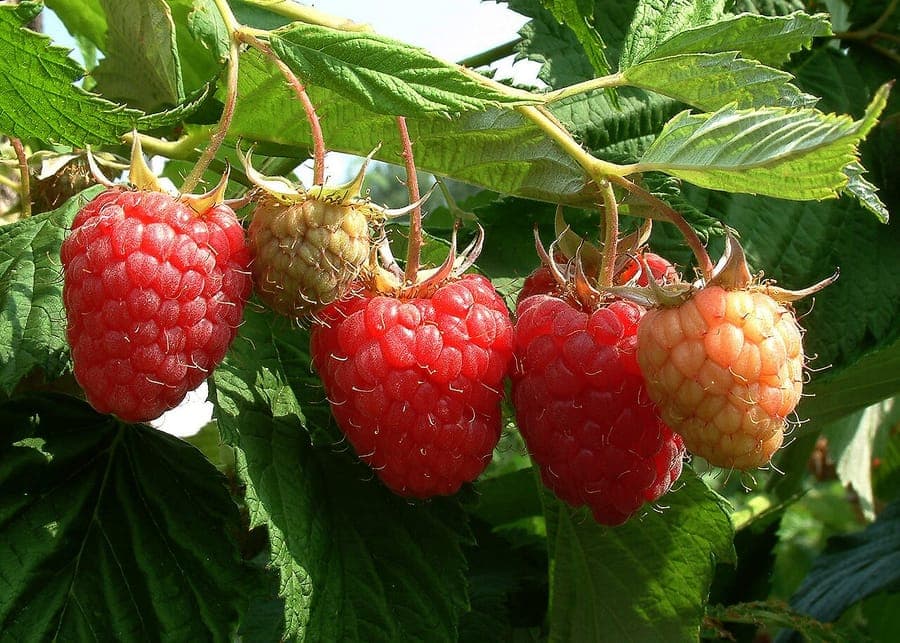
Kollányi Gábor / CC BY-SA 3.0, via Wikimedia Commons
Raspberry: complete guide
Rubus idaeus
Want to see Raspberry: complete guide in your garden?
1 minute, no credit card
Overview
Rubus idaeus, better known as the raspberry, is a rewarding plant for any gardener willing to give it a little space and attention. Native to regions like British Columbia, Alaska, and parts of Europe, this subshrub thrives in temperate climates and is hardy in USDA zones 4 to 8. Whether you're in Yorkshire, Ontario, or Oregon, raspberries can deliver juicy, aromatic fruit year after year. They grow as canes, sending up new shoots each spring, and require a support system like a trellis or post-and-wire setup. On gardenworld.app, you can design a garden layout that integrates raspberry rows with companion plants and proper spacing for airflow.
Appearance & bloom cycle
Raspberries are deciduous subshrubs with green, toothed foliage that turns yellow in autumn. In late spring to midsummer-typically May through July-they produce small white flowers with five petals. These blooms attract bees and other pollinators, essential for fruit set. After pollination, the flowers develop into compound berries that start green and ripen to a deep red. The fruit is hollow when picked, unlike blackberries. Canes can reach 150 cm tall and are often armed with small thorns, though thornless cultivars are available. The plant's biennial growth habit means new canes (primocanes) grow one year and bear fruit the next (floricanes), depending on the variety.
Ideal location
Raspberries prefer partial sun, rated at 5 on a 1–10 light scale. This means they do best with morning sun and afternoon shade, especially in hotter regions. Full sun all day can scorch leaves and dry out roots, while deep shade reduces flowering and fruiting. Choose a spot with good air circulation to prevent fungal diseases like powdery mildew. Avoid low-lying areas where cold air settles. A south-facing fence with light dappled shade works well. Keep them away from wild brambles to reduce disease spread.
Soil requirements
Raspberries thrive in soil with a pH between 5.0 and 7.5. They prefer rich, well-drained loam with plenty of organic matter. Before planting, mix in compost or well-rotted manure. Avoid heavy clay soils unless amended with sand or grit for drainage. If your soil is too wet, consider raised beds to prevent root rot. Test your pH with a simple kit-available at most garden centres-and adjust if needed using sulfur (to lower) or lime (to raise).
Watering
Consistent moisture is key. During dry spells in June and July, water deeply-about 10 litres per plant per week. Water at the base to keep foliage dry and reduce disease risk. Drip irrigation is ideal for even delivery. Mulch with straw or wood chips to retain moisture and suppress weeds. Avoid overhead watering, especially in humid conditions, as this encourages mildew.
Free design
Want to see Raspberry: complete guide in your garden? Make a free design now.
Pruning
Pruning depends on the type. Summer-bearing raspberries fruit on two-year-old canes. After harvest in July, cut down the spent floricanes to ground level. Leave the new primocanes, spacing them about 15 cm apart. Tip-prune them at 120 cm in summer to encourage branching. Everbearing (fall-bearing) types produce fruit on first-year canes. For a single fall crop, cut all canes to the ground in late winter. For two crops (summer and fall), leave the lower half of the cane after fall harvest and prune in spring. Always remove weak, damaged, or diseased canes.
Maintenance calendar
- March: Prune everbearing canes to 10 cm. Plant new canes 45–60 cm apart in rows 1.8 m apart. Add compost.
- April: Watch for aphids. Keep bed weed-free.
- May: Monitor for flowering. Begin regular watering.
- June: Harvest first summer varieties. Support canes.
- July: Finish summer harvest. Cut down fruited floricanes. Water consistently.
- August: Check for pests. Keep supports tight.
- September: Harvest fall-bearing crop. Inspect for cane blight.
- October: Clear fallen leaves. Plant new stock.
- November: Prune summer-bearing canes after leaf drop.
- December: Protect base with mulch in cold areas. Avoid plastic covers.
Winter hardiness
Raspberries are cold-hardy down to -30°C (USDA zone 4). In milder zones (6–8), they usually survive without protection. In colder areas, tip canes to the ground and cover with straw or row covers. Remove in early spring. Avoid piling snow heavily on plants, as ice buildup can damage canes.
Companion plants
Grow raspberries with garlic, chives, or thyme to deter pests. Avoid nightshades like potatoes and tomatoes-they share soil-borne diseases. Good companions include nasturtiums (trap crop for aphids), lavender, and sage. Don't plant near blackberries or wild brambles to reduce virus transmission. Consider using yarrow or comfrey as dynamic accumulators to boost soil health.
Closing
Raspberries are a staple in productive gardens. With proper pruning, support, and soil prep, you'll enjoy fresh fruit for months. Buy healthy bare-root or potted plants in early spring from reputable garden centres. Look for disease-resistant varieties like 'Heritage' or 'Autumn Bliss'. On gardenworld.app, you can design a garden layout that integrates raspberry rows with companion plants and proper spacing for airflow. Whether you're growing in rows, containers, or mixed beds, a little planning goes a long way. And remember: a well-pruned raspberry patch is a fruitful one.
Want to see Raspberry: complete guide in your garden? Make a free design now.
Upload a photo, pick a style, and get a photorealistic design with plant list in under a minute.
No credit card required


Similar plants
Siberian crab apple: complete guide
Malus x robusta
Complete guide to the Siberian crab apple (Malus x robusta): location, soil, pruning, winter hardiness and the best companion plants for your garden.
Chinese flowering crabapple (Malus x spectabilis): complete guide
Malus x spectabilis
Meet the Chinese flowering crabapple (Malus x spectabilis): a classic spring bloomer with carmine buds and pink blossom.
Potentilla crassinervia: complete guide
Potentilla crassinervia
Potentilla crassinervia, the Corsican cinquefoil, grows wild on Corsica and Sardinia's peaks. Discover how to grow this hardy alpine rock garden gem.