
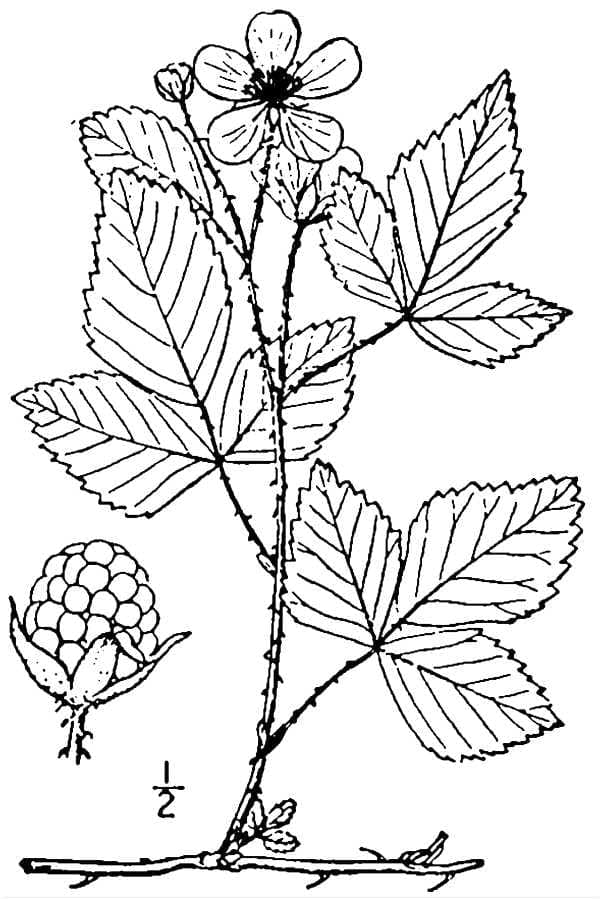
Britton, N.L., and A. Brown. 1913. An illustrated flora of the northern United States, Canada and the British Possessions. 3 vols. Charles Scribner's Sons, New York. Vol. 2: 281. / PD-US, via Wikimedia Commons
Fuscous bramble: complete guide
Rubus fuscus
Want to see Fuscous bramble: complete guide in your garden?
1 minute, no credit card
Overview
Rubus fuscus, commonly known as fuscous bramble, is a quietly resilient native species found in woodlands and forest edges across Belgium, Germany, Great Britain, and the Netherlands. While it doesn't grab attention like the common blackberry, it plays a vital role in supporting local biodiversity. Unlike its more rampant relatives, this bramble spreads moderately and fits well into naturalistic garden designs. On gardenworld.app, you can create a garden layout that seamlessly incorporates this understated yet ecologically valuable plant into your landscape.
The name 'fuscous' refers to the dusky, brownish tint of its stems and foliage, but the plant's real value lies in its adaptability and low impact. It's often mistaken for Rubus caesius, but closer inspection reveals distinct differences in flower structure and growth habit. If you're aiming for a wildlife-friendly garden with native species, Rubus fuscus deserves a spot.
Appearance & bloom cycle
This bramble grows 80–120 cm tall, forming upright to slightly arching canes with fine, downward-pointing thorns. The leaves are pinnate, typically with five to seven leaflets, dark green above and paler beneath, with a soft hairy texture along the margins. They emerge in spring and remain healthy through summer, turning yellow in autumn before dropping.
Flowering occurs in July, producing small, star-shaped blossoms about 1.5 cm wide. The petals are white with a subtle purple blush, especially on the outer edges. Each flower cluster contains numerous blooms, attracting bees, hoverflies, and other pollinators. After pollination, small black berries form, ripening in late summer. While edible, they're dry and seedy-much more appealing to birds and small mammals than to humans.
Ideal location
Fuscous bramble thrives in light to partial shade, corresponding to a light level of 6 out of 10. It does best under the dappled canopy of deciduous trees, along woodland borders, or on the northeast side of a hedge. Full sun is possible, but only if the soil retains moisture well. In dry, exposed sites, the plant may struggle with leaf scorch and reduced flowering.
This species suits naturalistic plantings, native hedges, or wild garden corners. It pairs beautifully with ferns, wood anemones, and wild violets. Avoid formal borders or high-traffic areas where its thorny stems could be a nuisance. On gardenworld.app, you can visualise how this plant integrates into a layered woodland garden design.
Soil requirements
Rubus fuscus prefers neutral to slightly acidic soils with a pH between 6.5 and 7.0. The ideal substrate is humus-rich, well-drained loam or sandy loam. Heavy clay or very sandy soils without organic matter are less suitable. If your garden has poor soil, amend the planting hole with a bucket of compost or well-rotted manure.
Once established, the plant benefits from a yearly mulch of leaf litter or wood chips in autumn. This mimics its natural forest floor habitat and helps retain moisture while suppressing weeds.
Free design
Want to see Fuscous bramble: complete guide in your garden? Make a free design now.
Watering
During the first growing season, especially in the first summer, provide consistent moisture. Water deeply once a week with 10–15 litres per plant during dry spells. After the first year, the plant becomes moderately drought-tolerant, but prolonged dry periods can reduce flowering and berry production.
Always water at the base to avoid wetting the foliage, which can encourage fungal diseases. Deep, infrequent watering promotes strong root development.
Pruning
Pruning is minimal with Rubus fuscus. In March, remove any dead or damaged canes at ground level. Avoid heavy cutting, as flowers and fruit develop on second-year wood. If the plant spreads beyond its intended area, trim back runners by hand or with secateurs.
Unlike invasive brambles, this species doesn't form dense thickets. Its growth is clump-forming and manageable, making it suitable even for smaller gardens.
Maintenance calendar
- January: Check for winter damage. Remove any broken stems.
- February: Prepare for spring. Lightly loosen soil around the base.
- March: Cut back dead canes. Apply compost if needed.
- April: New shoots emerge. Water if spring is dry.
- May: Growth accelerates. Keep surrounding area weed-free.
- June: Plant sets buds. No intervention required.
- July: Peak bloom. Attracts pollinators. Avoid pruning.
- August: Berries begin to ripen. Water during dry weeks.
- September: Berries drop. Birds feed on them.
- October: Leaves turn yellow and fall. Leave debris as natural mulch.
- November: Inspect for pests or disease. No pruning.
- December: Dormant period. No maintenance needed.
Winter hardiness
Fuscous bramble is hardy to USDA zone 6 (-23°C). In its native range, it survives winter without protection. Top growth may die back in harsh conditions, but the root system remains alive and sends up new canes in spring. A light mulch of leaves or straw can offer extra insulation in colder regions.
Companion plants
Pair Rubus fuscus with ferns like Dryopteris filix-mas, spring ephemerals such as Anemone nemorosa, and groundcovers like Lamium galeobdolon. These combinations create a layered, low-maintenance woodland scheme. Avoid aggressive spreaders that could overwhelm young shoots.
Closing
Rubus fuscus is a quiet achiever in the garden - unobtrusive, ecologically beneficial, and easy to care for. It supports pollinators, feeds wildlife, and blends naturally into native plantings. You can find this species at garden centres across the UK and Europe, often sold as 'native bramble' or 'woodland bramble'.
Want to see Fuscous bramble: complete guide in your garden? Make a free design now.
Upload a photo, pick a style, and get a photorealistic design with plant list in under a minute.
No credit card required


Similar plants
Siberian crab apple: complete guide
Malus x robusta
Complete guide to the Siberian crab apple (Malus x robusta): location, soil, pruning, winter hardiness and the best companion plants for your garden.
Chinese flowering crabapple (Malus x spectabilis): complete guide
Malus x spectabilis
Meet the Chinese flowering crabapple (Malus x spectabilis): a classic spring bloomer with carmine buds and pink blossom.
Potentilla crassinervia: complete guide
Potentilla crassinervia
Potentilla crassinervia, the Corsican cinquefoil, grows wild on Corsica and Sardinia's peaks. Discover how to grow this hardy alpine rock garden gem.