
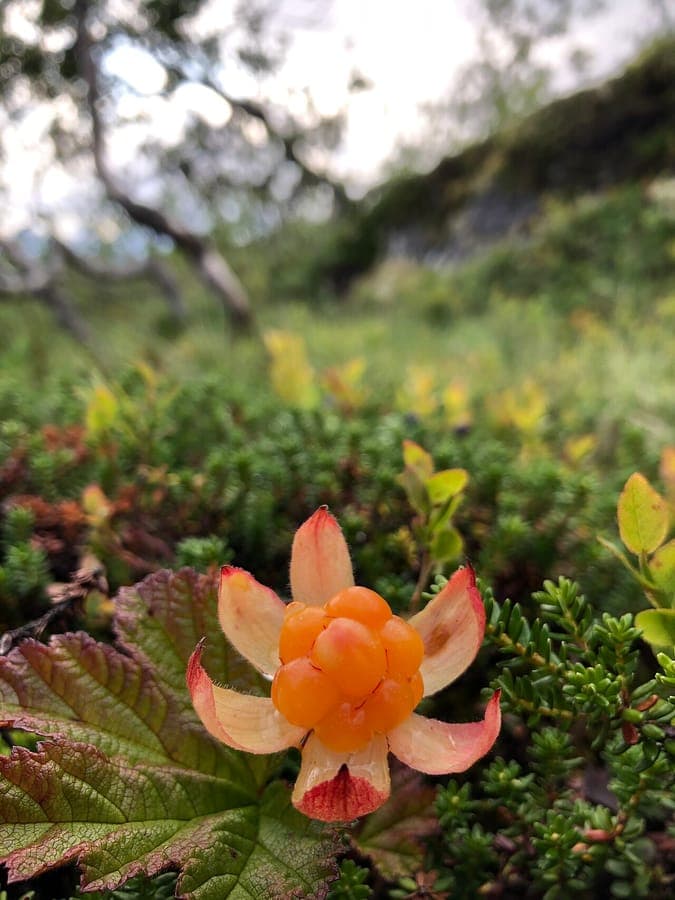
Moravice / CC BY-SA 4.0, via Wikimedia Commons
Cloudberry: complete guide
Rubus chamaemorus
Want to see Cloudberry: complete guide in your garden?
1 minute, no credit card
Overview
Rubus chamaemorus, better known as cloudberry, isn't your average bramble. It's a creeping subshrub or herb that thrives in cold, wet, acidic environments - think peat bogs, moorlands, and forest clearings. Native to northern regions like Alaska, Scandinavia, and Siberia, it's not commonly seen in average UK or US gardens. But with the right setup, you can grow it successfully, especially if you're aiming for a wild, naturalistic garden. This plant spreads slowly via underground rhizomes and stays low - rarely exceeding 15 cm in height. On gardenworld.app, you can design a garden layout that mimics its natural habitat, ensuring proper moisture levels and companion planting.
Appearance & bloom cycle
Cloudberry forms a low mat of green, palmate leaves with five to seven lobes. The foliage is bright green in spring and summer, turning golden or reddish in autumn. In late May to early June, solitary white flowers appear - about 2–3 cm wide, with five petals and prominent yellow stamens. These are pollinated by bees and hoverflies. After flowering, the fruit develops slowly over summer, ripening from green to amber-orange by late August or early September. The berries are soft, juicy, and have a unique tart-sweet flavour, often described as a mix of raspberry and apricot. One plant may yield only a handful of berries, so patience is key.
Ideal location
Cloudberry prefers partial to full shade, especially protection from hot afternoon sun. A north- or east-facing slope, the edge of a woodland garden, or beside a pond works best. It grows well under open conifers like pines or spruces, where the soil stays cool and moist. Avoid exposed, windy sites - they dry out the shallow root system. USDA hardiness zones 2 to 6 are ideal, though it can survive in zone 7 with mulch and consistent moisture. On gardenworld.app, use the sunlight analysis tool to find the shadiest, coolest spots in your garden for optimal placement.
Soil requirements
The soil must be acidic - pH 4.0 to 5.2 - and consistently moist but well-drained. Mix peat-free ericaceous compost with perlite and fine pine bark to create the perfect base. Never use garden compost, manure, or lime - these raise pH and harm the plant. The roots are shallow and sensitive, so avoid digging deeply. A top layer of pine needles helps maintain acidity and protects the rhizomes from temperature swings.
Free design
Want to see Cloudberry: complete guide in your garden? Make a free design now.
Watering
Keep the soil constantly damp, never soggy. Use rainwater whenever possible - tap water is often too alkaline. Water daily during dry spells in summer, preferably in the morning. Drip irrigation works well, but avoid wetting the foliage to prevent fungal issues. In winter, reduce watering but don't let the soil dry out completely.
Pruning
No pruning is needed. Cloudberry fruits on second-year canes, so cutting back will reduce your harvest. Only remove dead or damaged stems in early spring before new growth starts. Use clean, sharp secateurs and disinfect between cuts. Do not compost the debris - dispose of it to avoid spreading potential pathogens.
Maintenance calendar
- Jan: Check for frost heave, add mulch if needed
- Feb: No action required
- Mar: Remove old stems, test soil pH
- Apr: Begin light watering as temperatures rise
- May: Flowers emerge, maintain moisture
- Jun: Monitor for slugs and pests
- Jul: Keep soil covered, no feeding
- Aug: Harvest ripe berries by hand
- Sep: Continue harvesting, remove damaged leaves
- Oct: Reduce watering, leave mulch in place
- Nov: Protect with pine needle mulch
- Dec: Dormant period, check for frost
Winter hardiness
Cloudberry is extremely cold-tolerant, surviving down to -40°C (USDA zone 2). In milder zones like 7 or 8, it may struggle with warm winters unless the soil stays cool and moist. Apply a 5–10 cm layer of pine needles or leaf mould in late autumn to insulate the roots. Avoid plastic covers - they trap moisture and encourage rot.
Companion plants
Pair cloudberry with other acid-loving, moisture-tolerant plants. Good choices include lingonberry (Vaccinium vitis-idaea), bog rosemary (Andromeda polifolia), cotton grass (Eriophorum), and ferns like Dryopteris. Avoid aggressive groundcovers like ivy or mint. Cloudberry spreads slowly, so give it space. Also consider wild strawberries or wintergreen (Gaultheria procumbens) for a natural woodland feel.
Closing
Cloudberry isn't a beginner's plant, but it's deeply rewarding for those who respect its needs. It demands acidic soil, constant moisture, and patience. But when you harvest your first handful of golden berries, you'll understand why it's prized across the north. Use them in jams, desserts, or eat fresh. Buy plants from specialist nurseries or at garden centres like those carrying Nordic stock - avoid generic online sellers. And remember: on gardenworld.app, you can create a custom garden plan that includes microclimate data, soil prep, and companion planting suggestions tailored to cloudberry's needs.
Want to see Cloudberry: complete guide in your garden? Make a free design now.
Upload a photo, pick a style, and get a photorealistic design with plant list in under a minute.
No credit card required


Similar plants
Siberian crab apple: complete guide
Malus x robusta
Complete guide to the Siberian crab apple (Malus x robusta): location, soil, pruning, winter hardiness and the best companion plants for your garden.
Chinese flowering crabapple (Malus x spectabilis): complete guide
Malus x spectabilis
Meet the Chinese flowering crabapple (Malus x spectabilis): a classic spring bloomer with carmine buds and pink blossom.
Potentilla crassinervia: complete guide
Potentilla crassinervia
Potentilla crassinervia, the Corsican cinquefoil, grows wild on Corsica and Sardinia's peaks. Discover how to grow this hardy alpine rock garden gem.