
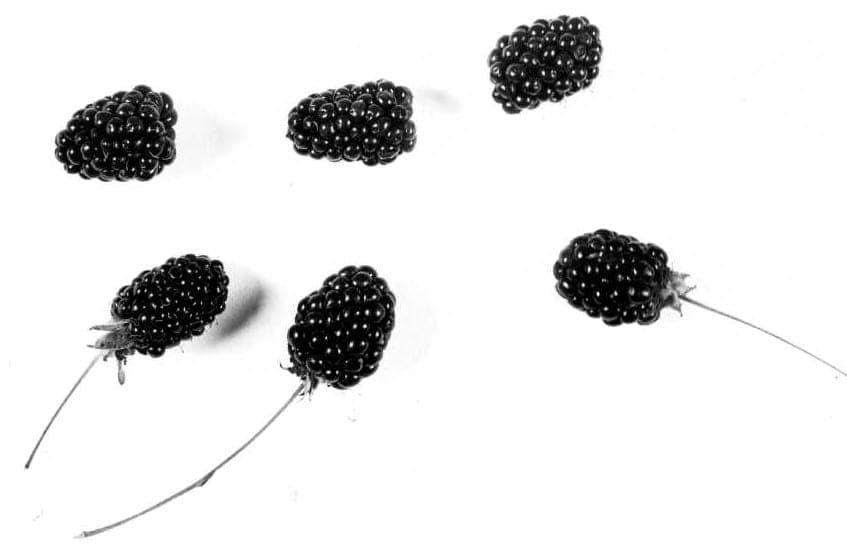
Unknown authorUnknown author / Public domain, via Wikimedia Commons
Smooth blackberry: complete guide
Rubus canadensis
Want to see Smooth blackberry: complete guide in your garden?
1 minute, no credit card
Overview
Rubus canadensis, commonly known as smooth blackberry, is a thornless, upright-growing relative of the more familiar bramble. Native to woodlands and forest edges across eastern North America - from Alabama to Maine - this species stands out for its clean, non-aggressive growth habit and delicious, edible fruit. Unlike many brambles that spread rampantly via underground runners, smooth blackberry forms tidy, self-contained clumps, making it a far more manageable option for home gardens.
Hardy in USDA zones 5b to 8a, it tolerates winter lows down to -23°C and thrives in temperate climates. In the UK and northern Europe, it adapts well to cooler summers and moist autumns. Its lack of thorns makes harvesting a breeze, and its upright stems rarely exceed 1.8 metres, so staking is usually unnecessary.
On gardenworld.app, you can design a low-maintenance edible garden where smooth blackberry plays a central role, combining beauty with practical yield.
Appearance & bloom cycle
Smooth blackberry grows to a height of 120–180 cm with a spread of about 100 cm. The stems are stout, green to reddish-brown, and completely thornless - a rare trait among Rubus species. Leaves are pinnately compound with 5–7 sharply toothed leaflets, dark green above and paler beneath. In autumn, they turn attractive shades of yellow and bronze, adding seasonal interest.
From late spring to early summer (May–June), clusters of small white flowers appear. Each bloom has five petals and a yellow centre, attracting bees, hoverflies, and other pollinators. These develop into blackberries from mid-July to late August. The fruit is medium-sized (about 1.5 cm), glossy black, and firm, with a sweet-tart flavour perfect for eating fresh, baking, or preserving.
Unlike some blackberries that crumble when picked, Rubus canadensis berries hold their shape well, making them ideal for transport and storage.
Ideal location
This plant prefers full sun but tolerates partial shade. For maximum fruit production, aim for at least 6 hours of direct sunlight daily. A south- or west-facing border works best. In dense shade, growth becomes leggy and fruiting drops significantly.
Use smooth blackberry in cottage gardens, wildlife borders, or as part of a soft fruit hedge. Its upright, non-invasive habit means it won't take over - a major advantage over traditional brambles. On gardenworld.app, you can visualise how to integrate smooth blackberry into mixed planting schemes for year-round structure.
Soil requirements
Rubus canadensis is adaptable but thrives in moist, well-drained loam or clay-loam with a pH between 5.5 and 6.8. Avoid waterlogged soils - prolonged saturation leads to root rot. Sandy soils can be improved by incorporating 15–20 cm of compost or well-rotted manure before planting.
Once established, the plant benefits from a spring mulch of compost or leaf mould. This conserves moisture, suppresses weeds, and slowly feeds the soil. Keep mulch a few centimetres away from the crown to prevent rot.
Free design
Want to see Smooth blackberry: complete guide in your garden? Make a free design now.
Watering
During the first growing season, water deeply 2–3 times per week, especially in dry spells. Provide 5–10 litres per plant each time. After establishment, the plant is moderately drought-tolerant but performs best with consistent moisture, particularly during flowering and fruit development (June–August).
Avoid overhead watering to reduce the risk of fungal diseases like powdery mildew. Instead, use a soaker hose or water at the base. Morning watering is ideal, allowing foliage to dry before nightfall.
Pruning
Pruning is straightforward but important. Smooth blackberry produces fruit on second-year canes (biennial fruiting). In late winter or early spring (February–March), cut all canes that bore fruit last year down to ground level. These will be darker, woody, and often show leaf scars.
Leave the new, greenish-brown first-year canes - these will flower and fruit next season. Also remove any weak, damaged, or crowded growth to improve airflow. Use clean, sharp secateurs to prevent disease spread.
Do not prune during summer, except to remove damaged stems.
Maintenance calendar
- January: Inspect for winter injury
- February: Begin pruning old canes
- March: Finish pruning, apply compost or balanced fertiliser
- April: Mulch with compost, monitor for aphids
- May: Flowers emerge, keep soil moist
- June: Peak flowering, avoid pruning
- July: Harvest begins, protect from birds
- August: Harvest ends, light tidy-up if needed
- September: No active care, watch for fungal signs
- October: Leave fallen leaves as natural mulch
- November: Plant dormant, no intervention needed
- December: Check cane stability, leave standing for winter interest
Winter hardiness
Smooth blackberry is reliably hardy in USDA zones 5b–8a. In colder areas (zone 5), a layer of straw or leaf mulch around the base can protect young plants from freeze-thaw cycles. Mature plants require no winter protection.
The standing canes add structure to the winter garden and provide shelter for beneficial insects. Avoid cutting them back in autumn - wait until late winter when new growth is visible.
Companion plants
Pair smooth blackberry with other sun-loving, low-maintenance perennials. Good companions include bee balm (Monarda), lavender, ornamental grasses, and alliums. Low-growing ground covers like creeping thyme or ajuga help suppress weeds without competing aggressively.
Avoid planting near invasive species like Japanese knotweed or highly thorny brambles that can overcrowd or damage the smooth blackberry. Also steer clear of heavy feeders that deplete soil nutrients.
Closing
Rubus canadensis is an underrated gem for edible landscaping. Thornless, productive, and tidy, it offers both yield and ornamental value. It's perfect for families, novice gardeners, or anyone tired of wrestling with thorny brambles.
Plant in full sun, mulch annually, prune at the right time, and enjoy reliable summer harvests. You can find smooth blackberry at reputable garden centres across the UK and US, where it's sometimes sold under its botanical name. Check stockists like local nurseries or online suppliers - many garden centres now carry it due to growing interest in low-maintenance edibles.
And remember: on gardenworld.app, you can map out an entire garden plan where smooth blackberry fits seamlessly into your vision - productive, beautiful, and easy to care for.
Want to see Smooth blackberry: complete guide in your garden? Make a free design now.
Upload a photo, pick a style, and get a photorealistic design with plant list in under a minute.
No credit card required


Similar plants
Siberian crab apple: complete guide
Malus x robusta
Complete guide to the Siberian crab apple (Malus x robusta): location, soil, pruning, winter hardiness and the best companion plants for your garden.
Chinese flowering crabapple (Malus x spectabilis): complete guide
Malus x spectabilis
Meet the Chinese flowering crabapple (Malus x spectabilis): a classic spring bloomer with carmine buds and pink blossom.
Potentilla crassinervia: complete guide
Potentilla crassinervia
Potentilla crassinervia, the Corsican cinquefoil, grows wild on Corsica and Sardinia's peaks. Discover how to grow this hardy alpine rock garden gem.