
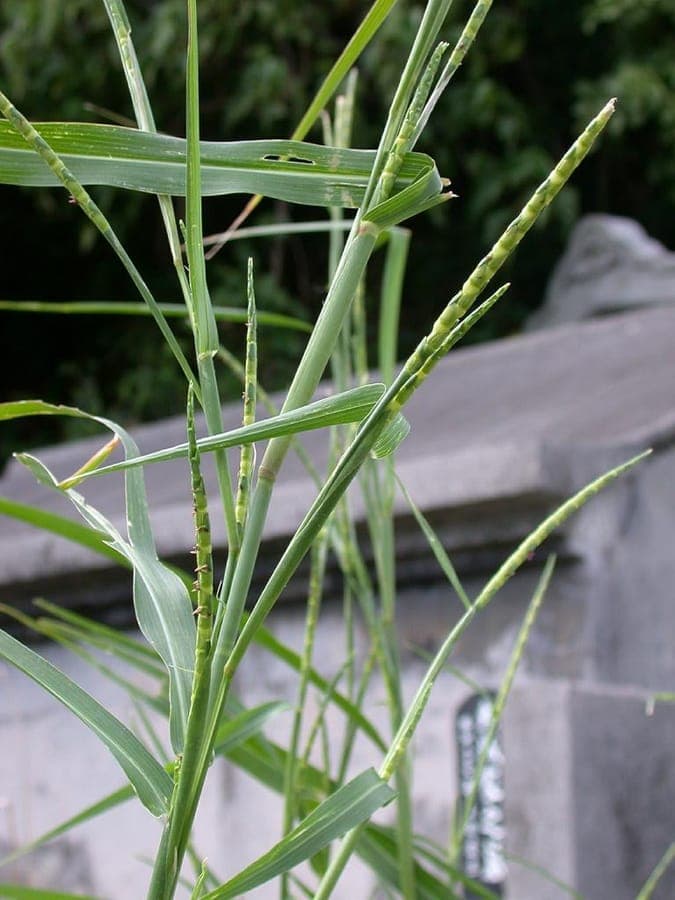
Keisotyo / CC BY-SA 3.0, via Wikimedia Commons
Rottboellia cochinchinensis: complete guide
Rottboellia cochinchinensis
Want to see Rottboellia cochinchinensis: complete guide in your garden?
1 minute, no credit card
Overview
Rottboellia cochinchinensis, commonly known as Guinea-fowl grass, is an annual or perennial tropical grass from tropical and subtropical Asia and northern Australia. This plant belongs to the Poaceae family (grass family) and is known for its interesting, compactly arranged spike structures and greenish-silver colorations. In garden design, this grass forms a unique structural plant with textural interest, especially suitable for exotic borders and landscape effects.
Appearance and Structure
Rottboellia cochinchinensis grows into an upright, hollow-stemmed plant 30-120 centimeters tall, depending on growing conditions and cultivation practices. The leaves are green, linear, approximately 5-15 millimeters wide with a distinct midvein. The most characteristic feature is the spike structure: densely arranged, compact spikes (inflorescences) of 8-15 centimeters long, with a purplish or brownish-red tint when ripe. The spikelets are arranged in a three-dimensional, zigzag-shaped pattern, giving the grass a very striking and sculptural appearance.
Ideal Location
Rottboellia cochinchinensis thrives best in full sun positions (at least 8 hours of direct sun daily). Partial shade reduces growth and spike formation. The plant tolerates heat well and grows optimally in tropical and subtropical conditions. For temperate climates, summer outdoor cultivation is ideal; for northerly regions, container cultivation with indoor overwintering may be needed. Protect from strong winds that can topple young plants.
Soil
Rottboellia cochinchinensis grows in normal, well-drained garden soil. Heavy clay should be improved with sand and compost for better drainage. The pH should be neutral to slightly acidic (6.0-7.5). Add organic material when planting (10-15% compost). The plant tolerates drought better than wet conditions; ensure excellent drainage. Poor soil is acceptable; too much food can lead to overgrowth and weak foliage.
Watering
Water regularly during the growing season (May-October), but avoid waterlogged situations. Ensure the soil dries slightly between waterings. In warm weather, more frequent watering may be needed. Once established, the plant tolerates drought better than many grasses. In containers, check moisture daily; potting soil dries quickly. Minimal watering in winter (in cold climates where it survives).
Free design
Want to see Rottboellia cochinchinensis: complete guide in your garden? Make a free design now.
Maintenance and Pruning
Rottboellia cochinchinensis is a low-maintenance grass form requiring minimal pruning. Remove dead foliage in early spring. Deadhead spent spikes for longer garden appeal and to prevent seeding. For annual cultivation: sow in April-May; transplant in May-June after frost danger. For perennial cultivation in warmer regions: allow the plant to overwinter and maintain minimally.
Maintenance Calendar
January-March: Seed preparation (for annual growing) or frost protection (perennial). April-May: Sow or transplant; begin regular watering. June-August: Growth; ensure sufficient water; remove unwanted seed spikes. September-October: Enjoy spike formation and color changes; maintain watering. November-December: Prepare for overwintering or harvest seeds.
Winter Hardiness and Durability
Rottboellia cochinchinensis is not winter hardy in temperate climates; frost kills the plant. In northern Europe, it is usually grown as an annual grass. For perennial cultivation in warm climates (Zone 10+), it may overwinter under protection. Seeds can be harvested in November; dry thoroughly and store cool and dry (5-10°C) for next season.
Companion Plants
Rottboellia cochinchinensis pairs interestingly with:
- Begonias: for foliage contrast and color
- Pentas: for flowering-textural contrast
- Coleus: for dramatic foliage patterns beside grass
- Succulents: for arid garden effects
- Scaevola: for trailing forms and blueness
Closing
Rottboellia cochinchinensis offers an unconventional, strong visual grass effect in front yard and container gardens. Its compact, arranged spikes create a fascinating architectural form that adapts well to exotic garden schemes. For annual cultivation in cold climates or perennial cultivation in warmer regions, this grass species deserves experimental use. Consult local plant nurseries for seed sources, or GardenWorld.app for exotic garden ideas.
Want to see Rottboellia cochinchinensis: complete guide in your garden? Make a free design now.
Upload a photo, pick a style, and get a photorealistic design with plant list in under a minute.
No credit card required


Similar plants
Sporobolus pungens: complete guide
Sporobolus pungens
Sporobolus pungens is a stoloniferous Mediterranean coastal grass with outstanding salt and drought tolerance, perfect for seaside and dry gardens.
Mediterranean aegilops: complete guide
Aegilops biuncialis
Everything about Aegilops biuncialis, a Mediterranean annual grass with ornamental spikes and outstanding drought tolerance for dry gardens.
Silver bluestem: complete guide
Bothriochloa saccharoides
Full guide to Bothriochloa saccharoides (silver bluestem): site, soil, watering, winter hardiness, pruning, and garden companions.