
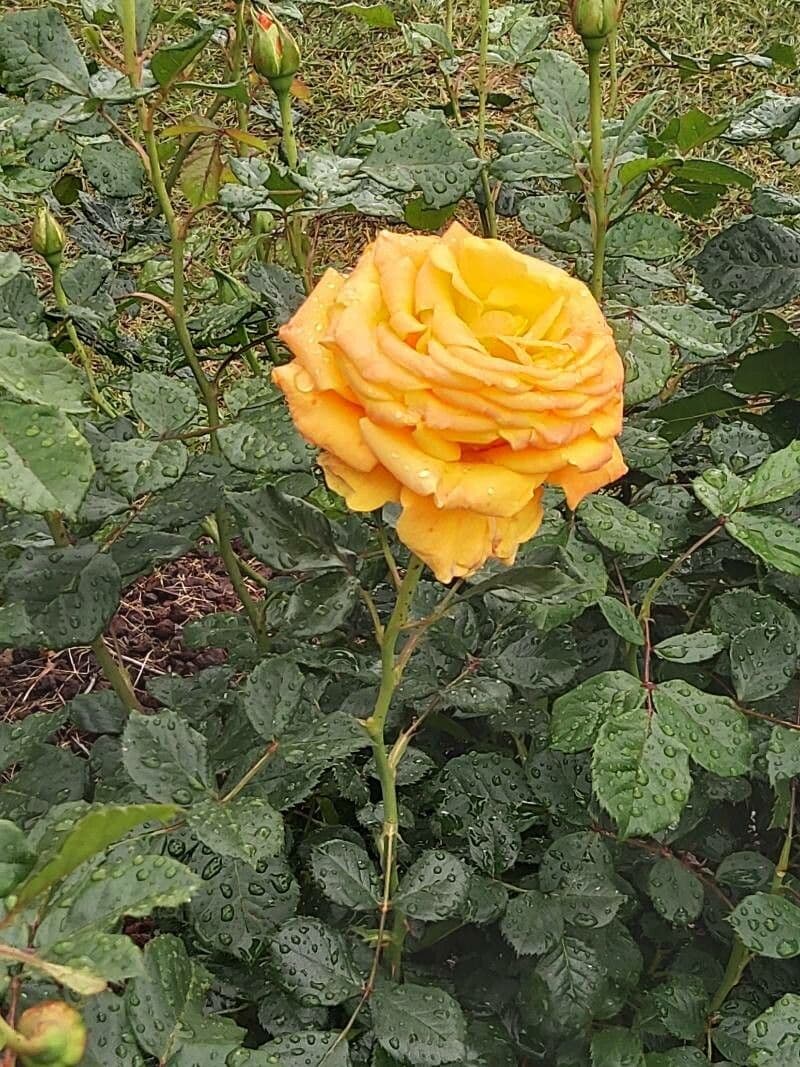
Austrian Copper Rose: complete guide
Rosa × foetida
Want to see Austrian Copper Rose: complete guide in your garden?
1 minute, no credit card
Overview
Rosa × foetida, commonly called the Austrian Copper Rose or Persian Yellow Rose, is a distinctive rose prized for its brilliant yellow blooms with striking copper-red reverses on the petals. This historic hybrid originated in Persia and became instrumental in introducing yellow coloring into modern rose breeding lines during the eighteenth and nineteenth centuries. The Austrian Copper rose produces powerfully scented flowers with an intense, somewhat spicy fragrance that proves polarizing among gardeners but undeniably distinctive. This shrub grows to modest size and performs admirably in mixed borders and specimen plantings. The plant provides spectacular contrast in any garden design through its vivid coloring. Related selections such as 'Bicolor' (with even sharper contrast between the two petal colors) are occasionally offered by specialist rose nurseries, though the straight species remains the most reliable choice for an average garden. Discover more about yellow roses and their use in garden design on gardenworld.app.
Appearance and Bloom Cycle
The Austrian Copper Rose reaches heights of 100 to 150 centimeters with a spread of 100 to 120 centimeters. The plant forms a dense, upright-growing shrub with relatively smooth canes and minimal thorning compared to many other rose types. The foliage is small to medium-sized, bright green, and finely serrated. The leaves emit a subtle scent when handled or bruised, contributing to the overall aromatic presence of the plant.
Flowers emerge from May through August in small clusters of one to three blooms. Each flower reaches 5 to 6 centimeters in diameter, displaying brilliant yellow petals frequently backed with bright red or copper coloring that creates dramatic contrast. The blooms typically exhibit semi-double form containing approximately 30 to 40 petals. The characteristic fragrance is potent and spicy, sometimes described as unpleasant but unmistakably distinctive and memorable. This rose blooms repeatedly throughout the growing season with intervals between flowering flushes. Small round hips of approximately 1 centimeter in diameter form after flowering and turn orange-red in autumn, providing food for birds.
Ideal Location
Austrian Copper roses thrive in very sunny locations receiving eight to ten hours of direct sunlight daily. This rose is sun-demanding and performs poorly in shaded conditions where blooming dramatically decreases. Position the plant where it receives full, unobstructed sun exposure without any shade. The fragrance is more pronounced in warm, sunny conditions. Ensure good air circulation to minimize disease susceptibility, as this variety proves more vulnerable to certain rose diseases than hardier types. Allow at least 60 to 80 centimeters of open space around the shrub so foliage dries quickly after rainfall.
Soil Requirements
Austrian Copper roses develop optimally in well-drained, fertile soil with pH between 6.0 and 7.5. Before planting, amend native soil with aged compost or well-rotted manure, improving soil structure and fertility. This rose tolerates dry conditions better than many rose types but develops best in moderately moist soil. Provide excellent drainage since persistent wetness leads to root rot, particularly in winter months. For container cultivation, use quality potting soil amended with compost in a pot at least 40 centimeters in diameter to give the root system enough room.
Watering
Water newly planted roses thoroughly until surrounding soil becomes fully saturated. Maintain regular moisture throughout the growing season and flowering period. This rose demonstrates greater drought tolerance than many competitors but performs optimally with consistent weekly moisture of approximately 15 to 20 millimeters. During dry periods, water more deeply and frequently. Avoid persistently wet soil conditions that promote fungal diseases. Never wet the foliage when irrigating, as moisture on leaves encourages mildew and black spot. Reduce frequency significantly in autumn and winter, and stop feeding entirely in late summer so new growth can harden off before frost.
Free design
Want to see Austrian Copper Rose: complete guide in your garden? Make a free design now.
Pruning
Prune the Austrian Copper rose in early spring when new growth commences. Remove all dead and damaged canes first with care using clean, sharp secateurs. Open the shrub by selectively thinning stems, which improves air circulation and reduces disease pressure. Since this rose blooms repeatedly, remove spent flowers to encourage additional flowering cycles, though leaving some late-season blooms in place allows hips to form for the birds. Annual moderate pruning of approximately one-third the previous year's growth maintains attractive form. Avoid aggressive pruning that creates excessive stress, as this species responds more slowly to hard cutting back than modern hybrid teas.
Propagation
The Austrian Copper rose is most commonly propagated from semi-hardwood cuttings taken in July-August. Cut sections approximately 15 to 20 centimeters long with at least three leaf nodes, remove the lower leaves, and dip the cut end in rooting hormone. Insert cuttings into a mix of potting soil and coarse sand, keep the medium consistently moist, and place the pot in bright, indirect light. Roots typically form within six to eight weeks. Propagation from seed is also possible but often produces variable offspring, since this rose has a hybrid origin.
Maintenance Calendar
FEBRUARY-MARCH: Perform structural pruning and remove dead wood. Apply fresh compost around the root zone. Begin spring fertilization. APRIL-MAY: Monitor closely for fungal diseases, particularly powdery mildew. Water needs increase significantly. JUNE-AUGUST: Provide consistent moisture. Remove deadheads regularly to promote continuous blooming. Apply fertilizer every two weeks. SEPTEMBER: Reduce watering as temperatures cool, stop fertilizing. OCTOBER-JANUARY: Minimal intervention. Provide winter protection in cold climates.
Winter Hardiness
The Austrian Copper rose demonstrates moderate cold hardiness, suitable for USDA zones 5 through 9, surviving temperatures as low as -15 to -20 degrees Celsius. In regions with severe winters, winter protection proves beneficial. Mulch young plantings with 15 to 20 centimeters of protective material. In extremely cold climates, planting against a south-facing wall provides beneficial warmth. Mounding soil 10 to 15 centimeters around the base in November offers additional protection during the harshest frosts of January and February.
Disease and Pest Management
The Austrian Copper rose proves more susceptible to powdery mildew, black spot, and rose rosette virus than many other rose types. Ensure proper air circulation and avoid overhead watering to prevent fungal issues. Common pests include aphids and spider mites, usually manageable with a strong jet of water or mild insecticidal soap. Rust can occasionally appear during humid summers, recognizable by orange spore clusters on the underside of leaves; remove affected foliage promptly and ensure adequate airflow.
Companion Plants
The Austrian Copper rose combines beautifully with purple clematis, blue-flowering salvia, and silver-leaved artemisia. For structural interest, incorporate small evergreen shrubs nearby. Low-growing plantings such as hardy catmint and lavender provide elegant edging. Avoid vigorous root competitors within one meter of the rose, and maintain at least 40 centimeters of spacing from neighboring plants for adequate air circulation.
Closing
The Austrian Copper rose is an exceptional choice for gardeners seeking distinctive character and striking color. With brilliant yellow flowers and unique fragrance, this rose brings unmistakable charm to any garden design. This variety proves somewhat more disease-susceptible than other roses, requiring regular monitoring. These brilliant roses are available at quality garden centers throughout Europe, typically as container plants of 3 to 5 liters. Explore additional rose varieties and comprehensive garden design inspiration on gardenworld.app.
Want to see Austrian Copper Rose: complete guide in your garden? Make a free design now.
Upload a photo, pick a style, and get a photorealistic design with plant list in under a minute.
10,000+ gardens designed already
No credit card required


Similar plants
Siberian crab apple: complete guide
Malus x robusta
Complete guide to the Siberian crab apple (Malus x robusta): location, soil, pruning, winter hardiness and the best companion plants for your garden.
Chinese flowering crabapple (Malus x spectabilis): complete guide
Malus x spectabilis
Meet the Chinese flowering crabapple (Malus x spectabilis): a classic spring bloomer with carmine buds and pink blossom.
Potentilla crassinervia: complete guide
Potentilla crassinervia
Potentilla crassinervia, the Corsican cinquefoil, grows wild on Corsica and Sardinia's peaks. Discover how to grow this hardy alpine rock garden gem.