
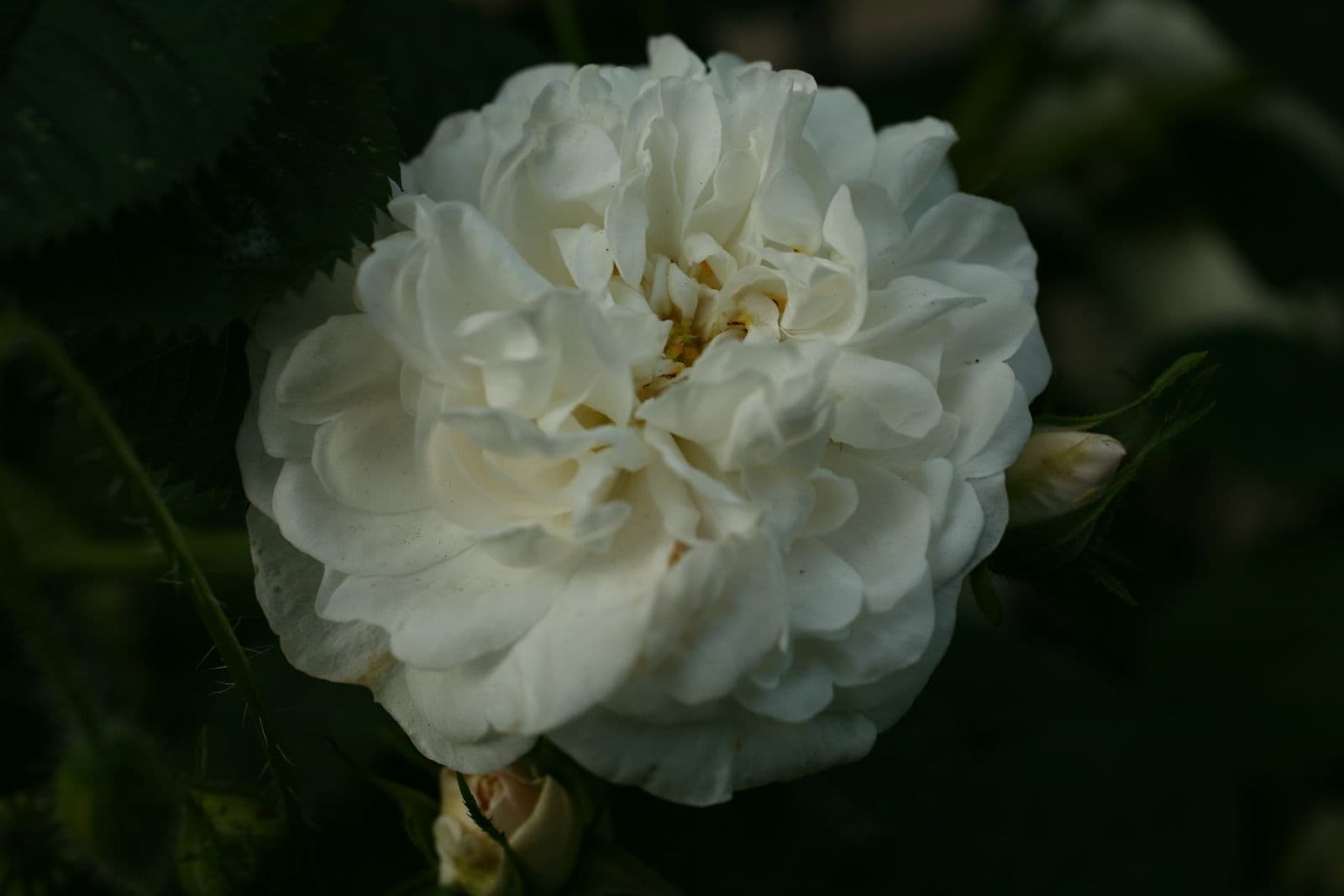
White Rose: complete guide
Rosa × alba
Want to see White Rose: complete guide in your garden?
1 minute, no credit card
Rosa × alba, commonly known as the White Rose or White Rose of York, is a classic hybrid rose that has been cultivated in gardens throughout Europe for centuries. This ancient rose is likely a natural cross between Rosa canina and Rosa damascena, though its exact parentage remains uncertain. With its pristine white blooms, strong fragrance, and exceptional hardiness, the Alba rose has earned a special place in the hearts of rose enthusiasts and gardeners worldwide. These robust roses are relatively disease-resistant and require minimal care, making them ideal for both experienced gardeners and beginners. Explore more rose varieties and garden design tips on gardenworld.app. The Alba rose represents everything classic about old garden roses, combining elegance with reliability.
Appearance and Bloom Cycle
Alba roses develop into substantial shrubs reaching 150 to 180 centimeters in height with a spread of 120 to 150 centimeters. The canes are heavily thorned and densely clothed with foliage. The leaves are dark green, matte-finished, and composed of five to seven rounded leaflets with prominent veining that gives the plant an attractive textured appearance. The foliage remains disease-free throughout most growing seasons. The stems are grey-green and quite rigid, providing excellent structural support for the flowering display.
The flowers emerge in clusters of two to five blooms and measure 5 to 7 centimeters in diameter. Most cultivars display pure white petals, though some selections exhibit a subtle blush of soft pink, particularly on the outer petals. The flowers typically contain 30 to 50 petals arranged in a quartered or cup formation, revealing golden stamens in the center. One defining characteristic of Alba roses is their rich, complex fragrance that intensifies during cool morning hours. The blooming season extends from early June through late July, occurring once annually. The abundant flowers persist on the shrub for several weeks, creating a spectacular display that transforms the entire plant.
Ideal Location
Alba roses perform best in full sun exposure, requiring a minimum of six to eight hours of direct sunlight daily for optimal flowering. While these roses tolerate partial shade better than most garden roses, reduced light will diminish flower production and increase disease susceptibility. Position the rose away from structures that radiate reflected heat, as excessive warming leads to flower deterioration and plant stress. Good air circulation is essential for preventing fungal diseases. In regions with intense midday sun, afternoon shade provides beneficial protection during peak heat. The location should allow air movement from multiple directions for disease prevention.
Soil Requirements
Alba roses require well-draining soil that does not retain excessive moisture. The ideal pH range is 6.0 to 7.0, though these adaptable plants tolerate slightly acidic to neutral conditions. Prepare planting holes by incorporating aged manure or compost into the native soil, improving both drainage and fertility. Apply a protective mulch layer of 5 to 7 centimeters around the base, keeping it several centimeters away from the canes to prevent rot. These roses perform exceptionally well in loamy soils enriched with organic matter. Container cultivation requires a premium rose or garden soil amended with compost. The soil should be amended annually with fresh compost to maintain fertility.
Free design
Want to see White Rose: complete guide in your garden? Make a free design now.
Watering
Thoroughly water newly planted roses until the surrounding soil becomes fully saturated. Maintain consistent moisture during the first two growing seasons, applying water deeply once weekly rather than frequent shallow irrigation. In drought conditions or high temperatures, increase frequency while ensuring drainage remains adequate. Once established, Alba roses demonstrate relative drought tolerance due to their extensive root systems. Always water at soil level, avoiding wetting foliage to minimize disease risk. Reduce irrigation during autumn and winter months based on natural rainfall. Monitor soil moisture by checking at least 10 centimeters below the surface.
Pruning
Perform major pruning in early spring when forsythia blooms. Remove all dead, diseased, or damaged canes first. Cut back approximately one-third of the previous season's growth to encourage sturdy, well-branched development. Since these roses bloom once annually, avoid extensive pruning after flowering, as this diminishes the following year's bloom production. Alba roses respond negatively to severe pruning, often resulting in reduced flowering. Remove spent blooms only if necessary for appearance; do not deadhead extensively as this variety produces limited flowers annually. Use sharp pruning tools and disinfect between cuts to prevent disease transmission.
Maintenance Calendar
FEBRUARY: Perform structural pruning, removing dead wood completely. Apply a fresh compost dressing to the root zone. MARCH: Inspect for winter damage and address any plant adjustments. Begin spring fertilization with balanced or nitrogen-rich formulations. APRIL-MAY: Monitor closely for emerging weeds and early disease signs. Apply supplemental fertilizer every two weeks. JUNE-JULY: Provide ample water during peak bloom season. AUGUST: Remove dead flowers if desired and apply summer maintenance pruning. SEPTEMBER: Reduce fertilizer applications and moderate watering frequency. OCTOBER-JANUARY: Minimal intervention required. Maintain surveillance for disease and pest activity.
Winter Hardiness
Alba roses are exceptionally cold-hardy, suitable for USDA zones 4 through 9, enduring temperatures as low as -25 to -30 degrees Celsius without damage. These roses require no winter protection in most climates and naturally enter dormancy without supplemental care. Young plantings may benefit from modest windbreak protection in severe winter conditions. In regions experiencing extreme cold, a 10 to 15 centimeter mulch layer provides additional root insulation. The plant loses all leaves by late autumn and becomes completely dormant.
Disease and Pest Management
Alba roses demonstrate good disease resistance but may occasionally encounter powdery mildew, black spot, or rose rosette virus. Ensure proper air circulation and avoid overhead watering to prevent fungal issues. Common rose pests include aphids and spider mites, though Alba roses typically tolerate light infestations. Use organic control methods whenever possible, including neem oil and insecticidal soap.
Companion Plants
Alba roses create stunning combinations with blue-flowering lavender, silver-leaved artemisia, and purple or white clematis varieties. Complementary perennials such as hardy geraniums and catmint reinforce the classical garden aesthetic. For structural interest, plant compact evergreens like boxwood and holly nearby. Low-growing groundcovers provide elegant contrast beneath the rose. Avoid planting vigorous competitors within one meter of the rose, as this variety performs poorly under root competition.
Closing
Rosa × alba represents timeless elegance, bringing historical charm and undeniable fragrance to any traditional garden. Its robust nature, minimal maintenance requirements, and prolific flowering make it a treasured addition to landscapes worldwide. These classic beauties are available at established garden centers throughout Europe. Discover additional rose varieties and comprehensive garden design inspiration on gardenworld.app.
Want to see White Rose: complete guide in your garden? Make a free design now.
Upload a photo, pick a style, and get a photorealistic design with plant list in under a minute.
10,000+ gardens designed already
No credit card required


Similar plants
Siberian crab apple: complete guide
Malus x robusta
Complete guide to the Siberian crab apple (Malus x robusta): location, soil, pruning, winter hardiness and the best companion plants for your garden.
Chinese flowering crabapple (Malus x spectabilis): complete guide
Malus x spectabilis
Meet the Chinese flowering crabapple (Malus x spectabilis): a classic spring bloomer with carmine buds and pink blossom.
Potentilla crassinervia: complete guide
Potentilla crassinervia
Potentilla crassinervia, the Corsican cinquefoil, grows wild on Corsica and Sardinia's peaks. Discover how to grow this hardy alpine rock garden gem.