
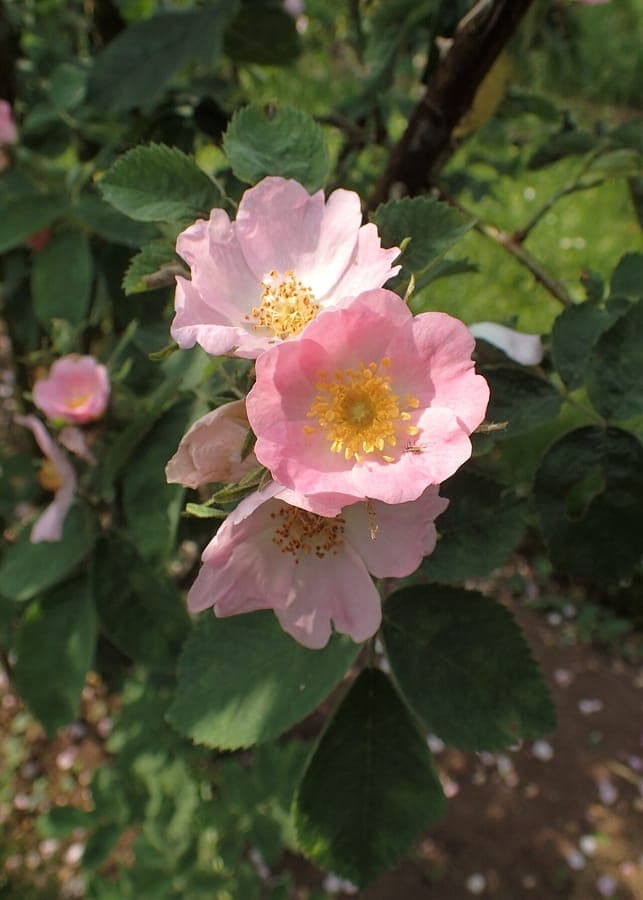
Krzysztof Ziarnek, Kenraiz / CC BY-SA 4.0, via Wikimedia Commons
Sherard's downy rose: complete guide
Rosa sherardii
Want to see Sherard's downy rose: complete guide in your garden?
1 minute, no credit card
Overview
Rosa sherardii, commonly known as Sherard's downy rose, is a resilient and understated wild rose that thrives in naturalistic gardens across temperate climates. Native to central and northern Europe, it's well-adapted to the UK and northern US zones, making it a reliable choice for gardeners seeking low-maintenance beauty. Unlike many hybrid roses, it's highly disease-resistant, rarely troubled by black spot or powdery mildew, and requires minimal intervention once established.
This shrub rose typically reaches 60–100 cm in height with a spread of up to 80 cm, forming a loose, open habit that works well as groundcover or in mixed borders. It's deciduous to semi-evergreen, meaning it may retain some foliage in mild winters. Growth begins in early spring with fresh green shoots that quickly harden into woody stems. It's a slow to moderate grower, gaining around 15–20 cm per year under ideal conditions.
On gardenworld.app, you can design a planting scheme that highlights the natural elegance of Sherard's downy rose, especially in wildlife-friendly or native plant gardens.
Appearance & bloom cycle
The foliage is ovate, slightly hairy, and mid-green with a textured surface that adds visual interest. In early June, single flowers appear - deep purple with five petals, about 3–4 cm wide. The colour is richest in full sun, with blooms fading slightly in prolonged wet weather. Flowering continues through July, often with a lighter second flush in August if spent blooms are removed.
After flowering, small, round hips develop, turning from green to reddish-brown by autumn. These persist into winter, providing food for birds like finches and thrushes. The scent is subtle - a clean, green fragrance rather than a traditional rose perfume, noticeable on warm afternoons.
Ideal location
For best results, plant in full sun (8 hours of direct light daily). A south- or west-facing border is ideal. While it tolerates partial shade, flowering will be reduced, and the plant may become leggy. Good air circulation is essential to prevent fungal issues, so avoid planting too close to dense shrubs.
This rose excels in cottage gardens, along pathways, or as part of a low informal hedge. Its spreading habit makes it suitable for stabilizing dry, sunny slopes where other plants struggle.
Soil requirements
Rosa sherardii prefers well-drained, neutral to slightly alkaline soil with a pH between 7.0 and 7.5. It handles chalky and loamy soils well but struggles in heavy clay unless amended with grit and compost. Acidic soils (below pH 6.5) may result in chlorosis - yellowing leaves with green veins.
For sandy soils, add organic matter like compost or well-rotted manure in spring to improve moisture retention. A 5 cm layer of mulch helps suppress weeds and maintain consistent soil moisture.
Free design
Want to see Sherard's downy rose: complete guide in your garden? Make a free design now.
Watering
Once established, this rose is drought-tolerant and rarely needs supplemental watering. However, young plants require regular watering during their first growing season, especially in dry spells. Aim for deep, infrequent watering - about 10–15 litres per plant once a week during summer droughts.
Always water at the base to keep foliage dry and reduce the risk of fungal diseases. Overhead watering, especially in the evening, can encourage mildew.
Pruning
Minimal pruning is needed. Since it flowers on previous year's wood, avoid hard pruning in spring. The best time is late summer, after flowering ends (August to early September). Remove dead, damaged, or crossing stems, and lightly shape the plant if desired.
Heavy pruning will reduce flowering the following year. This rose is better left to grow naturally than tightly clipped.
Maintenance calendar
- February–March: Inspect for winter damage, remove dead wood
- April: Apply mulch, light feed with balanced rose fertiliser
- May: Monitor for aphids, ensure soil moisture
- June–July: Peak bloom period, no pruning
- August: Light pruning after bloom, check for hips
- September–October: Stop feeding, leave hips for wildlife
- November–January: Dormant period, no action needed
Winter hardiness
Hardy in USDA zones 4 to 7, Rosa sherardii withstands temperatures down to -30°C. In the UK and most of the northern US, it requires no winter protection. In exposed sites or sandy soils, a light mulch around the base can help protect young roots.
Companion plants
Pair with late-summer bloomers like Echinacea, Verbena bonariensis, or Sedum 'Matrona'. It also complements aromatic herbs such as lavender, thyme, and sage. For a natural look, combine with ornamental grasses like Festuca glauca or Carex elata.
On gardenworld.app, explore planting combinations that feature Sherard's downy rose as a structural anchor, with recommendations for height layering and seasonal interest.
Closing
Sherard's downy rose is a quiet achiever - unassuming, tough, and full of quiet charm. It's perfect for gardeners who value ecological function, low upkeep, and natural beauty. Available at garden centres across the UK and US, often under its botanical name. Give it sun, well-drained soil, and a little space - and it will reward you with years of subtle colour and wildlife support.
Want to see Sherard's downy rose: complete guide in your garden? Make a free design now.
Upload a photo, pick a style, and get a photorealistic design with plant list in under a minute.
No credit card required


Similar plants
Siberian crab apple: complete guide
Malus x robusta
Complete guide to the Siberian crab apple (Malus x robusta): location, soil, pruning, winter hardiness and the best companion plants for your garden.
Chinese flowering crabapple (Malus x spectabilis): complete guide
Malus x spectabilis
Meet the Chinese flowering crabapple (Malus x spectabilis): a classic spring bloomer with carmine buds and pink blossom.
Potentilla crassinervia: complete guide
Potentilla crassinervia
Potentilla crassinervia, the Corsican cinquefoil, grows wild on Corsica and Sardinia's peaks. Discover how to grow this hardy alpine rock garden gem.