
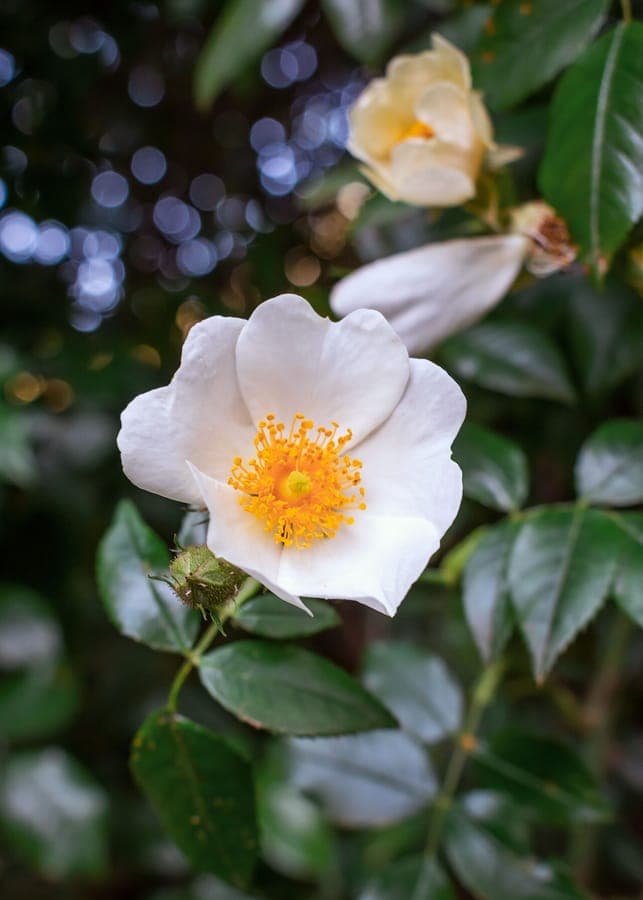
Riad Salih / CC BY 4.0, via Wikimedia Commons
Evergreen rose: complete guide
Rosa sempervirens
Want to see Evergreen rose: complete guide in your garden?
1 minute, no credit card
Overview
Rosa sempervirens, commonly known as the evergreen rose, is a graceful climber with a long history in Mediterranean gardens. Unlike most roses, it keeps its leaves through mild winters, offering year-round structure and interest. Native to southern Europe and North Africa - from southern France to Greece and Morocco - this rose thrives in hot, dry summers and mild, wet winters. In the UK and Ireland, it's best suited to sheltered gardens, especially near walls or fences that provide warmth. Gardeners appreciate its flexibility, whether trained on a pergola, allowed to scramble through shrubs, or grown as a loose hedge. On gardenworld.app you can visualise how this climber integrates into your garden design before planting.
Appearance & bloom cycle
This rose grows 2 to 4 metres tall with long, flexible canes that can be guided along supports or left to arch naturally. The foliage is glossy, dark green, and pinnate, usually made up of 5 to 7 narrow leaflets. It stays evergreen in USDA zones 8 and above, but may lose some leaves in colder areas during harsh winters.
Flowering occurs in early to mid-summer, typically from June to July, with occasional repeat blooms in late summer. The flowers appear in clusters of 3 to 12, each about 4–5 cm wide, pure white to pale pink, with a delicate fragrance. They attract bees and hoverflies, adding ecological value. After flowering, small oval hips develop, turning orange-red in autumn and providing visual interest and food for birds.
Ideal location
Plant Rosa sempervirens in full sun to partial shade. It needs at least 5–6 hours of direct sunlight daily for strong flowering. A south- or west-facing wall is ideal, especially in cooler regions, as it benefits from radiant heat. In exposed coastal or windy gardens, provide a sheltered spot - the foliage can suffer from wind scorch in winter.
This rose works well on wooden trellises, stone walls, and rustic fences. It's also suitable for informal mixed hedges. If you're unsure where to place it, try sketching your garden layout on gardenworld.app to test different placements.
Soil requirements
The evergreen rose isn't fussy but prefers well-drained, loamy to sandy soil with a pH between 6.0 and 7.0. Avoid heavy clay soils unless they're improved with grit and compost. Poor drainage leads to root rot, especially in winter. When planting, mix in well-rotted manure or compost to boost fertility and drainage.
For container growing, use a mix of two parts loam-based compost, one part perlite, and one part garden soil. Ensure pots have drainage holes and a layer of gravel at the bottom.
Free design
Want to see Evergreen rose: complete guide in your garden? Make a free design now.
Watering
Once established, Rosa sempervirens is drought-tolerant, but young plants need regular watering during their first growing season - about 10 litres per week during dry spells. Water deeply at the base to encourage deep root development. Avoid wetting the foliage to reduce the risk of fungal diseases like black spot.
In hot summers, especially in containers or against warm walls, increase watering frequency. Rainwater is preferred over tap water, which can be high in lime.
Pruning
Pruning is minimal. Since it flowers on previous year's growth, avoid hard pruning in spring. Instead, prune right after flowering in July. Remove dead, damaged, or crossing stems and lightly trim long shoots to maintain shape. Never cut back hard unless rejuvenating an old plant, and even then, do it gradually over two to three years.
For plants trained on wires or frames, tie in new growth horizontally to encourage more flowering laterals.
Maintenance calendar
- January: Check for winter damage. Remove snow buildup if needed.
- February: Inspect for pests and diseases. No pruning yet.
- March: Apply a layer of compost around the base. Prepare supports if needed.
- April: Lightly feed with rose fertiliser. Watch for aphids.
- May: Monitor for mildew and rose rust. Water if dry.
- June–July: Peak bloom period. Prune lightly after flowering.
- August: Enjoy possible second flush. Stop feeding.
- September: Leave hips for winter interest.
- October: Clear fallen leaves to reduce disease risk.
- November: Mulch the base with bark or compost in colder areas.
- December: Minimal care. Protect container plants from freezing.
Winter hardiness
Rosa sempervirens is hardy to USDA zone 7 (-15°C to -12°C). In zone 8 and above, it remains evergreen. In colder areas, foliage may drop, and shoot tips can die back, but the plant usually regrows from the base. In pots, wrap containers with hessian or bubble wrap, or move to a sheltered location. Avoid wet, cold soils in winter.
Companion plants
Pair with Mediterranean companions like Cistus, Lavandula, or Phlomis. It also contrasts beautifully with silver-foliaged plants like Artemisia or Stachys. Underplant with shade-tolerant perennials such as Alchemilla mollis or Vinca. Avoid invasive spreaders like mint or aggressive bamboos.
Closing
Rosa sempervirens is a reliable, elegant climber that brings charm with minimal effort. Its glossy leaves, fragrant flowers, and long season of interest make it a standout. Buy healthy plants from trusted garden centres - look for strong stems and green leaves, no black spots. Plant in a sunny, sheltered spot, and it will reward you for years. On gardenworld.app you can visualise how this climber integrates into your garden design before planting.
Want to see Evergreen rose: complete guide in your garden? Make a free design now.
Upload a photo, pick a style, and get a photorealistic design with plant list in under a minute.
No credit card required


Similar plants
Siberian crab apple: complete guide
Malus x robusta
Complete guide to the Siberian crab apple (Malus x robusta): location, soil, pruning, winter hardiness and the best companion plants for your garden.
Chinese flowering crabapple (Malus x spectabilis): complete guide
Malus x spectabilis
Meet the Chinese flowering crabapple (Malus x spectabilis): a classic spring bloomer with carmine buds and pink blossom.
Potentilla crassinervia: complete guide
Potentilla crassinervia
Potentilla crassinervia, the Corsican cinquefoil, grows wild on Corsica and Sardinia's peaks. Discover how to grow this hardy alpine rock garden gem.