
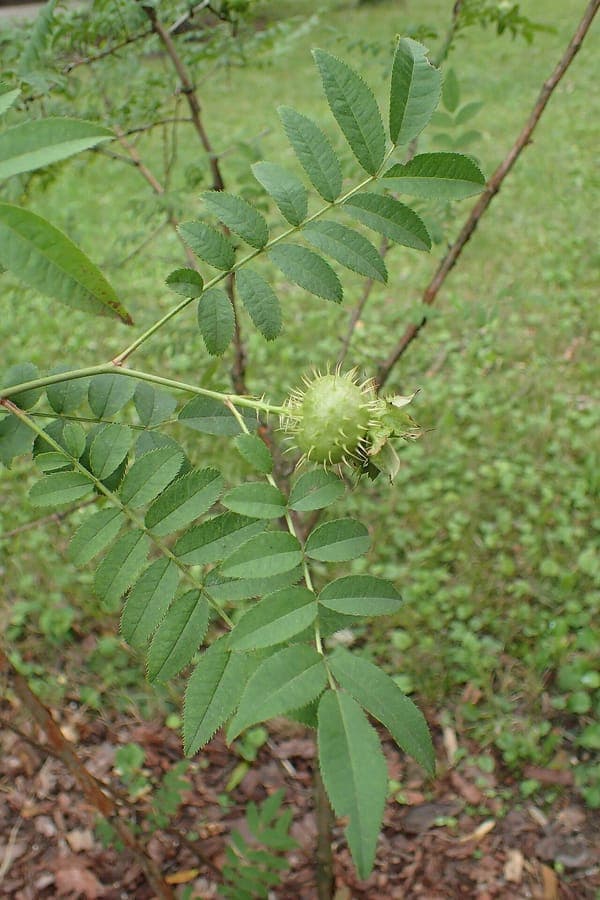
Krzysztof Ziarnek, Kenraiz / CC BY-SA 4.0, via Wikimedia Commons
Chestnut rose: complete guide
Rosa roxburghii
Want to see Chestnut rose: complete guide in your garden?
1 minute, no credit card
Overview
The Chestnut rose (Rosa roxburghii), also known as chinquapin rose, is a remarkable Asian rose from the Himalayas and China. This member of the Rosaceae family is named for its highly unusual, spiky fruits resembling chestnuts. The plant distinguishes itself by offering both single and double flower forms, with color variations from white to pink tones.
This shrub grows to approximately 1.5 to 2.5 meters tall and forms a dense, architectural plant with interesting decorative elements year-round. The unusual fruits persist until late autumn. For enthusiasts of botanical rarities and unique ornamental plants, the Chestnut rose offers an intriguing choice.
Appearance and Bloom
The Chestnut rose displays small to medium-sized, glossy green leaves with fine texture. The flowers are white to pink tones, often double or semi-double, appearing from June through July. The double forms are highly decorative with abundant petals. The flowers offer subtle, pleasant fragrance.
Following bloom, highly characteristic spherical fruits form, completely covered with flexible thorns or prickles. These fruits resemble small chestnuts and measure 2 to 3 cm diameter. The fruits ripen from green to orange-yellow and persist through December on the plant, providing exceptional visual interest.
Ideal Location
The Chestnut rose thrives in sunny to partial shade locations with at least 5-6 hours of direct daily sunlight. The plant succeeds even in partly shaded environments, though bloom and fruit set may be less abundant. In very hot climates, some afternoon shade prevents leaf scorch.
The plant is highly adaptive to various climates and grows well from zone 5 through zone 9. A sheltered location helps against very strong winds, though the plant is reasonably wind-tolerant. Avoid locations in frost pockets where frost lingers longer.
Soil
The Chestnut rose is soil-tolerant and grows in virtually all soil types. Ideal is well-drained, humus-rich soil with pH between 5.5 to 7. Heavy clay soils require amendment with organic material for improved drainage. The plant tolerates even poorer soils but thrives in nutrient-rich soil.
Add compost or well-rotted animal manure at planting time. This significantly promotes first-year growth. Ensure good drainage to prevent root rot, though the plant moderately tolerates moisture.
Free design
Want to see Chestnut rose: complete guide in your garden? Make a free design now.
Watering
The Chestnut rose is moderately drought-tolerant once well-established. Water regularly during the first growing season, approximately 2-3 times weekly depending on weather and soil type. The first year is crucial for developing strong root systems.
Once well-established (after 1-2 years), significantly reduce watering. The plant tolerates drought well, though supplemental water in dry summers promotes bloom and fruit set. In wet winters, minimize watering to prevent root rot. Preferably use rainwater.
Pruning
The Chestnut rose grows naturally into an attractive form requiring minimal pruning. Annual pruning may occur in early spring to remove dead or damaged wood. Prune no more than 20-25% of the branch structure annually.
Following bloom, spent flowers may be carefully removed, but many gardeners retain them for decorative spiky fruits. Avoid heavy pruning, which may reduce subsequent growth. Young plants may be lightly pruned to encourage denser growth.
Maintenance Calendar
March to April: Inspect frost damage, light pruning, begin fertilizing. May to June: Regular watering as bloom begins, replenish mulch. July to August: Continue watering, observe fruit set. September to October: Reduce water frequency, enjoy fruits. November to February: Minimal maintenance, enjoy decorative fruits.
Winter Hardiness
The Chestnut rose is hardy down to approximately -25 degrees Celsius (zone 5a). This makes it suitable for zones 5 through 9. In zone 4, extra protection during very cold winters may be beneficial. Once established, the plant is extremely winter-hardy.
Young plants may experience frost damage, so base mulching in the first year is recommended. The plant tolerates snowfall and hard freezes very well. Sheltered plantings against very strong winds are recommended in exposed locations.
Companion Plants
The Chestnut rose combines beautifully with other Asian roses and ornamental shrubs. Combine with other Rosa species for different bloom times. For green backdrop, plant Lonicera varieties or small Ilex shrubs.
In mixed borders, associate with Weigela or Deutzia for similar Asian heritage. The decorative fruits contrast with blue-green conifers. For fall color, plant nearby Acer palmatum.
Closing
The Chestnut rose is an exceptional choice for gardeners appreciating botanical rarities and unusual ornamental merit. With good drainage and moderate watering, this Himalayan rose forms an intriguing accent with interesting seasonal displays. Plant today and enjoy early-summer blooms and decorative spiky fruits through late autumn. Discover availability at specialized garden centers and learn more at gardenworld.app and gardenworld.app.
Want to see Chestnut rose: complete guide in your garden? Make a free design now.
Upload a photo, pick a style, and get a photorealistic design with plant list in under a minute.
No credit card required


Similar plants
Siberian crab apple: complete guide
Malus x robusta
Complete guide to the Siberian crab apple (Malus x robusta): location, soil, pruning, winter hardiness and the best companion plants for your garden.
Chinese flowering crabapple (Malus x spectabilis): complete guide
Malus x spectabilis
Meet the Chinese flowering crabapple (Malus x spectabilis): a classic spring bloomer with carmine buds and pink blossom.
Potentilla crassinervia: complete guide
Potentilla crassinervia
Potentilla crassinervia, the Corsican cinquefoil, grows wild on Corsica and Sardinia's peaks. Discover how to grow this hardy alpine rock garden gem.