
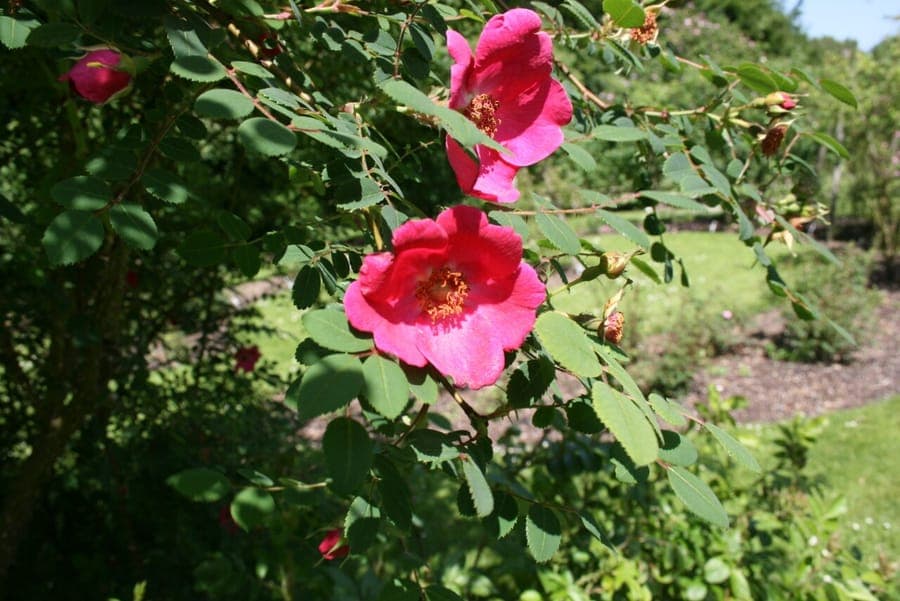
Sten Porse / CC BY-SA 3.0, via Wikimedia Commons
Rosa moyesii: complete guide
Rosa moyesii
Want to see Rosa moyesii: complete guide in your garden?
1 minute, no credit card
Overview
Rosa moyesii, commonly called the Mandarijn rose or Moyes rose, is a spectacular wild rose native to the mountains of Tibet, central China, and Bhutan. This botanically fascinating species grows naturally on alpine slopes between 1,500 and 3,000 metres elevation, having adapted to challenging mountain climates with significant temperature fluctuation and wind exposure. Belonging to the Rosaceae family, Rosa moyesii represents a heritage specimen with exceptional characteristics distinguishing it from other wild rose species. With its dramatic flowers and ornamental hips, this rose truly captivates garden visitors.
Appearance and bloom
Rosa moyesii develops into an elegant, upright shrub reaching 2 to 2.5 metres tall with stiffly ascending, minimally branched canes creating a distinctive columnar silhouette. The foliage is small, distinctly serrated, and displays a soft grey-green colour. Flowers emerge May through June in varying red tones ranging from bright scarlet to deeper crimson. Each bloom measures 5 to 7 centimetres across, composed of five simple petals arranged in an elegant formation. Following pollination, distinctive flask-shaped or heart-shaped hips develop in brilliant red to golden-orange, persisting until late autumn and attracting numerous bird species. These hips serve dual purposes as decoration and wildlife food source.
Ideal location
Rosa moyesii performs optimally with six or more hours of direct sunlight daily. The plant grows acceptably in partial shade but flowering and hip production diminish noticeably. This rose excels as a background specimen or vertical accent in mixed borders, reaching sufficient height to create structural interest. Position at least 2 metres from competing plants. The stiffly upright growth habit suits contemporary and traditional gardens equally well. While adaptable to moderate wind, sheltered positions support more robust flowering.
Soil
Rosa moyesii thrives in well-draining, humus-rich soil with pH 6.0 to 7.0. Paradoxically, the plant flourishes in modestly fertile soils; excessive fertility stimulates vegetative growth at flowering's expense. Amend planting holes with mature compost and aged leaf-mould. This rose responds positively to annual spring application of balanced organic fertiliser. Avoid waterlogged conditions, particularly in winter months. Mountain-origin species tolerate lean, rocky substrates better than heavily amended soil.
Free design
Want to see Rosa moyesii: complete guide in your garden? Make a free design now.
Watering
Once established, Rosa moyesii demonstrates considerable drought tolerance reflecting its mountain heritage. During establishment year and summer droughts, consistent deep watering becomes essential. Water early morning to prevent fungal diseases; direct irrigation to soil rather than foliage. Maintain regularly moist but never waterlogged soil; deep, infrequent watering encourages deeper root development. Mulch 5 centimetres deep with wood chips to conserve moisture and moderate temperature fluctuation.
Pruning
Prune Rosa moyesii after flowering, typically mid-July, removing all spent flowers while retaining ornamental hips. Thin only heavily overlapping or crossing canes, preserving the upright architecture. Since flowering occurs on previous year's wood, aggressive pruning dramatically reduces next season's display. Light maintenance pruning February through March addresses winter damage only. The naturally upright form requires minimal intervention to remain handsome.
Maintenance calendar
May-June: Flowering period; monitor for fungal diseases and spider mites. June-July: Post-bloom assessment; retain hips for ornamental value. August-October: Supplemental watering during droughts; observe autumn hip colour progression and bird activity. November-February: Hip display and wildlife feeding; light maintenance pruning in February if needed. March-April: Growth preparation; apply balanced organic fertiliser.
Winter hardiness
Rosa moyesii is exceptionally winter-hardy, suitable for USDA hardiness zones 5 to 8, withstanding temperatures as low as -20 degrees Celsius. This makes it excellent for the Netherlands, Belgium, and Germany. The plant maintains its distinctive upright structure throughout winter, and the brilliant red hips provide essential nutrition for birds during frozen months. No winter protection is required in these regions.
Companion plants
Rosa moyesii combines magnificently with other Asian species and European wild roses. Create dramatic red-rose compositions with Rosa rugosa or Rosa davidii. Underplant with low-growing groundcovers such as Juniperus horizontalis or Cotoneaster horizontalis for textural contrast. Tall background plants like Ligustrum or Berberis create effective frames. Shrubs with contrasting foliage such as Sarcococca confusa or Mahonia provide supplementary seasonal interest.
Closing
Rosa moyesii is undoubtedly a showstopper for gardeners seeking something botanically distinctive and visually arresting. With its spectacular scarlet flowers and ornamental hips, this Asian rose provides multi-season interest and reliable performance. Whether designing a specialty rose garden or selecting an outstanding focal-point specimen, Rosa moyesii delivers exceptional results and enduring garden value.
Want to see Rosa moyesii: complete guide in your garden? Make a free design now.
Upload a photo, pick a style, and get a photorealistic design with plant list in under a minute.
No credit card required


Similar plants
Siberian crab apple: complete guide
Malus x robusta
Complete guide to the Siberian crab apple (Malus x robusta): location, soil, pruning, winter hardiness and the best companion plants for your garden.
Chinese flowering crabapple (Malus x spectabilis): complete guide
Malus x spectabilis
Meet the Chinese flowering crabapple (Malus x spectabilis): a classic spring bloomer with carmine buds and pink blossom.
Potentilla crassinervia: complete guide
Potentilla crassinervia
Potentilla crassinervia, the Corsican cinquefoil, grows wild on Corsica and Sardinia's peaks. Discover how to grow this hardy alpine rock garden gem.