
Wikimedia Commons / CC BY-SA 3.0, via Wikimedia Commons
Soft downy rose: complete guide
Rosa mollis
Want to see Soft downy rose: complete guide in your garden?
1 minute, no credit card
Overview
Rosa mollis, commonly known as the soft downy rose, is a resilient, deciduous shrub that thrives in temperate climates. Native to regions across Northern and Central Europe - including Finland, the Baltic States, and France - this wild rose brings subtle charm to informal and wildlife-friendly gardens. It grows best in USDA hardiness zones 4 to 8, making it suitable for most of the UK, Ireland, and large parts of North America. The plant is part of the Rosaceae family and stands out for its softly hairy foliage and modest, single-petaled blooms.
Unlike many cultivated roses, Rosa mollis doesn't demand constant care. It's perfect for gardeners who prefer a natural aesthetic over high-maintenance displays. This shrub fits seamlessly into cottage gardens, woodland edges, or native hedgerows. If you're planning a wild garden, try using gardenworld.app to design a layout that highlights Rosa mollis alongside other native species.
Appearance & bloom cycle
Rosa mollis typically reaches a height of 120 to 180 cm, spreading 100 to 150 cm wide. Its upright, slightly arching habit creates a loose, open structure. The leaves are dark green, deeply veined, and covered with fine down on the underside - giving them a soft, velvety feel. This tactile quality is one of its defining features.
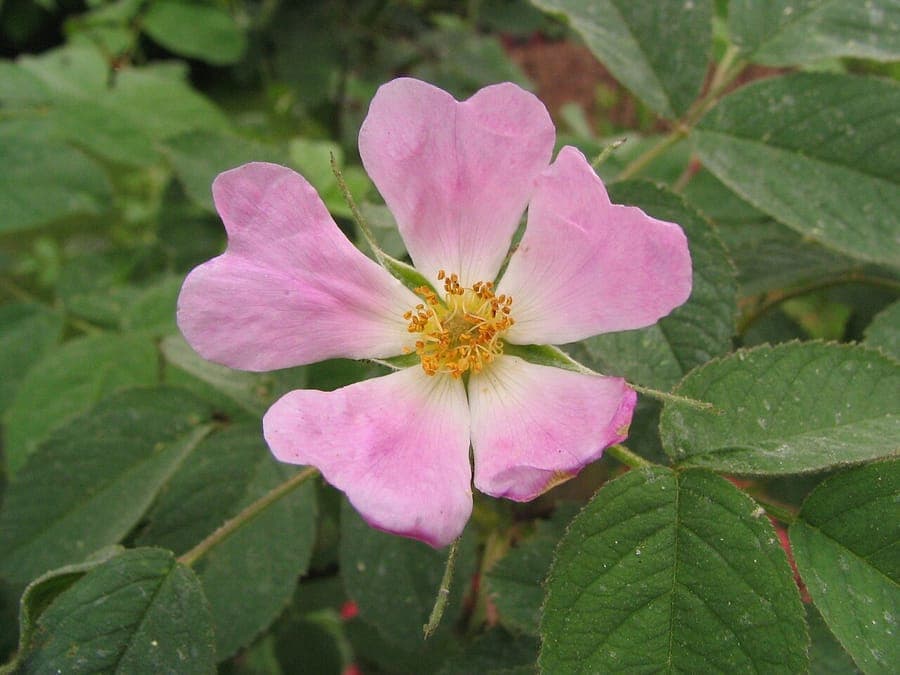
From late June to mid-July, the plant produces single, five-petaled flowers in soft pink, fading to near-white at the center. Each bloom measures 4 to 6 cm across and has a delicate, open form. While not fragrant, the flowers attract pollinators like bees and hoverflies. After blooming, small, oval hips develop, turning bright red by autumn. These persist into winter and are a valuable food source for birds such as thrushes and finches.
Ideal location
For best results, plant Rosa mollis in full sun to light shade (light level 8/10). It needs at least six hours of direct sunlight daily to flower well. A spot at the back of a border, along a fence, or in a mixed shrub hedge works perfectly. Allow 1.5 meters between plants to give them space to grow without crowding. Avoid deep shade, which reduces flowering and encourages leggy growth.
In exposed gardens, young plants may benefit from a windbreak during their first winter. Mature shrubs are generally sturdy, but strong gusts can damage long canes. Use gardenworld.app to visualize how Rosa mollis fits into your existing garden structure and plan for ideal positioning.
Free design
Want to see Soft downy rose: complete guide in your garden? Make a free design now.
Soil requirements
This rose prefers well-drained, moderately fertile soil with a pH between 7.0 and 7.5 - slightly alkaline to neutral. It tolerates clay if drainage is improved, but struggles in waterlogged conditions. Avoid heavy, compacted soils. Before planting, work in well-rotted garden compost to improve soil structure and root establishment. Do not over-fertilize; excess nitrogen promotes leafy growth at the expense of flowers and hips.
Watering
Water newly planted Rosa mollis regularly during the first growing season, especially in dry spells. Provide about 10 litres per week for the first 3–6 months. Once established, it's fairly drought-tolerant, though occasional deep watering during prolonged dry periods will support better blooming and hip development. Water at the base to prevent fungal diseases like black spot.
Pruning
Minimal pruning is required. Rosa mollis looks best when allowed to grow in its natural form. Only remove dead, damaged, or crossing stems in late winter or early spring (February to March). Cut back any old wood over five years to encourage rejuvenation. Use sharp, clean secateurs and disinfect blades between cuts to prevent disease spread.
Maintenance calendar
- Jan: inspect for winter damage
- Feb: remove dead wood
- Mar: light pruning; apply compost mulch
- Apr: check for aphids; water if dry
- May: monitor for pests
- Jun-Jul: flowering period; avoid pruning
- Aug: water during droughts
- Sep: clear fallen leaves to reduce disease risk
- Oct: harvest hips or leave for birds
- Nov: protect young plants with leaf litter
- Dec: final inspection; no action needed for mature shrubs
Winter hardiness
Rosa mollis is extremely hardy, surviving temperatures down to -25°C (USDA zone 4). No winter protection is needed for established plants. Young specimens may benefit from a light mulch of straw or leaves around the base in harsh winters.
Companion plants
Pair Rosa mollis with late-summer perennials like Echinacea, Persicaria, or ornamental grasses such as Molinia. These complement its form and extend seasonal interest. Low-growing shrubs like Cotoneaster or Symphoricarpos enhance its natural look. Avoid overly aggressive groundcovers that might smother its base.
Closing
Rosa mollis is a quiet performer, not flashy but deeply rewarding. It supports wildlife, asks little in return, and fits beautifully into naturalistic designs. Find it at garden centres across the UK and US, including Truffaut, Jardiland, OBI, Hornbach, and Gamma. And when planning your planting scheme, remember that gardenworld.app helps you create a cohesive, balanced garden where Rosa mollis can truly shine.
Want to see Soft downy rose: complete guide in your garden? Make a free design now.
Upload a photo, pick a style, and get a photorealistic design with plant list in under a minute.
No credit card required


Similar plants
Siberian crab apple: complete guide
Malus x robusta
Complete guide to the Siberian crab apple (Malus x robusta): location, soil, pruning, winter hardiness and the best companion plants for your garden.
Chinese flowering crabapple (Malus x spectabilis): complete guide
Malus x spectabilis
Meet the Chinese flowering crabapple (Malus x spectabilis): a classic spring bloomer with carmine buds and pink blossom.
Potentilla crassinervia: complete guide
Potentilla crassinervia
Potentilla crassinervia, the Corsican cinquefoil, grows wild on Corsica and Sardinia's peaks. Discover how to grow this hardy alpine rock garden gem.