
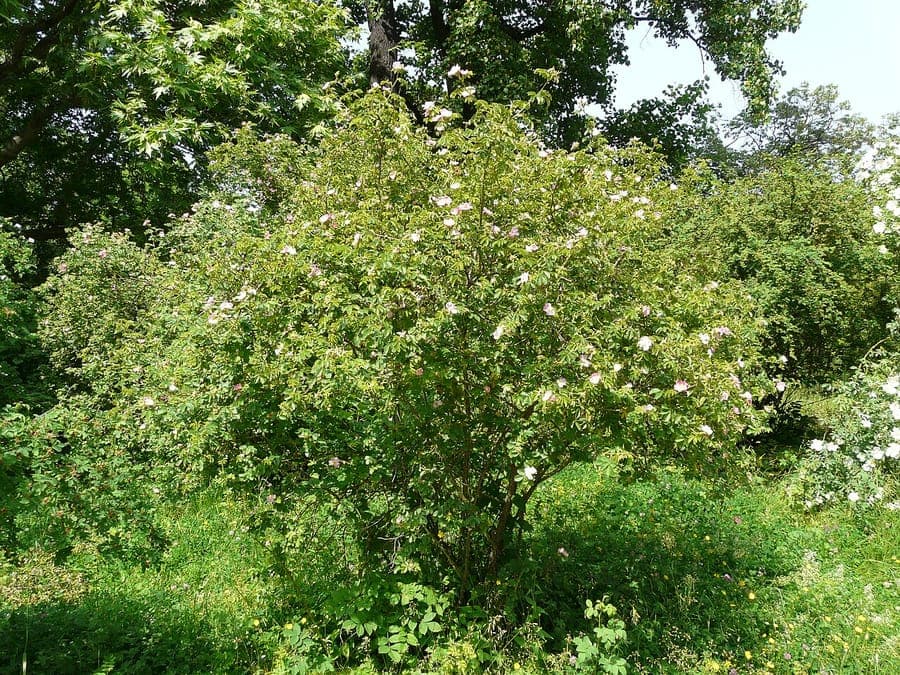
Andrea Moro / CC BY-SA 4.0, via Wikimedia Commons
Small-flower sweetbriar: complete guide
Rosa micrantha
Want to see Small-flower sweetbriar: complete guide in your garden?
1 minute, no credit card
Overview
Rosa micrantha, commonly known as small-flower sweetbriar, is a resilient and understated shrub that brings subtle charm to gardens across Europe. Native to countries like France, Germany, and Great Britain, this species thrives in open woodlands, scrublands, and hedgerows. As a subshrub, it reaches up to 120 cm in height with a spread of about 150 cm. Its compact yet spreading habit makes it suitable for naturalistic plantings, cottage gardens, and even informal hedges. For gardeners seeking a low-fuss, ecologically sound choice, this rose fits the bill. On gardenworld.app, you can design a garden layout that integrates Rosa micrantha seamlessly into your landscape.
Appearance & bloom cycle
The small-flower sweetbriar is named for its modest blooms - delicate purple flowers, 2 to 3 cm wide, that appear in clusters of three to five from June through July. The petals often carry a soft wine-purple hue, fading slightly as they mature. The foliage is pinnate, with five to seven narrow leaflets that emit a faint apple-like scent when crushed - a trait shared with other eglantine roses. After flowering, small, round hips develop, ripening to a glossy red by autumn. These persist into winter, providing food for birds like thrushes and finches. The plant's stems are armed with fine prickles, typical of wild roses, and take on a reddish tinge when young.
Ideal location
This rose thrives in full sun, scoring an 8 out of 10 on the light scale. Aim for at least six to eight hours of direct sunlight daily. It performs best in USDA hardiness zones 5 to 8, making it suitable for most of the UK, northern Europe, and the northern US. Choose a spot with good air circulation to prevent fungal diseases like powdery mildew. Avoid deep shade, where growth becomes leggy and flowering sparse. A south- or east-facing border, or the edge of a woodland garden, works well. For inspiration on where to place it, check gardenworld.app for seasonal garden designs featuring native shrubs.
Soil requirements
Rosa micrantha prefers neutral to alkaline soils with a pH between 7.5 and 8.0. It does best in well-drained, loamy or sandy soils rich in organic matter. While it tolerates poor soils, it struggles in highly acidic conditions. If your garden has acidic soil, amend it with ground limestone and well-rotted compost before planting. Avoid heavy clay unless you improve drainage with grit and organic matter. The plant is drought-tolerant once established, but waterlogged roots will lead to rot.
Free design
Want to see Small-flower sweetbriar: complete guide in your garden? Make a free design now.
Watering
Young plants need consistent moisture during their first growing season. Water deeply once a week with about 10 litres per plant during dry spells. After that, Rosa micrantha becomes highly drought-resistant. Mature plants rarely need supplemental watering, relying on natural rainfall. When watering is necessary, apply it at the base to keep foliage dry and reduce disease risk. Overhead watering encourages fungal issues, so use a soaker hose or water by hand at ground level.
Pruning
Prune in late winter or early spring before new growth emerges. Focus on removing dead, damaged, or crossing stems to improve airflow. Since it blooms on old wood, avoid hard pruning - cut back only up to one-third of the previous year's growth. Use clean, sharp secateurs to prevent disease spread. Avoid pruning after midsummer, as you may remove next year's flower buds. Light shaping is acceptable, but let the plant maintain its natural form.
Maintenance calendar
- January: Inspect for winter damage; light cleanup
- February: Prepare tools for pruning; check for swelling buds
- March: Prune lightly; remove old mulch if moldy
- April: Monitor for new shoots; apply organic mulch
- May: No action needed; watch for aphids
- June: Peak bloom; avoid disturbing the plant
- July: Flowers fade; collect seed heads if desired
- August: Remove spent foliage; check for mildew
- September: Hips form; leave for wildlife
- October: Clear fallen leaves; avoid heavy pruning
- November: Protect base with leaf litter if young
- December: Minimal care; plant dormant
Winter hardiness
This species is fully hardy down to -20°C (USDA zone 5). It requires no winter protection in most temperate climates. The plant loses its leaves in autumn and remains dormant until spring. Even in harsh winters, established plants survive without issue. Young specimens may benefit from a light mulch around the base to protect emerging roots.
Companion plants
Pair Rosa micrantha with Echinacea, Nepeta, or ornamental grasses like Stipa tenuissima. It works well in cottage borders or wildlife gardens. Avoid aggressive spreaders like mint or ground ivy. Instead, choose perennials with similar needs - drought-tolerant, sun-loving plants. Combine with Salvia nemorosa or Achillea millefolium for a long bloom season. The purple blooms contrast beautifully with silver-foliaged plants like Artemisia or Santolina.
Closing
Rosa micrantha is not flashy, but it's dependable. It asks for little and gives back much - flowers, hips, habitat, and quiet beauty. You can find it at garden centres across the UK or online retailers. When planted in the right spot, it thrives for years with minimal care. For design ideas and planting schemes, visit gardenworld.app and explore custom garden plans tailored to native species like this one.
Want to see Small-flower sweetbriar: complete guide in your garden? Make a free design now.
Upload a photo, pick a style, and get a photorealistic design with plant list in under a minute.
10,000+ gardens designed already
No credit card required


Similar plants
Siberian crab apple: complete guide
Malus x robusta
Complete guide to the Siberian crab apple (Malus x robusta): location, soil, pruning, winter hardiness and the best companion plants for your garden.
Chinese flowering crabapple (Malus x spectabilis): complete guide
Malus x spectabilis
Meet the Chinese flowering crabapple (Malus x spectabilis): a classic spring bloomer with carmine buds and pink blossom.
Potentilla crassinervia: complete guide
Potentilla crassinervia
Potentilla crassinervia, the Corsican cinquefoil, grows wild on Corsica and Sardinia's peaks. Discover how to grow this hardy alpine rock garden gem.