
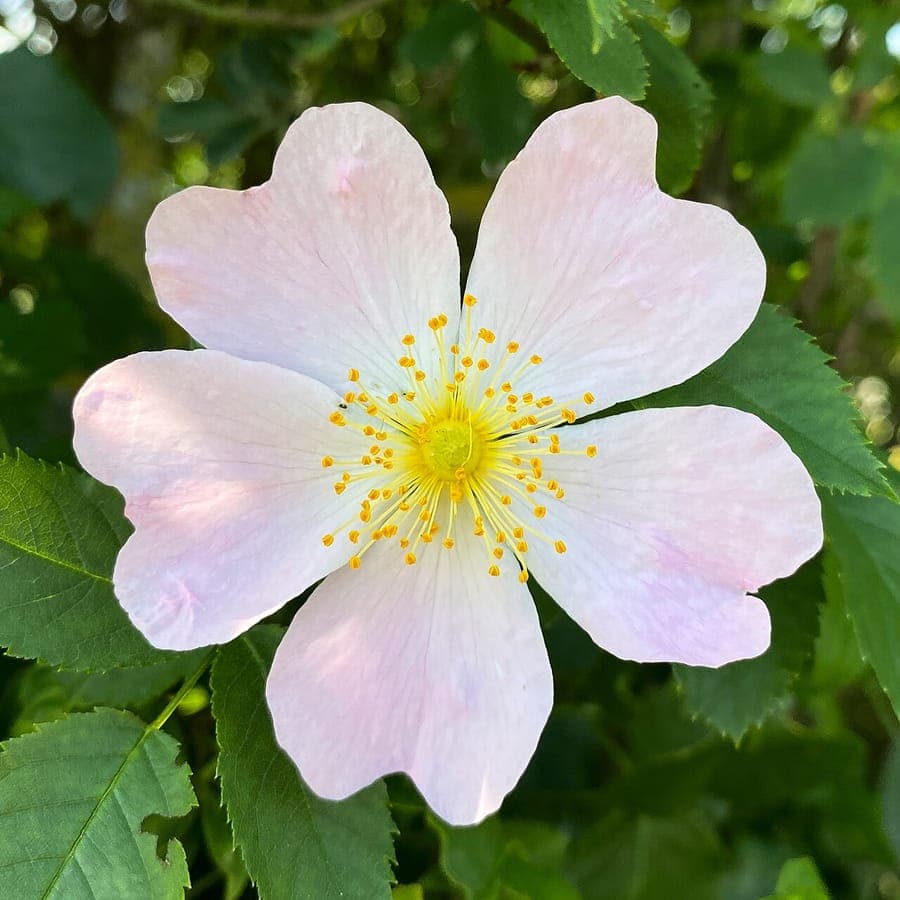
Hangman'sDeath / CC0, via Wikimedia Commons
Corymb rose: complete guide
Rosa corymbifera
Want to see Corymb rose: complete guide in your garden?
1 minute, no credit card
Overview
Rosa corymbifera, commonly known as the Corymb rose, is a hardy and adaptable shrub rose native to central and southern Europe. It's not commonly found in the wild in the UK or North America, but it's a brilliant choice for gardeners looking to add a natural, informal look to their borders or hedges. With its subshrub to vine-like growth habit and impressive disease resistance, this rose fits perfectly in cottage gardens, wildlife areas, or as a screening plant.
One of its standout traits is its ability to root where stems touch the ground, making it excellent for naturalising or filling in bare spots. The plant grows upright but develops long, arching canes that can be trained along fences or trellises. Whether you're designing a wildflower meadow or a mixed border, the Corymb rose brings structure and seasonal interest. On gardenworld.app, you can design a planting layout that matches its sprawling habit and bloom timing.
Appearance & bloom cycle
The Corymb rose has glossy, dark green pinnate leaves made up of five to seven leaflets, giving it a lush, textured look. In early summer-typically from late June through July-it produces clusters of small, white to pale yellow flowers, each about 2–3 cm across. The blooms have five petals and a prominent cluster of golden stamens, attracting bees, hoverflies, and other pollinators.
After flowering, the plant develops small, round hips, roughly 1 cm in diameter. These start green and mature to a deep purple or brownish-black, often persisting into winter. They're not particularly showy compared to some ornamental roses, but they're a valuable food source for birds. Mature plants reach 150–250 cm in height with a spread of 120–180 cm, depending on support and pruning.
Ideal location
This rose thrives in full sun, scoring an 8 out of 10 for light needs-meaning it needs at least 6–8 hours of direct sunlight daily. While it can tolerate light shade, flowering will be sparse and stems may become leggy. A south- or west-facing spot works best, especially if you want to train it as a climber.
It's ideal as a background shrub in mixed borders, part of a native hedge, or trained against a wooden fence. It combines well with plants like dogwood, elderberry, or guelder rose. To visualise spacing and companion planting, check gardenworld.app for layout ideas that suit your garden size and style.
Soil requirements
Rosa corymbifera isn't picky about soil but performs best in well-drained, moderately fertile ground with a pH between 6.5 and 7.0. It tolerates clay soils if they're not waterlogged, and sandy soils if amended with organic matter. Avoid overly rich or wet soils-both can lead to root rot or excessive leafy growth at the expense of flowers.
When planting, mix in a bucket of compost or well-rotted manure into the planting hole. A light mulch of compost or leaf mould in spring helps retain moisture and suppress weeds. Steer clear of high-nitrogen fertilisers, which encourage foliage over blooms.
Free design
Want to see Corymb rose: complete guide in your garden? Make a free design now.
Watering
During its first growing season, water deeply once or twice a week, especially in dry spells-about 10 litres per plant. Once established, it's fairly drought-tolerant and only needs supplemental watering during prolonged dry periods (three weeks or more without rain).
Always water at the base, not over the foliage, to reduce the risk of fungal diseases like powdery mildew. A drip hose or watering can is better than overhead sprinklers.
Pruning
Pruning is minimal but beneficial. In late winter or early spring (February to March), remove any dead, damaged, or crossing stems. Cut back older canes by about one-third to encourage new growth and flowering. For a tidier look, you can shape the plant lightly, but avoid heavy pruning in autumn to preserve the winter hips.
If growing as a climber, train the main stems horizontally-this encourages more flowering side shoots. Don't over-prune; this rose blooms on old wood, so excessive cutting can reduce next year's flowers.
Maintenance calendar
- January: Check for winter damage; remove broken stems if needed.
- February: Begin light pruning; cut back old wood by one-third.
- March: Finish pruning; apply compost around the base.
- April: Monitor for aphids or mildew; treat early with organic sprays if necessary.
- May: Plant new specimens; keep soil moist.
- June: Main flowering period begins; ensure good air circulation.
- July: Peak bloom; avoid deadheading to allow hips to form.
- August: Possible late flush; leave hips intact.
- September: Reduce watering; let hips remain for birds.
- October: Clear fallen leaves to prevent disease.
- November: No action needed unless in a wet climate-add light mulch.
- December: Enjoy winter structure and hips.
Winter hardiness
This rose is fully hardy in USDA zones 5 to 9, tolerating temperatures down to -20°C. In the UK (zone 8) and similar climates, it requires no winter protection. The persistent hips add winter interest and support garden wildlife. In areas with heavy winter rain, a light mulch can help protect the crown, but it's rarely necessary.
Companion plants
Pair the Corymb rose with late-summer perennials like asters, echinacea, or sedum. Low-growing ground covers such as thyme or creeping phlox help suppress weeds and reduce soil moisture loss. Combine with other wild roses like Rosa canina or Rosa rubiginosa for a diverse, insect-friendly hedge.
For visual contrast, plant alongside silver-foliaged herbs like lavender or Russian sage-their colour and texture highlight the rose's glossy green leaves.
Closing
The Corymb rose is a low-maintenance, wildlife-friendly shrub that brings year-round interest to the garden. Whether used as a hedge, screen, or standalone feature, it's tough, attractive, and supports biodiversity. Available at garden centres across the UK and North America. With the right spot and minimal care, it will thrive for years. And remember, you can use gardenworld.app to simulate how this rose will grow and fit into your existing garden design.
Want to see Corymb rose: complete guide in your garden? Make a free design now.
Upload a photo, pick a style, and get a photorealistic design with plant list in under a minute.
10,000+ gardens designed already
No credit card required


Similar plants
Siberian crab apple: complete guide
Malus x robusta
Complete guide to the Siberian crab apple (Malus x robusta): location, soil, pruning, winter hardiness and the best companion plants for your garden.
Chinese flowering crabapple (Malus x spectabilis): complete guide
Malus x spectabilis
Meet the Chinese flowering crabapple (Malus x spectabilis): a classic spring bloomer with carmine buds and pink blossom.
Potentilla crassinervia: complete guide
Potentilla crassinervia
Potentilla crassinervia, the Corsican cinquefoil, grows wild on Corsica and Sardinia's peaks. Discover how to grow this hardy alpine rock garden gem.