
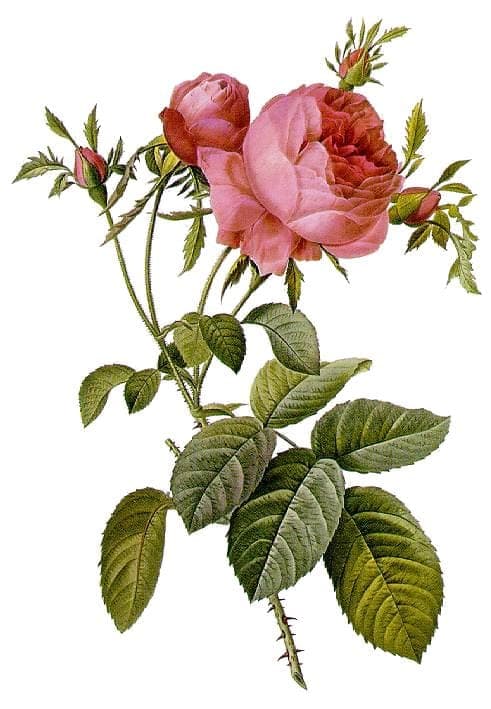
Pierre-Joseph Redouté / Public domain, via Wikimedia Commons
Cabbage rose: complete guide
Rosa centifolia
Want to see Cabbage rose: complete guide in your garden?
1 minute, no credit card
Overview
Rosa centifolia, better known as the Cabbage rose, is one of the most iconic old garden roses. With its dense, many-petaled blooms and rich, heady fragrance, it's a favorite for cottage gardens, romantic borders, and cut-flower enthusiasts. Originally bred in the Netherlands and France centuries ago, this rose thrives in temperate climates and is hardy to USDA zone 6 (-23°C to -18°C). It's not the most disease-resistant rose, but its charm and perfume make up for the extra care it needs.
If you're planning a garden with vintage appeal, the Cabbage rose fits perfectly. On gardenworld.app, you can design a layout that highlights its full, rounded form and soft color palette, placing it where its scent can be enjoyed near paths or seating areas.
Appearance & bloom cycle
The Cabbage rose earns its name from the tight, cabbage-like flower heads. Blooms are typically 8–10 cm wide, with over 100 petals in shades of creamy white, soft pink, or deep rose. The flowers form on arching canes and appear in flushes from late June through July, with a lighter repeat bloom possible in August if you deadhead promptly.
The shrub reaches 100–150 cm in height and spreads 80–120 cm wide. Foliage is dark green, semi-glossy, and tends to be susceptible to powdery mildew in humid conditions. Stems are thorny and slightly zigzagging, giving the plant a relaxed, informal look-ideal for naturalistic planting schemes.
Ideal location
Plant your Cabbage rose where it gets at least 6 hours of direct sun daily. Full sun encourages better flowering and reduces fungal issues. A spot with good air movement helps prevent mildew, so avoid cramming it into tight corners. It works well as a specimen shrub, against a fence, or in the middle of a mixed border.
If you're layering planting heights, place low-growing companions like nepeta or alliums at its base to hide bare lower stems. For visual inspiration, check gardenworld.app to see how designers integrate this rose into cohesive, multi-season schemes.
Soil requirements
This rose prefers fertile, well-drained loam or clay-loam with a pH between 6.0 and 6.8. Avoid sandy soils unless amended heavily with compost. Before planting, dig a hole 50x50 cm and mix in well-rotted manure or garden compost. A base layer of broken terracotta or gravel improves drainage, especially in heavy soils.
Ensure the graft union is level with the soil surface-planting too deep can lead to rot. Mulch annually in spring with compost to enrich the soil and retain moisture.
Free design
Want to see Cabbage rose: complete guide in your garden? Make a free design now.
Watering
Water deeply once a week during dry spells, providing 10–15 liters per mature shrub. Always water at the base to keep foliage dry and reduce disease risk. Use rainwater if possible, as Cabbage roses can be sensitive to lime in tap water.
Consistent moisture is key during bud formation and bloom. Letting the soil dry out completely can cause buds to drop. A 5–8 cm mulch layer helps maintain even moisture and suppresses weeds.
Pruning
Prune in early spring (March) before buds break. Remove dead, damaged, or crossing stems. Cut back healthy canes by about one-third, just above an outward-facing bud. This encourages an open centre and better airflow.
Avoid heavy pruning-unlike modern hybrid teas, Cabbage roses bloom on older wood. Over-pruning reduces flowering. After the first flush, deadhead to encourage a second, lighter bloom.
Maintenance calendar
- Jan: Inspect canes for winter damage
- Feb: Prepare tools and plan pruning
- Mar: Light pruning and clean-up
- Apr: Apply compost mulch
- May: Monitor for aphids and mildew
- Jun: First bloom begins; ensure consistent watering
- Jul: Peak flowering; deadhead spent blooms
- Aug: Possible second flush; control weeds
- Sep: Stop feeding to harden new growth
- Oct: Mulch with compost
- Nov: Remove fallen leaves to reduce disease carryover
- Dec: Check mulch layer; protect base in harsh winters
Winter hardiness
Hardy to USDA zone 6, the Cabbage rose tolerates winter lows down to -23°C. In colder zones, apply a thick layer of mulch (straw or leaf mould) around the base in late autumn. Young plants may benefit from burlap wraps in exposed areas.
Avoid wet, stagnant soil in winter-root rot is a real threat in poorly drained sites.
Companion plants
Pair with fragrant, airy plants like lavender, salvia, allium, or nepeta. These not only contrast the dense rose form but also improve airflow and attract pollinators. Low-growers like campanula or thrift help cover bare lower stems.
Avoid aggressive ground covers like ivy or mint that compete for nutrients. Stick to well-behaved perennials that don't overcrowd the rose's root zone.
Closing
The Cabbage rose brings timeless elegance to any garden. It's not the easiest rose to grow, but its perfume and old-world beauty are unmatched. Plant it where you can enjoy its scent and soft blooms up close.
You'll find Rosa centifolia at most garden centres in spring, often in 3–5 litre pots. Look for healthy green foliage and avoid plants with white powdery spots. With proper care, your Cabbage rose will become a centrepiece for years. And remember, on gardenworld.app you can build a custom garden plan that makes the most of this classic rose's strengths.
Want to see Cabbage rose: complete guide in your garden? Make a free design now.
Upload a photo, pick a style, and get a photorealistic design with plant list in under a minute.
No credit card required


Similar plants
Siberian crab apple: complete guide
Malus x robusta
Complete guide to the Siberian crab apple (Malus x robusta): location, soil, pruning, winter hardiness and the best companion plants for your garden.
Chinese flowering crabapple (Malus x spectabilis): complete guide
Malus x spectabilis
Meet the Chinese flowering crabapple (Malus x spectabilis): a classic spring bloomer with carmine buds and pink blossom.
Potentilla crassinervia: complete guide
Potentilla crassinervia
Potentilla crassinervia, the Corsican cinquefoil, grows wild on Corsica and Sardinia's peaks. Discover how to grow this hardy alpine rock garden gem.