
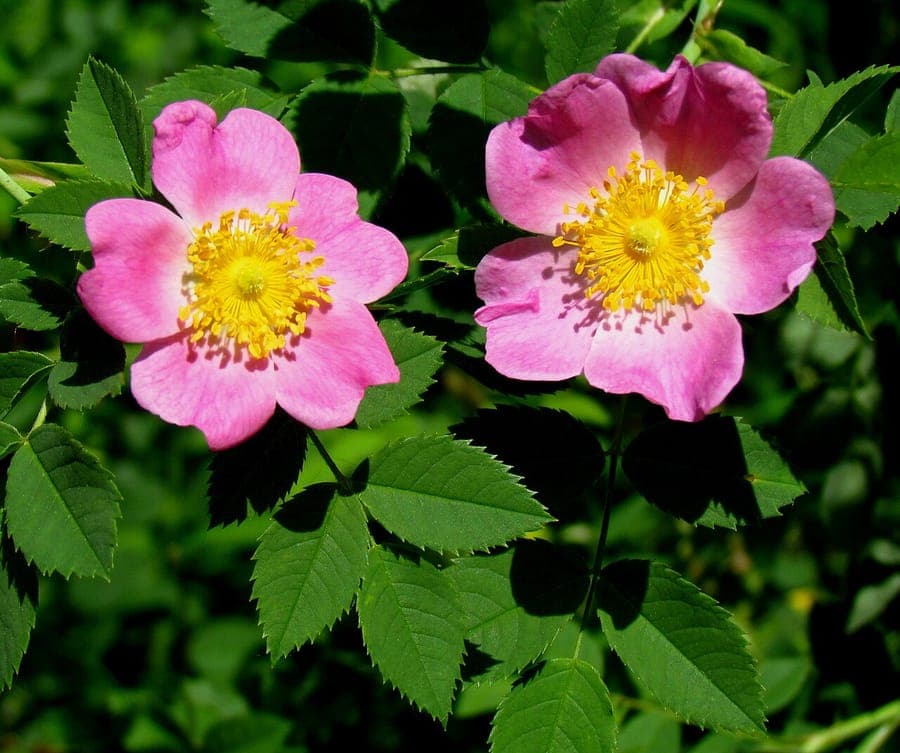
D. Gordon E. Robertson / CC BY-SA 3.0, via Wikimedia Commons
Carolina rose: complete guide
Rosa carolina
Want to see Carolina rose: complete guide in your garden?
1 minute, no credit card
Overview
Rosa carolina, commonly known as the Carolina rose, is a subshrub native to the eastern United States, ranging from Alabama to Illinois and Connecticut. It's one of the few truly native roses in North America, making it a top choice for ecologically minded gardeners. In the UK and across temperate Europe, it's gaining popularity for its understated beauty, resilience, and support for local wildlife. This rose thrives in naturalistic planting schemes where structure, seasonality, and habitat value matter.
As a horticulturist who's worked extensively with native species, I can tell you Rosa carolina isn't flashy - it's dependable. It performs year after year with minimal fuss, offering consistent flowering and excellent winter interest. On gardenworld.app, you can design a planting plan that integrates this rose into mixed borders, considering spacing, mature spread, and seasonal transitions.
Appearance & bloom cycle
The Carolina rose grows 2 to 4 feet (60–120 cm) tall with a spread of up to 3 feet (90 cm). Stems are slender, arching, and lightly thorned - far less aggressive than hybrid tea roses. The foliage is dark green, pinnately compound with 5–7 oval leaflets, turning brilliant shades of orange and purple in autumn.
From June to July, single, five-petaled flowers bloom - 2 to 3 inches (5–7 cm) wide - in soft pink with a golden center. They emit a light, sweet fragrance attractive to bees, butterflies, and hoverflies. After flowering, small round hips (1–1.5 cm) develop, ripening to bright red-orange by late summer and persisting into winter. These are rich in vitamin C and provide food for birds like waxwings and finches.
Ideal location
Plant Rosa carolina in full sun - at least 6 hours of direct sunlight daily - for maximum bloom production. It tolerates partial shade but will flower less and grow leggy. Good air circulation is essential to prevent fungal issues, so avoid planting it in tight corners or dense shrub borders. It works well in informal hedges, naturalised areas, or as a specimen in a mixed border.
It thrives in USDA hardiness zones 4 to 8. In cooler maritime climates like the UK, it performs reliably in zones 6–8. Use gardenworld.app to assess your garden's microclimate and determine the best spot for this rose, factoring in wind exposure and soil drainage.
Free design
Want to see Carolina rose: complete guide in your garden? Make a free design now.
Soil requirements
This rose is adaptable. It grows well in sandy, loamy, or clay soils as long as drainage is adequate. The ideal pH is between 4.0 and 7.0, meaning it tolerates both slightly acidic and neutral conditions. Avoid waterlogged or compacted soils. At planting, mix in a little compost, but don't over-fertilise - native plants prefer lean conditions.
Watering
During the first growing season, water weekly if rainfall is below 2.5 cm. Deep watering encourages deep root development. Once established, Rosa carolina is moderately drought-tolerant. Water only during prolonged dry spells. Always water at the base to keep foliage dry and reduce the risk of black spot or powdery mildew.
Pruning
Prune in late winter or early spring (February to early March) before new growth emerges. Remove dead, damaged, or crossing canes to improve airflow. Cut back older woody stems by one-third to stimulate new shoots. Avoid heavy pruning - this rose blooms on old wood, so cutting too hard reduces flowering.
Maintenance calendar
- Jan: Inspect for winter damage
- Feb: Light pruning and clean up debris
- Mar: Check for pests, apply compost
- Apr: Apply thin mulch layer
- May: Monitor for fungal issues in wet weather
- Jun–Jul: Peak bloom, observe pollinators
- Aug: Reduce watering, watch for stress
- Sep: Hips begin to colour up
- Oct: Leave fallen leaves for overwintering insects
- Nov: Cease pruning, let plant go dormant
- Dec: Final inspection, protect base if needed
Winter hardiness
Rosa carolina is hardy in USDA zones 4–8. In zone 4, a light mulch around the crown helps protect roots during extreme cold. Older plants survive snow cover and sub-zero temperatures with no issues. The plant dies back to woody stems and resprouts vigorously in spring.
Companion plants
Pair with native perennials like Echinacea purpurea, Monarda fistulosa, or Panicum virgatum. These share similar cultural needs and create a pollinator-rich planting. Avoid aggressive groundcovers like English ivy that can smother the rose. Low herbs such as thyme or oregano make good understory matches.
Closing
The Carolina rose is a quiet achiever - not showy, but deeply valuable. It supports biodiversity, asks little in return, and brings seasonal interest from spring bloom to winter hips. It's a perfect fit for low-intervention gardens. You'll find it at garden centres across the UK and US, often labelled as 'native rose' or 'Carolina rose'. For thoughtful placement and design, plan your layout on gardenworld.app, where you can visualise how this rose fits into your long-term garden vision.
Want to see Carolina rose: complete guide in your garden? Make a free design now.
Upload a photo, pick a style, and get a photorealistic design with plant list in under a minute.
No credit card required


Similar plants
Siberian crab apple: complete guide
Malus x robusta
Complete guide to the Siberian crab apple (Malus x robusta): location, soil, pruning, winter hardiness and the best companion plants for your garden.
Chinese flowering crabapple (Malus x spectabilis): complete guide
Malus x spectabilis
Meet the Chinese flowering crabapple (Malus x spectabilis): a classic spring bloomer with carmine buds and pink blossom.
Potentilla crassinervia: complete guide
Potentilla crassinervia
Potentilla crassinervia, the Corsican cinquefoil, grows wild on Corsica and Sardinia's peaks. Discover how to grow this hardy alpine rock garden gem.