
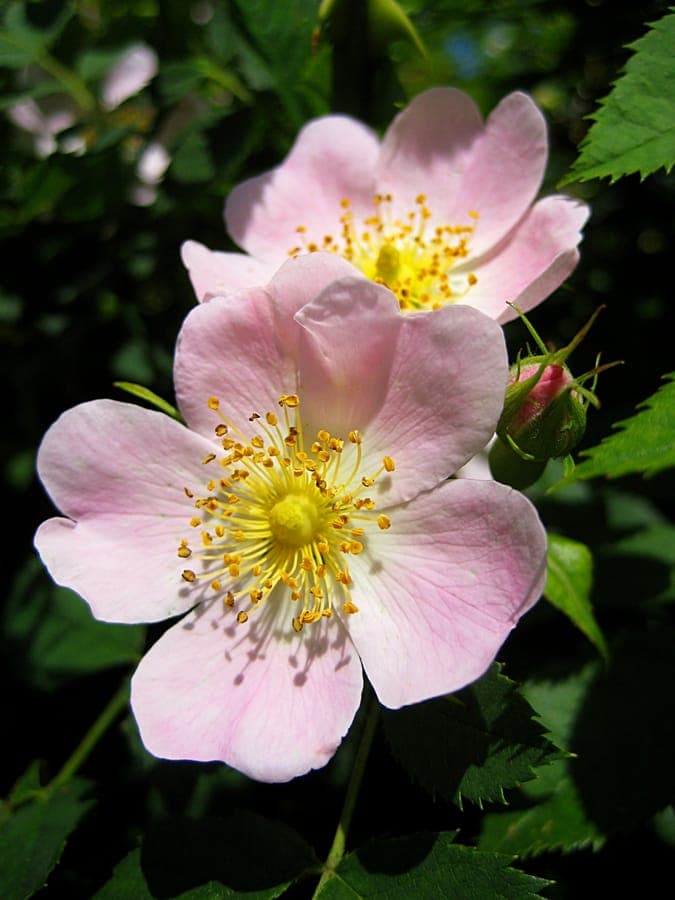
Roberta F. / CC BY-SA 3.0, via Wikimedia Commons
Common-briar: complete guide
Rosa canina
Want to see Common-briar: complete guide in your garden?
1 minute, no credit card
Overview
Rosa canina, commonly known as the Common-briar, is a hardy wild rose species native to Europe, North Africa, and Western Asia. It thrives in hedgerows, woodland edges, and dry, open grasslands. In the UK and Ireland, it's a familiar sight along country lanes and fence lines, often forming part of traditional mixed hedges. This vigorous shrub is not just ornamental - it's a vital plant for wildlife, supporting pollinators during its bloom and providing food for birds in winter. Whether you're restoring a rural boundary or creating a wildlife-friendly garden, Common-briar is a reliable, low-effort choice. On gardenworld.app, you can design a garden layout that incorporates Common-briar as a natural hedge or feature shrub, tailored to your space.
Appearance & bloom cycle
Common-briar grows 1.5 to 3 meters tall with a spread of up to 1.5 meters. It has an upright, arching growth habit, often leaning into surrounding vegetation. The stems are covered in hooked prickles that help the plant scramble through other shrubs. The leaves are pinnate, composed of 5–7 oval, toothed leaflets that emerge bright green in spring and turn pale yellow in autumn.
Flowering occurs from May to June. The blooms are single, with five pale pink to white petals, a cluster of golden stamens, and a soft, sweet fragrance. Each flower is about 4–5 cm across and is highly attractive to bees, hoverflies, and butterflies. After pollination, the flowers develop into oval, bright orange-red hips, 1.5–2 cm long. These persist well into winter, especially if not eaten by birds like blackbirds and thrushes.
Ideal location
Common-briar performs best in full sun to light shade (light level 7/10). It flowers most prolifically in open, sunny positions. In deep shade, flowering is sparse and growth becomes leggy. Choose a spot where it has room to arch and spread - ideal for informal hedges, wildlife corners, or slope stabilisation. Avoid planting near delicate perennials, as its root suckers can spread aggressively in loose, well-drained soils.
Gardeners in the UK often use it as a component of native hedgerows. On gardenworld.app, you can preview how a Common-briar hedge would look in your garden, including spacing and companion plant suggestions.
Soil requirements
This rose is adaptable to a wide range of soils, including sandy, loamy, and clay types, as long as drainage is adequate. It prefers a slightly acidic to neutral pH (5.5–6.5) but tolerates mildly alkaline conditions. Avoid waterlogged sites, which can lead to root rot. It grows well on poor to moderately fertile soils - overly rich soils may promote leafy growth at the expense of flowers.
Free design
Want to see Common-briar: complete guide in your garden? Make a free design now.
Watering
Once established, Common-briar is drought-tolerant and rarely needs supplemental watering. Young plants, however, should be watered weekly during dry spells in their first growing season. Provide about 10 litres per plant per week if rainfall is below 25 mm. Water at the base to keep foliage dry and reduce the risk of fungal diseases like black spot or powdery mildew.
Pruning
Minimal pruning is required. A light trim every 2–3 years in late winter (February–March) helps maintain shape and encourages new growth. Remove dead, damaged, or crossing stems. Cut back older wood (over 4 years) to ground level or 30–50 cm to promote vigorous basal shoots. Always use sharp, clean secateurs and wear thick gloves - the prickles are sharp and can harbor bacteria.
Maintenance calendar
- Jan: Inspect stems, remove dead wood
- Feb: Light pruning, clear debris
- Mar: Final pruning before bud break
- Apr: Monitor for aphids or fungal spots
- May-Jun: Peak bloom - do not prune
- Jul-Aug: Water young plants in drought
- Sep: Hips begin to ripen
- Oct: Harvest hips for tea or syrup
- Nov: Leave hips for birds, minimal care
- Dec: Dormant period - no action needed
Winter hardiness
Common-briar is fully hardy in USDA zones 4 to 8, surviving temperatures down to -25°C. It loses its leaves in winter, revealing its thorny framework, which adds winter structure. The persistent hips provide visual interest and food for birds during cold months.
Companion plants
Pair Common-briar with other native shrubs and perennials. Good companions include Dogwood (Cornus sanguinea), Spindle (Euonymus europaeus), and Elder (Sambucus nigra). For ground cover, consider Primrose (Primula vulgaris) or Bugle (Ajuga reptans). Avoid slow-growing or delicate plants that may be overwhelmed.
You can find Common-briar at garden centres across the UK, especially during bare-root season (November–March). Look for healthy root systems and avoid plants with signs of mildew or dieback.
Closing
Rosa canina is a resilient, ecologically valuable shrub that brings beauty and function to any garden. It supports biodiversity, requires little maintenance, and offers year-round interest. From fragrant spring blooms to winter hips, it's a plant that earns its place. Whether you're planting a wildlife hedge or restoring a traditional boundary, Common-briar delivers. Use gardenworld.app to visualise your planting plan and ensure it fits your garden's size, soil, and light conditions.
Want to see Common-briar: complete guide in your garden? Make a free design now.
Upload a photo, pick a style, and get a photorealistic design with plant list in under a minute.
No credit card required


Similar plants
Siberian crab apple: complete guide
Malus x robusta
Complete guide to the Siberian crab apple (Malus x robusta): location, soil, pruning, winter hardiness and the best companion plants for your garden.
Chinese flowering crabapple (Malus x spectabilis): complete guide
Malus x spectabilis
Meet the Chinese flowering crabapple (Malus x spectabilis): a classic spring bloomer with carmine buds and pink blossom.
Potentilla crassinervia: complete guide
Potentilla crassinervia
Potentilla crassinervia, the Corsican cinquefoil, grows wild on Corsica and Sardinia's peaks. Discover how to grow this hardy alpine rock garden gem.