
A. Barra / CC BY-SA 3.0, via Wikimedia Commons
Smooth rose: complete guide
Rosa blanda
Want to see Smooth rose: complete guide in your garden?
1 minute, no credit card
Overview
Rosa blanda, commonly known as Smooth rose, is a graceful subshrub native to central and eastern North America, thriving from Manitoba down through Illinois and into Maine. Unlike many cultivated roses, it's nearly thornless, cold-hardy, and remarkably resilient in poor soils. For gardeners in cooler climates looking to incorporate more native plants, this species offers beauty without fuss.
It's not the type of rose you'd enter in a flower show, but it brings a wild elegance to a garden - airy, open growth, soft blooms in early summer, and persistent red hips that feed birds through winter. Mature plants reach 3 to 5 feet tall and wide, forming loose thickets over time. They're perfect for naturalistic plantings, hedgerows, or as a background element in sunny borders.
On gardenworld.app, you can design a garden layout that highlights Rosa blanda's spreading form and pairs it with complementary native perennials.
Appearance & bloom cycle
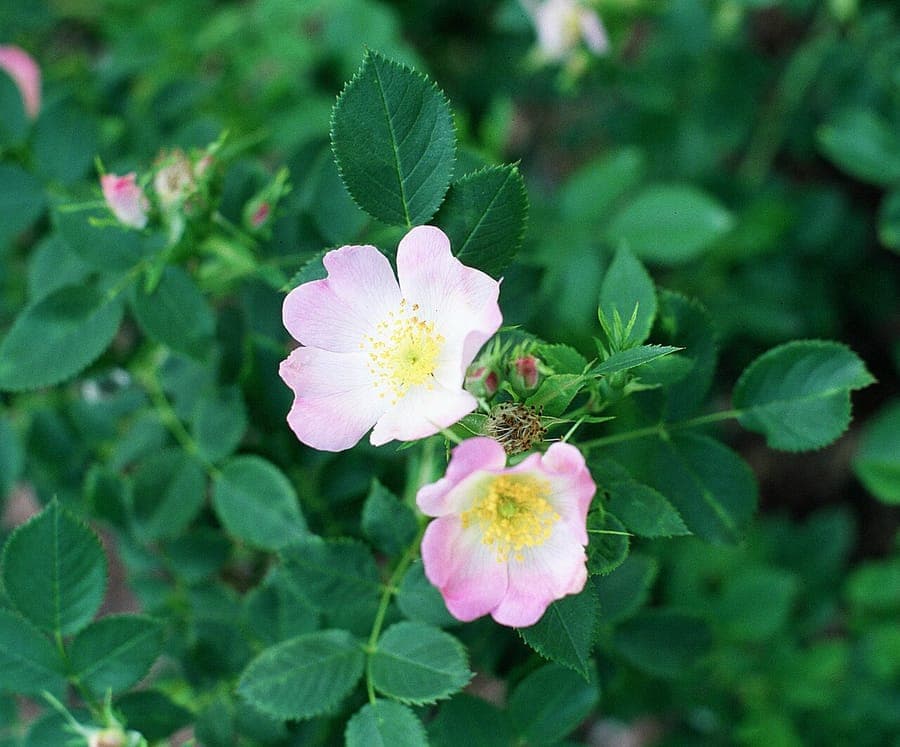
Rosa blanda features single flowers, 2 to 3 inches across, with five pale pink petals and a center of golden stamens. Blooming occurs from late May to early July, depending on your location. The flowers are lightly fragrant - clean and fresh, not overpowering.
The foliage is pinnately compound, with 5 to 9 narrow leaflets that are bright green in spring and turn yellow to bronze in fall. The stems are smooth and reddish-brown, a rare trait among roses, hence the common name. After flowering, pea-sized red hips develop and remain on the plant well into winter, providing food for birds like waxwings and grosbeaks.
Unlike modern hybrid roses, Rosa blanda doesn't rebloom, but its seasonal rhythm - spring growth, summer bloom, fall hips - fits perfectly into a garden that celebrates natural cycles.
Ideal location
Plant Rosa blanda in full sun - at least 6 hours of direct light daily. It can tolerate light shade, but flowering will be reduced and the plant may become leggy. Good air circulation is essential to prevent powdery mildew, a common issue in humid summers.
This rose thrives in open, dry areas, making it ideal for slopes, meadow edges, or xeriscaped gardens. It's also a great choice for coastal gardens where salt spray and sandy soil limit other options. Use it in mixed shrub borders or as part of a native plant hedge.
Check your garden's sun exposure on gardenworld.app to ensure it's suitable for Rosa blanda before planting.
Soil requirements
Rosa blanda is adaptable but prefers well-drained, loamy to sandy soils. It tolerates a pH range of 5.5 to 7.5 and does well in low to moderate fertility. Avoid heavy clay or constantly wet soils, which can lead to root rot.
If planting in dense soil, amend the planting hole with 20–30% coarse sand or perlite. Don't enrich the soil with compost or fertilizer - this encourages weak, disease-prone growth. A little neglect goes a long way with this tough native.
Free design
Want to see Smooth rose: complete guide in your garden? Make a free design now.
Watering
Water deeply once a week during the first growing season. After establishment - typically by the second year - Rosa blanda is highly drought tolerant and rarely needs supplemental watering, even in hot summers.
When watering, apply at the base to keep foliage dry and reduce disease risk. Use a soaker hose or drip irrigation for best results. During extended droughts (4+ weeks without rain), a deep soak every two weeks will keep the plant stress-free.
Pruning
Pruning is minimal. In late winter or early spring, remove any dead, damaged, or crossing canes. Cut back older stems to the base to encourage new growth from the roots - this keeps the plant vigorous.
Avoid heavy pruning; unlike tea or floribunda roses, Rosa blanda doesn't require shaping. Leave the hips on the plant through winter for wildlife and visual interest. Clean, sharp bypass pruners are all you need.
Maintenance calendar
- Jan: Monitor for winter damage
- Feb: Prepare tools, inspect canes
- Mar: Prune dead wood; cut back old stems
- Apr: Watch for new growth; no fertilizing
- May: Bloom begins; watch for mildew
- Jun: Peak bloom; ensure good airflow
- Jul: Flowering ends; hips start forming
- Aug: Minimal care; avoid watering unless very dry
- Sep: Observe leaf color; no pruning
- Oct: Hips mature; leave for birds
- Nov: Clean up fallen leaves; leave hips
- Dec: Dormant; protect from heavy snow load if needed
Winter hardiness
Rosa blanda is hardy in USDA zones 3 to 7. It withstands winter lows down to -40°C (-40°F) and requires no winter protection. In colder zones, avoid late-season fertilizing to prevent tender new growth that could be damaged by frost.
In wetter regions, ensure the planting site has good drainage to prevent crown rot. The smooth stems are less prone to winter injury than thorny varieties, making this a reliable choice for harsh climates.
Companion plants
Pair Rosa blanda with other native sun-lovers: Eutrochium fistulosum (Joe-Pye weed), Monarda fistulosa (wild bergamot), Schizachyrium scoparium (little bluestem), and Solidago rugosa (wrinkleleaf goldenrod). These companions share similar soil and moisture needs and together create a dynamic, pollinator-rich planting.
Avoid aggressive spreaders like mint or goldenrod species that can overwhelm the rose. Give it space to develop its natural, open form.
Closing
Rosa blanda is a quiet standout - not flashy, but full of ecological value and subtle charm. It supports wildlife, asks little in return, and fits seamlessly into low-maintenance, sustainable gardens. If you're tired of high-maintenance hybrids, this native rose is a refreshing alternative.
You'll find Rosa blanda at garden centres across Canada and the northern U.S., especially those specializing in native plants. Look for it in spring or fall. And when planning your layout, use gardenworld.app to visualize how this rose fits into your garden's long-term design.
Want to see Smooth rose: complete guide in your garden? Make a free design now.
Upload a photo, pick a style, and get a photorealistic design with plant list in under a minute.
No credit card required


Similar plants
Siberian crab apple: complete guide
Malus x robusta
Complete guide to the Siberian crab apple (Malus x robusta): location, soil, pruning, winter hardiness and the best companion plants for your garden.
Chinese flowering crabapple (Malus x spectabilis): complete guide
Malus x spectabilis
Meet the Chinese flowering crabapple (Malus x spectabilis): a classic spring bloomer with carmine buds and pink blossom.
Potentilla crassinervia: complete guide
Potentilla crassinervia
Potentilla crassinervia, the Corsican cinquefoil, grows wild on Corsica and Sardinia's peaks. Discover how to grow this hardy alpine rock garden gem.