
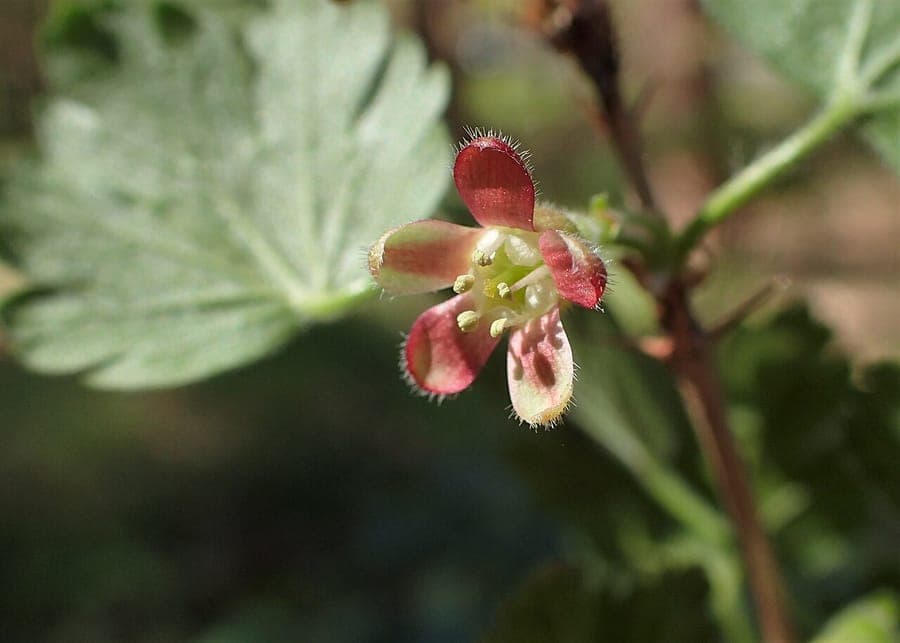
Krzysztof Ziarnek, Kenraiz / CC BY-SA 4.0, via Wikimedia Commons
European gooseberry: complete guide
Ribes uva-crispa
Want to see European gooseberry: complete guide in your garden?
1 minute, no credit card
Overview
Ribes uva-crispa, better known as the European gooseberry, is a thorny deciduous shrub native to much of central and southern Europe, including countries like Germany, France, and Bulgaria. It grows 1 to 1.5 meters tall and wide, forming a dense, bushy structure that makes it ideal as a soft barrier or productive focal point in the home garden. This member of the Grossulariaceae family is prized for its tangy, translucent berries, which are larger and more robust than those of red or white currants.
On gardenworld.app, you can design a garden layout that fits the growth pattern of gooseberries, ensuring proper spacing and light exposure from the start.
Appearance & bloom cycle
Gooseberry bushes have deeply lobed, palmate leaves with a slightly fuzzy texture. The stems are armed with stiff, sharp spines - usually one to three per node - which protect the plant from browsing animals. Flowers appear in early spring, typically between March and April, before the leaves fully emerge. They're small (about 1 cm), bell-shaped, and range from greenish-purple to deep maroon, hanging singly or in pairs from the leaf axils.
Fruit development follows quickly, with berries forming by late May. They ripen from late June to mid-July, depending on variety and microclimate. Mature fruits are 1.5–3 cm in diameter, smooth or hairy, and vary in color from green to golden yellow or even reddish-purple. Some cultivars, like 'Hinnonmäki Red', are nearly spine-free and offer sweeter fruit.
Ideal location
Gooseberries perform best in partial shade (light level 4 out of 10), particularly in areas with hot summers. A site with morning sun and afternoon shade - such as the east side of a shed or under light tree canopy - prevents fruit scald and reduces moisture stress. Full sun is acceptable in cooler regions like the UK or northern Europe, but may require extra watering.
Avoid exposed, windy spots; these can damage the brittle branches and reduce pollination. In smaller gardens, consider growing gooseberries as cordons against a fence or wall. On gardenworld.app, you can simulate how cordon-trained gooseberries fit into your space and align with other crops.
Soil requirements
Gooseberries thrive in fertile, moisture-retentive yet well-drained soil. A loamy or clay-loam mix rich in organic matter is ideal. The pH should be slightly acidic to neutral: 5.5–6.5. Soils above pH 7.0 may induce iron chlorosis, showing as yellowing between leaf veins.
Before planting, incorporate 5 liters of well-rotted manure or compost per shrub. Avoid liming the soil - gooseberries dislike high calcium levels. Test your soil pH with an affordable kit from any garden centre, such as those at B&Q or local independents.
Free design
Want to see European gooseberry: complete guide in your garden? Make a free design now.
Watering
Consistent moisture is key, especially during fruit set and dry spells. Young plants need 10–15 liters per week during their first two growing seasons. Established bushes are more resilient but still benefit from deep watering (10 liters) once a week in prolonged dry periods (June–August).
Use rainwater when possible - gooseberries are sensitive to chlorine and salts in tap water. Mulch annually with 5–7 cm of compost or wood chips to retain moisture, suppress weeds, and feed the soil slowly over time.
Pruning
Winter pruning (December–February) is essential to maintain shape, encourage new growth, and maximize yields. For the first two years, select 4–5 strong basal shoots and remove the rest. From year three onward, remove one-third of the oldest wood (4+ years) each winter, cutting them back to ground level.
Cut remaining branches just above an outward-facing bud to encourage an open, vase-like structure that allows light and air penetration. Remove any inward-growing, crossing, or diseased wood. Always use sharp, sterilized secateurs to prevent spreading fungal spores.
Maintenance calendar
- December–February: Prune old wood, apply compost or manure.
- March: Inspect for aphids or mildew; install grease bands to deter winter moths.
- April–May: Light feed with balanced organic fertilizer (e.g., seaweed extract), water during dry spells.
- June–July: Harvest ripe berries; continue watering in drought.
- August: Top up mulch, remove weeds, avoid pruning.
- September–November: Clear fallen leaves to reduce disease carryover; check for pests in bark crevices.
Winter hardiness
European gooseberries are hardy in USDA zones 5–8 (-20°C to -10°C). They tolerate cold winters well and require a chilling period to set fruit. In zone 5, protect young plants with a thick mulch layer (10 cm straw) around the base. Mature shrubs are generally self-sufficient.
Late frosts in March or April can damage emerging flower buds, especially in exposed locations. Consider planting against a north-facing wall to delay bud break and avoid frost pockets.
Companion plants
Plant gooseberries with shallow-rooted companions like chives, garlic, or tansy to deter aphids and mildew. Avoid large, thirsty shrubs like bamboo or mature rhododendrons that compete for water. Ferns and hostas work well beneath them, providing ground cover without root competition.
Borage and thyme attract pollinators and improve fruit set. On gardenworld.app, you can map out companion planting zones to boost biodiversity and reduce pest pressure in your fruit area.
Closing
The European gooseberry is a low-maintenance, high-reward shrub that delivers tart, versatile fruit year after year. With proper pruning, mulching, and site selection, it can live 15–20 years. Choose disease-resistant cultivars like 'Invicta' or 'Captivator' from reputable suppliers at garden centres. And remember - a well-planned garden saves effort down the line. Use gardenworld.app to sketch your ideal gooseberry patch before you plant.
Want to see European gooseberry: complete guide in your garden? Make a free design now.
Upload a photo, pick a style, and get a photorealistic design with plant list in under a minute.
No credit card required


Similar plants
Canadian gooseberry: complete guide
Ribes oxyacanthoides
Discover the Canadian gooseberry, an extremely hardy North American fruit shrub with bristly stems and tart berries for jams and orchards.
Ribes bracteosum: complete guide to this Pacific Northwest shrub
Ribes bracteosum
Grow stink currant, a hardy Pacific Northwest shrub with deep-lobed foliage, fragrant blooms, and dark berries attractive to birds.
Ribes acerifolium: complete guide
Ribes acerifolium
Discover Mapleleaf currant - a stunning native shrub with maple-like leaves and interesting berries. Ideal for natural gardens.