
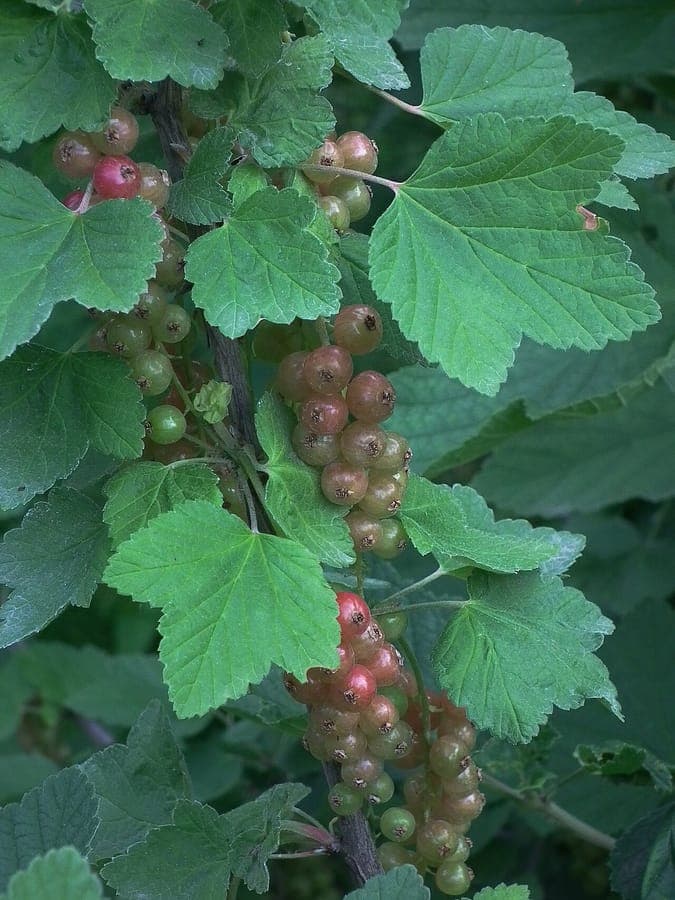
4028mdk09 / CC BY-SA 3.0, via Wikimedia Commons
Currant: complete guide
Ribes spicatum
Want to see Currant: complete guide in your garden?
1 minute, no credit card
Overview
Ribes spicatum, commonly known as the European black currant or spiked currant, is a resilient deciduous shrub that brings quiet value to any garden. Native to northern and eastern Europe - including the Baltic States, Finland, Russia, and parts of Central Europe - it thrives in cool, moist environments and adapts well to UK and northern US gardens. Reaching 1 to 1.5 meters in height and about 1 meter in spread, it grows upright with multiple stems emerging from the base. Unlike the more familiar Ribes nigrum, this species is less cultivated commercially but equally rewarding in home gardens, especially for wildlife and early-season interest.
One of its standout features is its early flowering period. From late February to mid-April, depending on your zone and winter severity, clusters of pale yellow, bell-shaped flowers dangle from the bare branches. These are rich in nectar, attracting early bees, hoverflies, and bumblebees. Later, in June, small dark berries form - edible but tart, more suitable for jams or syrups than fresh eating. Birds, including thrushes and warblers, will clean them up if you don't.
Appearance & bloom cycle
The stems of Ribes spicatum are smooth, dark brown, and slightly shiny, with a few scattered small spines. Leaves are palmate, deeply lobed into five segments, with coarse, irregular teeth along the edges. They emerge bright green in spring, darken over summer, and turn yellow in autumn before falling. The flowers, borne in racemes of 5 to 10, are small (about 8 mm long), pale yellow to creamy-white, and hang downward - a classic look for early Ribes species. Bloom time typically runs from late winter into early spring. Berries follow, ripening in June to deep purple-black with a fine bloom, 8–10 mm in diameter, slightly elongated. They're not the sweetest, but they're nutritious and cold-hardy.
Ideal location
Choose a spot with partial to full shade. While it can tolerate full sun, especially in cooler climates, it performs best with protection from the hot afternoon sun. It's ideal for woodland gardens, shrub borders, or naturalized areas near streams or damp corners. Plant it where it won't compete with aggressive ground covers. Spacing should be at least 80 cm from neighboring shrubs to allow airflow. On gardenworld.app, you can design a planting plan that fits Ribes spicatum perfectly, balancing light exposure and spacing with companion plants.
Soil requirements
This currant prefers moist, humus-rich, loamy soil. It tolerates clay if well-drained and slightly acidic to neutral pH (5.5–7.0). Avoid dry, sandy soils unless you commit to regular watering. When planting, dig in a bucket of compost or well-rotted manure to improve moisture retention and fertility. Mulch annually with leaf mold or composted bark to maintain soil structure and suppress weeds.
Free design
Want to see Currant: complete guide in your garden? Make a free design now.
Watering
Keep consistently moist, especially in the first year. Young plants need about 10–15 liters per week during dry spells. Established shrubs are more drought-tolerant but produce better berry yields with reliable soil moisture. Water at the base to avoid wetting foliage, which can encourage fungal issues. Rainwater is preferable to tap water, which may be too alkaline in some regions.
Pruning
Pruning is minimal. Since it flowers on old wood, avoid heavy cutting. In late winter (February), remove any dead, damaged, or crowded stems. You can thin out up to one-third of the oldest branches to encourage new growth, but never cut back hard in spring. Use sharp, clean secateurs. Avoid pruning after March, as flower buds are already visible.
Maintenance calendar
- January: Check for winter damage. Plant bare-root specimens if soil isn't frozen.
- February: Light pruning. Watch for emerging flower buds.
- March: Final planting window. Add compost around the base.
- April: Monitor for aphids or powdery mildew. Keep foliage dry.
- May: No major tasks, unless drought occurs.
- June: Berries begin to ripen. Net if birds are a concern.
- July: Harvest dark, fully ripe berries. They should detach easily.
- August: No action needed.
- September: Let plant prepare for dormancy.
- October: Clear fallen leaves if disease-prone, otherwise leave for habitat.
- November: Consider mulching young plants.
- December: No maintenance, unless planting.
Winter hardiness
Extremely hardy, surviving down to -30°C. USDA zones 3–7. In most of the UK and northern US, no winter protection is needed. Young plants may benefit from a mulch of compost or straw to insulate roots during their first winter.
Companion plants
Pair with shade-tolerant perennials like hostas, ferns, or Pulmonaria. It also works well with other moisture-loving shrubs such as alder or willow. For an edible woodland edge, grow alongside wild raspberry or serviceberry. On gardenworld.app, explore plant combinations that enhance both aesthetics and function in your garden.
Closing
Ribes spicatum may not grab attention like showy ornamentals, but it's a backbone plant for ecological gardens. Early bloom, wildlife support, and adaptability to tough spots make it a smart choice. Find it at garden centres in spring, sometimes labeled under native shrub sections. With minimal care and the right spot, it'll thrive for decades.
Want to see Currant: complete guide in your garden? Make a free design now.
Upload a photo, pick a style, and get a photorealistic design with plant list in under a minute.
No credit card required


Similar plants
Canadian gooseberry: complete guide
Ribes oxyacanthoides
Discover the Canadian gooseberry, an extremely hardy North American fruit shrub with bristly stems and tart berries for jams and orchards.
Ribes bracteosum: complete guide to this Pacific Northwest shrub
Ribes bracteosum
Grow stink currant, a hardy Pacific Northwest shrub with deep-lobed foliage, fragrant blooms, and dark berries attractive to birds.
Ribes acerifolium: complete guide
Ribes acerifolium
Discover Mapleleaf currant - a stunning native shrub with maple-like leaves and interesting berries. Ideal for natural gardens.