
Wikimedia Commons / CC BY-SA 3.0, via Wikimedia Commons
Ribes speciosum: complete guide
Ribes speciosum
Want to see Ribes speciosum: complete guide in your garden?
1 minute, no credit card
Overview
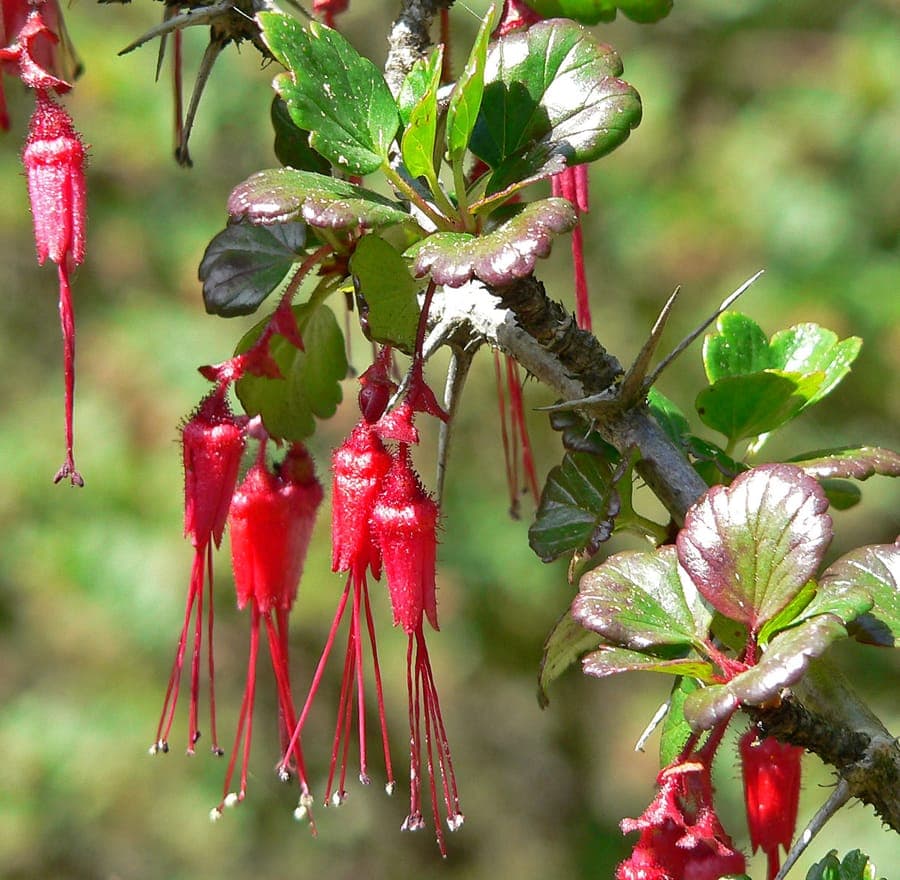
Ribes speciosum, popularly known as Fuchsia-flower gooseberry or Fuchsia-flowered gooseberry, is one of the most spectacular American Ribes species. This semi-evergreen shrub naturally grows in California and Baja California. It is renowned for its spectacular red flowers resembling fuchsia blooms.
The plant is a true jewel for garden designers seeking something special. The bloom is a true highlight and the plant remains interesting year-round.
Appearance and Bloom
Fuchsia-flower gooseberry is a semi-evergreen, heavily thorny shrub of 1 to 2 meters height. The plant has an open growth habit with somewhat drooping, thicker branches. The thorns are numerous and sharp.
The leaves are small, deeply lobed, giving the plant refined texture. In wintery regions the leaves may largely fall, but in milder climates the majority is retained. The leaves have fine texture and form an elegant skeleton.
The flowers are the highlight of this plant. They appear from March to May and are remarkable: approximately 1-1.5 cm long, bright red to vermillion colored with long protruding stamens. They indeed resemble fuchsia flowers and are visited by hummingbirds and other bird pollinators. The bloom is very abundant and the entire plant sometimes appears to be on fire.
From June to September, dark red to black berries ripen, approximately 0.8 cm large. These berries are valuable bird food.
Ideal Location
Fuchsia-flower gooseberry thrives best in sunny to part-shade locations. The plant accepts somewhat light partially filtered light. In very hot areas, some afternoon shade can be beneficial.
The plant grows well in temperate climates but struggles in much colder alpine areas in winter. It is more suited to coastal areas and southern gardens.
Plant in well-drained locations. The thorns can serve as natural fencing.
Soil
Ribes speciosum is not fussy about soil. It grows well in sandy, clayey, and stony soils. Neutral to slightly acidic pH is preferred but the plant tolerates chalky soils. The plant performs better in somewhat moister soil than other Ribes species.
When planting, adding compost-containing soil helps. Mulching of 5-7 cm helps improve moisture retention.
Free design
Want to see Ribes speciosum: complete guide in your garden? Make a free design now.
Watering
Fuchsia-flower gooseberry needs more water than many other Ribes species. Regular watering during the growing season is important. In the first year water when the top 3 cm feel dry. Young plants don't want to dry out.
Once mature (after 2-3 years), the plant is fairly drought-tolerant but performs best with regular moisture. Keep water constant during bloom and berry formation.
Pruning
Fuchsia-flower gooseberry tolerates minimal pruning. Dead or damaged branches can be removed in late winter. Form maintenance is rarely needed because the plant grows naturally elegantly.
The many thorns require careful work. Old branches can be carefully removed but this is rarely needed.
Maintenance Calendar
Spring (March-May): Pruning complete. Follow flowering. Intensify watering. This is peak season.
Summer (June-August): Observe berry formation. Continue watering. Minimal further care needed.
Autumn (September-November): Reduce watering. Plant prefers drier conditions in autumn.
Winter (December-February): In mild areas, plant remains mostly green. In colder areas, some leaf drop may occur.
Winter Hardiness
Fuchsia-flower gooseberry is hardy to about -10C in protected locations. This makes it suitable for mild coastal areas but less suitable for cold mountain areas. In very cold regions, the plant may die in hard frosts.
In temperate climate zones, the plant usually survives, though difficult winters may cause some wood death. Winter netting protection in very cold regions can help.
Companions and Partners
Fuchsia-flower gooseberry associates beautifully with other California natives such as Ceanothus, Mahonia, and Salvia. The contrast of red flowers against silvery foliage of sages is beautiful. Also combine with evergreen partners for winter structure.
Plant in groups of three or more for maximum effect. In hummingbird gardens, this is an essential plant.
Closing
Ribes speciosum offers unparalleled ornamental value thanks to its spectacular red flowers. For garden designers seeking something special with pollinator and wildlife value, this is a top choice.
You can find information at specialty nurseries. For more inspiration visit gardenworld.app where thousands of designs show how you can integrate this spectacular plant. GardenWorld helps you choose plant partners that allow the red flowers to shine.
Want to see Ribes speciosum: complete guide in your garden? Make a free design now.
Upload a photo, pick a style, and get a photorealistic design with plant list in under a minute.
No credit card required


Similar plants
Canadian gooseberry: complete guide
Ribes oxyacanthoides
Discover the Canadian gooseberry, an extremely hardy North American fruit shrub with bristly stems and tart berries for jams and orchards.
Ribes bracteosum: complete guide to this Pacific Northwest shrub
Ribes bracteosum
Grow stink currant, a hardy Pacific Northwest shrub with deep-lobed foliage, fragrant blooms, and dark berries attractive to birds.
Ribes acerifolium: complete guide
Ribes acerifolium
Discover Mapleleaf currant - a stunning native shrub with maple-like leaves and interesting berries. Ideal for natural gardens.