
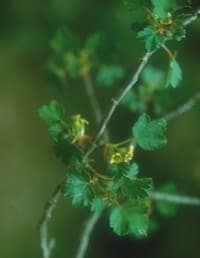
MIPSG/SSC/IUCN / CC BY-SA 2.5, via Wikimedia Commons
Sardinian currant: complete guide
Ribes sardoum
Want to see Sardinian currant: complete guide in your garden?
1 minute, no credit card
Overview
The Sardinian currant (Ribes sardoum) is a rare and endemic shrub native exclusively to Sardinia, Italy. This member of the Grossulariaceae family occurs only wild in the mountains of Oliena on Sardinia, making it a precious botanical rarity. With its limited wild distribution, it is legally protected and represents a fascinating specimen for collectors.
This compact, thorny shrub grows to about 1 meter tall and spreads laterally. The plant distinguishes itself with delicate, pale flowers and unusual growth patterns. For enthusiasts of challenging and rare plants, the Sardinian currant offers an intriguing choice.
Appearance and Bloom
The Sardinian currant displays small, tender green leaves with three to five lobes and slightly rough texture. The stems are armed with sharp thorns, typical of the Ribes genus. Flowers are small, greenish-yellow to pale white, gathered in short, sparse flower clusters appearing in April or May.
Following bloom, small red to purple berries ripen in June and July. These berries feed birds and other wildlife. The plant loses its foliage in autumn, creating an interesting bare silhouette in winter months.
Ideal Location
The Sardinian currant thrives in sunny to partly shaded locations. In hot Mediterranean climates, some afternoon shade aids moisture retention and prevents leaf scorch. The plant is remarkably adapted to rocky, mountainous terrain where it occurs in the wild.
A wind-sheltered location promotes growth, as the plant is compact with potentially delicate root systems when young. The plant is extremely frost-hardy and grows well in cold regions.
Soil
The Sardinian currant grows best in well-drained, slightly acidic to neutral soil. pH between 6 and 7.5 is ideal. The plant adapts to poor, rocky soils with low nutrient concentrations. Preparing a mix of 50% potting soil, 25% sand, and 25% gravel provides the very porous soil this plant prefers.
Heavy clay soils must be amended with sand and gravel to improve drainage. Waterlogging is highly detrimental and can lead to root rot within weeks.
Free design
Want to see Sardinian currant: complete guide in your garden? Make a free design now.
Watering
The Sardinian currant is a moderate drought-tolerant plant once well-rooted. Water regularly during growing season (April to October), ensuring soil dries between waterings. Overwatering is far more damaging than underwatering for this plant.
In winter, when dormant, water minimally to keep soil slightly moist. Always use quality water; the plant is sensitive to minerals and chlorine in tap water.
Pruning
The Sardinian currant requires minimal pruning. Remove dead, damaged, or diseased branches as observed. Light shaping may occur in early spring before growth season starts. Pruning exceeding 10-15% annually damages the plant's compact form and reduces flowering.
Following bloom, spent flowers may be carefully removed to keep the plant neat, but this is not essential. Avoid heavy pruning, which stresses the plant.
Maintenance Calendar
March to April: Prepare for growing season, inspect winter damage, light pruning. May to June: Regular watering as flowers appear, replenish mulch. July to August: Continue watering, monitor fruit ripening. September to October: Gradually reduce water frequency, prepare for dormancy. November to February: Minimal watering, winter protection for very young plants.
Winter Hardiness
The Sardinian currant is extremely hardy to approximately -20 degrees Celsius (zone 5b). Since it grows in mountainous, rugged areas of Sardinia, it is extremely adapted to freezing winters and snowfall. Young plants may benefit from shelter during very cold first winters.
The plant requires no special winter protection in most temperate climates. Strong wind gusts can damage the compact shrub, so sheltered locations are recommended.
Companion Plants
The Sardinian currant combines well with other Mediterranean and rocky terrain-adapted plants. Combine with Helianthemum, dwarf Juniperus varieties, or Sarcococca. For herbaceous companions, plant Thymus or Stachys byzantina nearby.
In alpine gardens or rock gardens, the Sardinian currant excels as a compact plant providing bird food. Combine with other rare, specialized plants for a true collector's garden.
Closing
The Sardinian currant is a fascinating choice for botanical enthusiasts appreciating rare, endemic plants. With good drainage and moderate watering, this Mediterranean jewel forms an intriguing accent in well-tended gardens. Plant today and enjoy this unique Sardinian rarity. Learn more at gardenworld.app and gardenworld.app.
Want to see Sardinian currant: complete guide in your garden? Make a free design now.
Upload a photo, pick a style, and get a photorealistic design with plant list in under a minute.
No credit card required


Similar plants
Canadian gooseberry: complete guide
Ribes oxyacanthoides
Discover the Canadian gooseberry, an extremely hardy North American fruit shrub with bristly stems and tart berries for jams and orchards.
Ribes bracteosum: complete guide to this Pacific Northwest shrub
Ribes bracteosum
Grow stink currant, a hardy Pacific Northwest shrub with deep-lobed foliage, fragrant blooms, and dark berries attractive to birds.
Ribes acerifolium: complete guide
Ribes acerifolium
Discover Mapleleaf currant - a stunning native shrub with maple-like leaves and interesting berries. Ideal for natural gardens.