
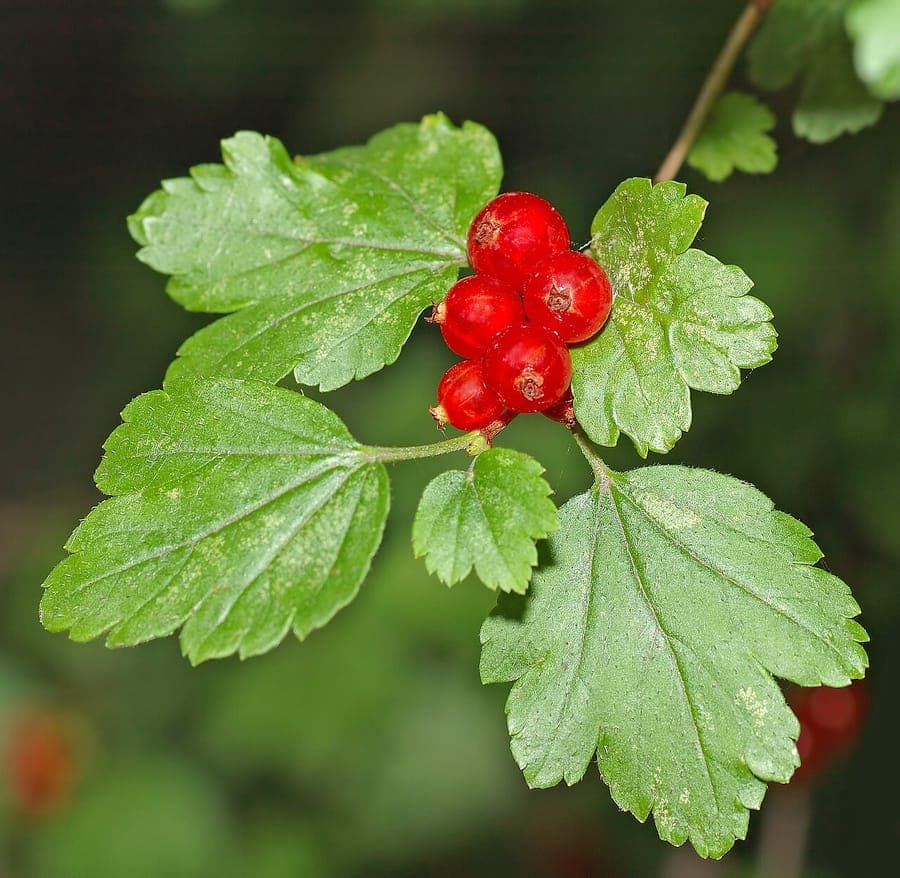
André Karwath aka Aka / CC BY-SA 2.5, via Wikimedia Commons
Alpine currant: complete guide
Ribes alpinum
Want to see Alpine currant: complete guide in your garden?
1 minute, no credit card
Overview
Ribes alpinum, commonly known as Alpine currant, is a compact, upright deciduous shrub prized for its dense foliage and adaptability in temperate gardens. Native to forested slopes across Central and Eastern Europe, this hardy shrub reaches 1 to 1.5 meters in height with a spread of about 1 meter, making it ideal for hedges, borders, or structural planting. Though technically deciduous, Alpine currant often behaves as semi-evergreen in milder climates, holding onto its leaves well into winter-offering rare structure during the dormant season.
One of its defining traits is its dioecious nature: individual plants are either male or female. Only female plants produce inconspicuous, dark purple berries in late summer, but they're not edible. The species is more valued for its foliage and form than fruiting. It blooms in early spring (March to April) with small, greenish-yellow flowers that attract early pollinators but add little visual drama.
On gardenworld.app, you can design a garden layout that uses Alpine currant's dense growth as a living screen or formal hedge, especially in cooler climate zones.
Appearance & bloom cycle
Alpine currant features small, five-lobed leaves with a slightly glossy, dark green surface. The foliage emerges bright green in spring, matures to deep green in summer, and turns yellow to yellow-brown in fall-though autumn color is modest and not a primary ornamental feature. The leaf shape resembles a tiny maple leaf but with a finer texture.
Flowering occurs from late March to early April, depending on local weather. Flowers grow in pendulous racemes of 5 to 10 blooms, each under 5 mm in diameter. They're wind-pollinated and lack fragrance, but support early insects like queen bumblebees. Female plants set small, round berries (5–8 mm) by August, turning from green to deep purple-black. These are not palatable and are best left for birds.
Ideal location
Alpine currant thrives in partial shade (light level 6/10), though it tolerates full sun in cooler regions. In hot afternoon sun, especially in USDA zones 7 and above, leaf scorch can occur without consistent moisture. A north- or east-facing site provides optimal conditions, particularly for hedging.
This shrub is reliably hardy in USDA zones 4 to 7. It handles urban pollution well, making it suitable for city gardens, roadside plantings, or courtyard spaces. Avoid exposed, windy sites where foliage can dry out in winter.
Soil requirements
The plant prefers well-drained, moderately alkaline soils with a pH between 7.5 and 8. It grows well in loamy or sandy soils but struggles in heavy clay unless amended for drainage. Poor drainage leads to root rot, especially in winter.
At planting time, mix in organic matter like compost or well-rotted manure to improve soil structure. In alkaline soils, chlorosis is rare, but in acidic conditions (below pH 7), iron deficiency may appear as yellowing between leaf veins. Mulch with 5 cm of bark or leaf mold to retain moisture and suppress weeds.
Free design
Want to see Alpine currant: complete guide in your garden? Make a free design now.
Watering
During the first growing season, water weekly with 10 liters per plant, especially during dry spells. Once established, Alpine currant is moderately drought-tolerant but performs best with consistent moisture. Avoid soggy soil.
In hot summers, supplement with deep watering every 10–14 days. Mulch helps maintain root zone moisture and reduces summer stress. Drought-stressed plants may drop leaves prematurely or show reduced growth.
Pruning
One of its greatest strengths is its response to pruning. Alpine currant can be pruned heavily and recovers quickly, making it a top choice for formal hedges. For a tight, dense hedge, trim twice a year-once in late June and again in late August.
Use sharp bypass pruners or hedge shears to avoid tearing. Avoid pruning in hard frost. For a more natural look, limit pruning to removing dead, damaged, or crossing stems in late winter. Renewal pruning-cutting older stems to the base every few years-helps maintain vigor.
Maintenance calendar
- January: Inspect for winter damage. Remove broken branches.
- February: Plant bare-root specimens if soil isn't frozen.
- March: Light shaping. Watch for emerging pests.
- April: Monitor for aphids. Apply balanced fertilizer if needed.
- May: Mulch to conserve moisture.
- June: First hedge trim after flowering.
- July: Check soil moisture. Remove weeds.
- August: Second and final hard trim.
- September: Stop pruning to allow new growth to harden.
- October: Rake fallen leaves. Refresh mulch.
- November: Protect young plants with burlap in zone 4.
- December: Dormant period. Minimal care required.
Winter hardiness
Extremely cold-hardy, Alpine currant survives temperatures down to -34°C (USDA zone 4). Foliage may bronze or drop in harsh winters, but plants rebound strongly in spring. In milder zones, it often retains leaves, adding structure to winter landscapes.
Avoid planting in areas with drying winter winds. A light mulch helps insulate roots, especially in the first two winters.
Companion plants
Pair Alpine currant with other structural plants like boxwood, yew, or holly for formal gardens. For looser planting schemes, combine with spring ephemerals such as daffodils, hellebores, or lungwort.
It works well as a backdrop for flowering perennials like catmint or salvia. On gardenworld.app, visualize how Alpine currant fits into layered planting designs, balancing texture and height in your garden plan.
Closing
Alpine currant is a dependable, low-maintenance shrub that earns its place in any garden needing reliable green structure. Its dense growth, adaptability, and tolerance of pruning make it a hedge favorite. While not flashy, its year-round presence and resilience in tough conditions set it apart.
Available at garden centres across the UK and North America, look for healthy, bushy specimens. For hedges, plant 40–50 cm apart. Whether used for screening, edging, or formal design, Alpine currant delivers consistent performance with minimal fuss.
Want to see Alpine currant: complete guide in your garden? Make a free design now.
Upload a photo, pick a style, and get a photorealistic design with plant list in under a minute.
No credit card required


Similar plants
Canadian gooseberry: complete guide
Ribes oxyacanthoides
Discover the Canadian gooseberry, an extremely hardy North American fruit shrub with bristly stems and tart berries for jams and orchards.
Ribes bracteosum: complete guide to this Pacific Northwest shrub
Ribes bracteosum
Grow stink currant, a hardy Pacific Northwest shrub with deep-lobed foliage, fragrant blooms, and dark berries attractive to birds.
Ribes acerifolium: complete guide
Ribes acerifolium
Discover Mapleleaf currant - a stunning native shrub with maple-like leaves and interesting berries. Ideal for natural gardens.