
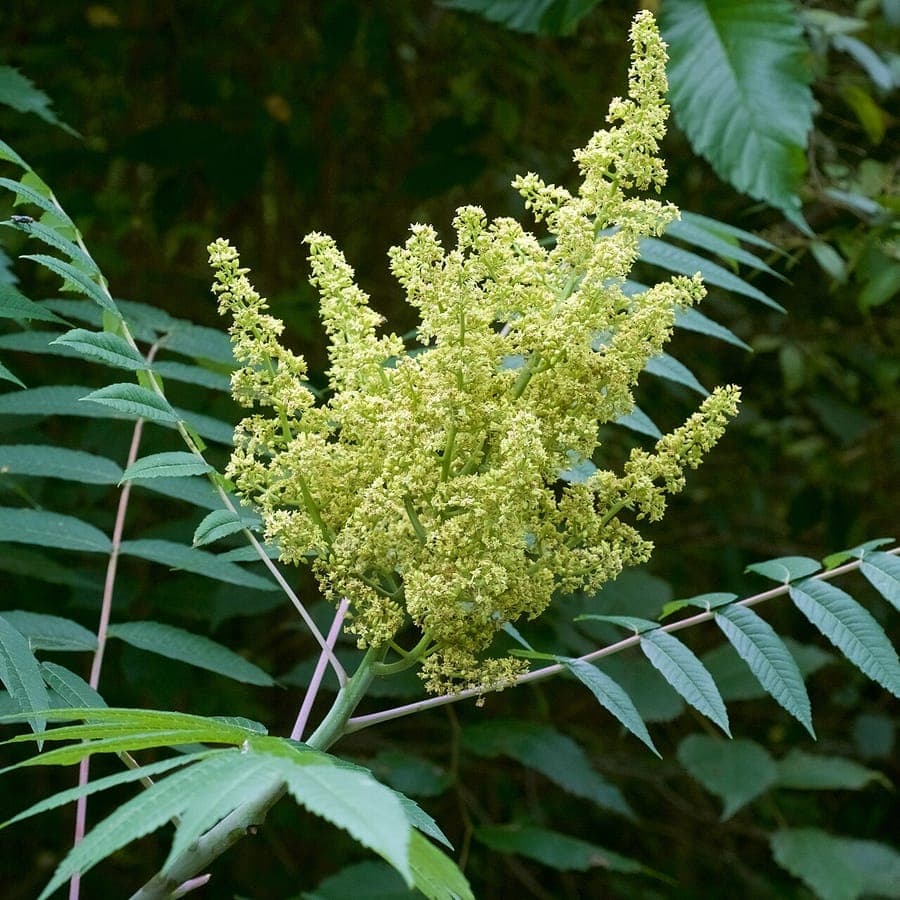
Eric Hunt / CC BY-SA 4.0, via Wikimedia Commons
Rhus glabra (Smooth Sumac): complete guide
Rhus glabra
Want to see Rhus glabra (Smooth Sumac): complete guide in your garden?
1 minute, no credit card
Overview
Smooth sumac (Rhus glabra) is a striking North American shrub prized for its spectacular scarlet fall foliage. Growing to 3-4 meters tall, it creates an elegant, spreading silhouette with compound leaves that shift from fresh green in summer to brilliant reds and oranges as temperatures drop. The foliage consists of opposing leaflets arranged along a central stem, lending a distinctly modern, geometric appearance that complements contemporary garden designs.
Once established, smooth sumac is remarkably low-maintenance and tolerant of dry conditions, making it an excellent choice for sustainable gardens and neglected sunny corners. The plant grows vigorously during the growing season and requires minimal intervention to thrive.
Appearance and Bloom
Smooth sumac develops as a multi-stemmed shrub with an open, tree-like habit. Its twice-compound leaves consist of numerous lance-shaped leaflets arranged in a striking linear pattern. In May to June, inconspicuous yellow-green flowers cluster in dense, terminal spikes, attracting pollinators and initiating a remarkable transformation.
Following pollination, distinctive red, hairy drupes form in prominent conical clusters. These scarlet berries persist well into winter, providing extended ornamental value and nourishment for birds. Young stems are smooth and greenish; as the plant matures, bark becomes light grayish-brown, developing character with age.
Ideal Location
Select a spot with full sun to partial shade for best results. Smooth sumac thrives with at least six hours of direct sunlight daily; more sun intensifies fall color brilliance. In deeper shade, the plant will grow but autumn foliage coloring becomes muted.
The plant is not fussy about wind or humidity levels. Provide adequate space for its natural form to develop without constant pruning against neighbors.
Soil
Smooth sumac is remarkably soil-tolerant, growing well on poor, dry, gravelly, or heavy clay soils. It accepts both acidic and alkaline conditions without complaint. Good drainage is essential; prolonged waterlogging causes root rot. Amend dense clay with grit or sand, or plant on a raised site to ensure water penetration and escape.
Optimal pH ranges between 4.5 and 7.5. In most maintained gardens, no additional soil amendment is necessary beyond mulching in the first year.
Watering
Established smooth sumac is drought-tolerant and rarely needs supplemental watering. During the planting season (spring and fall), water twice weekly unless natural rainfall occurs. In hot, dry summers, modest supplemental watering supports healthy growth, but avoid waterlogging.
Young plants are more demanding and benefit from regular moisture until roots establish. Check soil moisture to 10 cm depth; water thoroughly when dry. Apply 5 cm of organic mulch around the base to conserve moisture and regulate soil temperature.
Free design
Want to see Rhus glabra (Smooth Sumac): complete guide in your garden? Make a free design now.
Pruning
Smooth sumac naturally develops an attractive form requiring minimal intervention. Remove dead or damaged wood in early spring. Prune lower or congested branches to open the canopy and improve airflow.
For a more compact habit, prune after flowering (July) by cutting select branches back to 30 cm from the base, stimulating bushier growth. Severe cutting may stress the plant and reduce flowering the following season.
The plant occasionally produces root suckers. Remove these promptly to prevent spreading and work carefully to avoid stem damage.
Maintenance Calendar
Spring (March-May): Remove dead wood. Mulch the base. Begin regular watering for new plantings.
Summer (June-August): Monitor for drought stress; water during extended dry spells. Enjoy flowers and fruit development.
Fall (September-October): Witness spectacular foliage color. Leave berries for birds. Taper watering as growth slows.
Winter: Plant is fully hardy. No maintenance required. Berries feed overwintering birds.
Winter Hardiness
Smooth sumac is extremely cold-hardy to zone 3 (to -40 degrees Celsius). It thrives throughout Northwestern Europe without protection. Young, newly planted specimens may show frost sensitivity during their first winter; mulch generously to insulate roots.
Strong frost occasionally damages exposed twigs, but the plant readily regrows from healthy wood the following spring.
Companion Plants
Smooth sumac combines beautifully with other shrubs offering fall interest:
- Robinia (black locust) for white spring flowers and golden autumn color
- Amelanchier for delicate pink blossoms and early berries
- Viburnum for attractive red autumn fruit
- Native wildflower borders for seasonal movement
- Ornamental grasses like Miscanthus for textural contrast
Plant with adequate spacing to allow each specimen room to develop naturally. Mixing leaf textures and bloom times extends seasonal interest across the entire year.
Closing
Smooth sumac is a robust, reliable choice for gardeners seeking autumn spectacle without significant maintenance. Its drought tolerance makes it ideal for modern, sustainable landscapes. With minimal care, this plant delivers years of visual reward. Quality nurseries and garden centers stock this species readily.
For inspiration and personalized garden designs featuring smooth sumac and other plants perfectly suited to your space, visit gardenworld.app today.
Want to see Rhus glabra (Smooth Sumac): complete guide in your garden? Make a free design now.
Upload a photo, pick a style, and get a photorealistic design with plant list in under a minute.
No credit card required


Similar plants
Skunkbush sumac: complete guide
Rhus trilobata
Everything about Rhus trilobata: siting, soil, autumn colour, pruning, and how this tough ornamental shrub earns a place in any garden.
Winged sumac: complete guide
Rhus copallinum
Everything about Rhus copallinum, the winged sumac with spectacular autumn colour. Location, pruning and garden value in full detail.
Aromatic sumac: complete guide
Rhus aromatica
Full guide to aromatic sumac (Rhus aromatica): planting, soil, care, pruning and companion plants for dry, sunny gardens and slope stabilisation.