
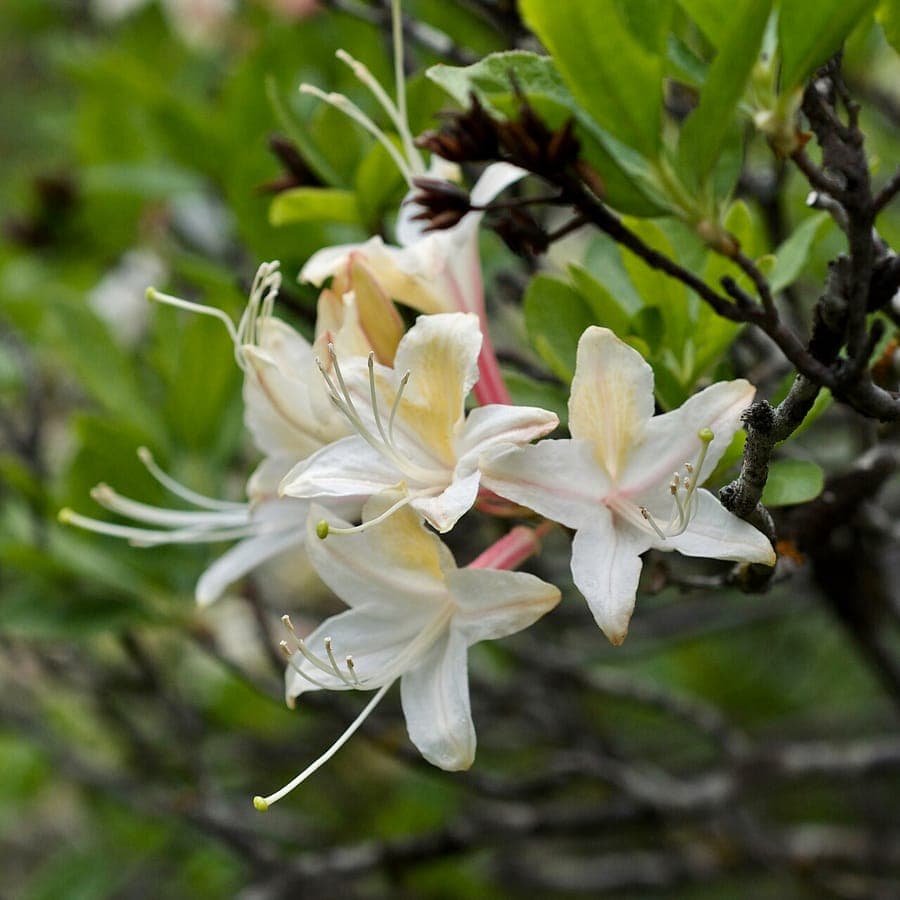
Eric Hunt / CC BY-SA 4.0, via Wikimedia Commons
Rhododendron occidentale: complete guide
Rhododendron occidentale
Want to see Rhododendron occidentale: complete guide in your garden?
1 minute, no credit card
Overview
Rhododendron occidentale, commonly known as Western azalea or California azalea, is an elegant deciduous flowering shrub native to the mountains of California and Oregon. This beautiful plant is celebrated for its fragrant, bicolored flowers that open from May to June, ranging in color from white to pink with orange or red markings on the upper petals.
This North American native naturally occurs in moist mountain forests and alongside mountain streams. In the garden, it makes an excellent choice for those seeking a romantic, fragrant bloom without extensive maintenance requirements. The shrub typically reaches 2-3 meters in height and is winter-hardy in temperate climates.
Appearance and Bloom
The Western azalea is a deciduous shrub with a naturally attractive, broad-leaved growth habit. During summer and fall, the lance-shaped foliage displays beautiful yellow-orange tones. The flowers are the season's highlight, appearing in clusters and featuring a delightful, subtle sweet fragrance.
Each flower measures approximately 4-5 cm across and opens into a characteristic shape. The petals show texture and striping, providing additional visual interest. After blooming, small seed pods form, adding further structural appeal to the plant.
Ideal Location
Choose a partially shaded spot for this azalea. Half-sun is ideal: at least 3-4 hours of indirect sunlight daily. Direct afternoon light in hot climates can cause leaf scorch. The plant performs best in locations receiving morning sun but protected from harsh midday rays.
Provide windbreaks as well. A location against a wall or between other plants offers protection from strong winds that might damage flowers. The natural growing habitat in mountain woodlands suggests a preference for higher elevation, cooler environments.
Soil Requirements
The Western azalea requires acidic, well-draining soil with a pH between 4.5 and 6.5. This is crucial for healthy growth. In alkaline soils, leaf yellowing (chlorosis) may occur.
Amend garden soil with abundant organic matter: fallen leaves, compost, or coniferous needle-based humus. This improves drainage and water retention. The plant prefers moist soil but without waterlogging. Apply a 5-7 cm mulch layer to keep soil cool and moist. Use coniferous-based mulch that breaks down into acidic material.
Watering
Keep the soil consistently moist, especially during the growing season and bloom period. In dry spells, this makes a significant difference between success and stress. Water at soil level, not from overhead. During hot summers, daily watering may be necessary.
In winter after leaf drop, reduce watering, but never let the soil dry completely. Use rainwater or softened water when possible, as many azalea species are sensitive to chlorides. During frost periods, water less frequently but avoid total drying.
Free design
Want to see Rhododendron occidentale: complete guide in your garden? Make a free design now.
Pruning
Pruning is minimal. After flowering, spent blooms can be gently removed to reduce seed set and redirect energy toward growth. This process is called deadheading.
It is better not to prune extensively, as this can remove flower buds for the next season. Remove only damaged, dead, or excessively long shoots. Best done after flowering in June. Avoid heavy pruning, which slows recovery.
Maintenance Calendar
March-April: Preparation. Check for frost damage. Water thoroughly. Apply mulch.
May-June: Blooming. Water regularly. Remove faded flowers. Monitor for pests.
July-August: Summer care. Water deeply during dry spells. Top up mulch.
September-October: Fall color. Reduce watering. Leaf drop may begin.
November-January: Rest. No feeding needed. Monitor for frost. Water minimally.
February: Prepare for the coming season. Apply compost.
Winter Hardiness
The Western azalea is quite winter-hardy and can withstand temperatures of -15 to -20C, depending on provenance and location. In northern climates, it is suitable for zones 6-8. Protect young plants in their first year against severe frost spikes.
Hardened wood is more frost-resistant than soft new growth. In snowy winters, a protective screen of branches or cloth helps young specimens. Frost damage typically manifests as scorched leaf edges or burned shoot tips.
Companion Plants
Combine Western azalea with other acid-loving plants:
- Japanese maples (Acer palmatum) for fine fall color
- Kalmia species for complementary blooms
- Gaultheria species for groundcover
- Fine conifers like Chamaecyparis for structure
- Helleborus (Christmas rose) for winter interest
- Hostas for foliage contrast in shade
- Erica species (heather) for early blooms
Avoid heavily lime-rich soils or massive privet hedges that alkalinize the soil.
Conclusion
The California azalea is a true gem for those seeking a fragrant flowering shrub in part shade to dappled sun locations. With proper acidic soil, regular moisture, and minimal pruning, it grows almost effortlessly. From May through June, it fills the garden with bewitching fragrance and color.
Those seeking a larger design element with patience will enjoy years of beauty from this magnificent North American species. Incorporate it into a broader garden scheme with other shade-lovers and you create a magical spring corner.
Gardenworld.app helps you design a garden where this beautiful specimen shines. Try our garden planner and receive advice tailored to your front yard.
See our other flowering shrub guides on gardenworld.app for further inspiration!
Want to see Rhododendron occidentale: complete guide in your garden? Make a free design now.
Upload a photo, pick a style, and get a photorealistic design with plant list in under a minute.
No credit card required


Similar plants
Zenobia pulverulenta: complete guide
Zenobia pulverulenta
Everything about Zenobia pulverulenta (honeycup): siting, acid soil, pruning and the fragrant white bells, in this complete care guide.
Dwarf huckleberry: complete guide
Gaylussacia dumosa
Everything about dwarf huckleberry (Gaylussacia dumosa): acidic soil, partial shade, pruning and care for this compact North American berry shrub.
Drooping leucothoe: complete guide
Leucothoe fontanesiana
Everything about drooping leucothoe (Leucothoe fontanesiana): shade tolerance, soil, watering, pruning, hardiness and companion plants.