
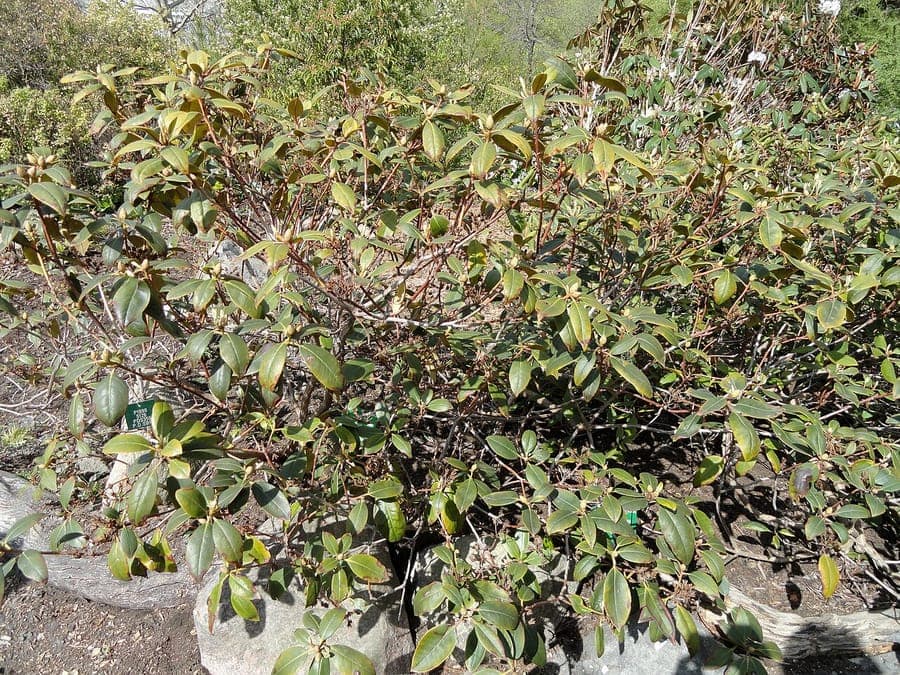
Daderot / CC0, via Wikimedia Commons
Piedmont rhododendron: complete guide
Rhododendron minus
Want to see Piedmont rhododendron: complete guide in your garden?
1 minute, no credit card
Overview
Rhododendron minus, commonly known as Piedmont rhododendron or American alpros, is a compact and charming evergreen shrub native to the mountain regions of southeastern America - Alabama, Georgia, North Carolina, South Carolina, Tennessee, and Florida. This native American plant grows naturally on rocky mountain slopes and in coniferous forests.
The Piedmont rhododendron is an excellent choice for gardeners seeking a low-maintenance, native plant that fits perfectly into contemporary gardens. The plant offers compact growth, reliable bloom, and proven winter hardiness.
Appearance and bloom
Rhododendron minus grows as a compact, densely-branched shrub typically reaching 60-120 centimeters in height with similar spread. The plant naturally adopts a neat, rounded form requiring minimal pruning. Foliage is small and ovate, dark green, remaining evergreen year-round.
Blooming occurs from April through May with numerous small, trumpet or funnel-shaped flowers in shades of pink, lavender, or occasionally white. The flowers cluster densely creating abundant floral display. The dark green foliage provides an attractive backdrop.
Even after bloom, the plant remains ornamental thanks to its compact form and persistent green foliage.
Ideal location
The Piedmont rhododendron performs best in dappled to partial shade. The plant tolerates full sun but thrives with protection from intense afternoon sun. In southern climates, shade is actually essential.
Position the plant in a sheltered location, not exposed to strong winds. A position beneath tall trees or against a wall provides optimal conditions.
Soil
The Piedmont rhododendron thrives on acidic, well-draining soils with pH between 4.5 and 6.0. The plant performs poorly in alkaline soils. Provide humus-rich, organic-laden soil.
If your soil is not sufficiently acidic, generously amend with peat moss, shredded leaves, or pine bark. Ensure good drainage, though the plant prefers moderately moist conditions.
Free design
Want to see Piedmont rhododendron: complete guide in your garden? Make a free design now.
Watering
The Piedmont rhododendron thrives in moderately moist soils. Water regularly, especially during dry periods and the first growing season. The plant tolerates drought less well than some other rhododendrons.
In very warm regions, consistent watering is essential. Mulch well with shredded leaves or pine bark to maintain soil moisture.
Pruning
Regular pruning is unnecessary as the plant naturally develops an attractive compact form. After bloom, remove only dead, diseased, or overgrown branches. Gentle shaping is acceptable if needed.
Avoid heavy pruning, especially in autumn, as this can harm the plant and result in bloom loss the following season.
Maintenance calendar
Spring: Water regularly. Apply rich fertilizer in April. Enjoy the bloom. Summer: Water consistently, especially during dry periods. Mulch well. Autumn: Reduce watering. Observe early autumn color changes. Winter: Protect from extreme frost in very cold regions. Minimal watering.
Winter hardiness
Rhododendron minus is reasonably winter-hardy, tolerating temperatures to approximately -15 to -18 degrees Celsius. This makes it suitable for many temperate zones in Europe. In extremely cold regions, protection during severe weather is beneficial.
The plant can suffer from drying winds, particularly in snow-free winters. A sheltered position and mulch layer help mitigate damage.
Companion planting
The Piedmont rhododendron pairs beautifully with other native American plants and compact evergreen rhododendrons. Pleasant combinations are possible with coral bells (Heuchera), helleborus (Christmas roses), and dark-foliaged hostas.
Woodland ferns, native ferns, and early spring woodland ephemerals also work well. On gardenworld.app, you will find designs that maximize the potential of this native beauty.
Conclusion
Rhododendron minus is an underappreciated native plant deserving greater attention in modern gardens. The combination of compact growth, reliable bloom, winter hardiness, and minimal care makes it a perfect choice for diverse garden styles. This American treasure brings mountain charm to your garden.
Source quality specimens from specialist nurseries. Visit gardenworld.app for advice on native plant garden designs.
Want to see Piedmont rhododendron: complete guide in your garden? Make a free design now.
Upload a photo, pick a style, and get a photorealistic design with plant list in under a minute.
No credit card required


Similar plants
Zenobia pulverulenta: complete guide
Zenobia pulverulenta
Everything about Zenobia pulverulenta (honeycup): siting, acid soil, pruning and the fragrant white bells, in this complete care guide.
Dwarf huckleberry: complete guide
Gaylussacia dumosa
Everything about dwarf huckleberry (Gaylussacia dumosa): acidic soil, partial shade, pruning and care for this compact North American berry shrub.
Drooping leucothoe: complete guide
Leucothoe fontanesiana
Everything about drooping leucothoe (Leucothoe fontanesiana): shade tolerance, soil, watering, pruning, hardiness and companion plants.