
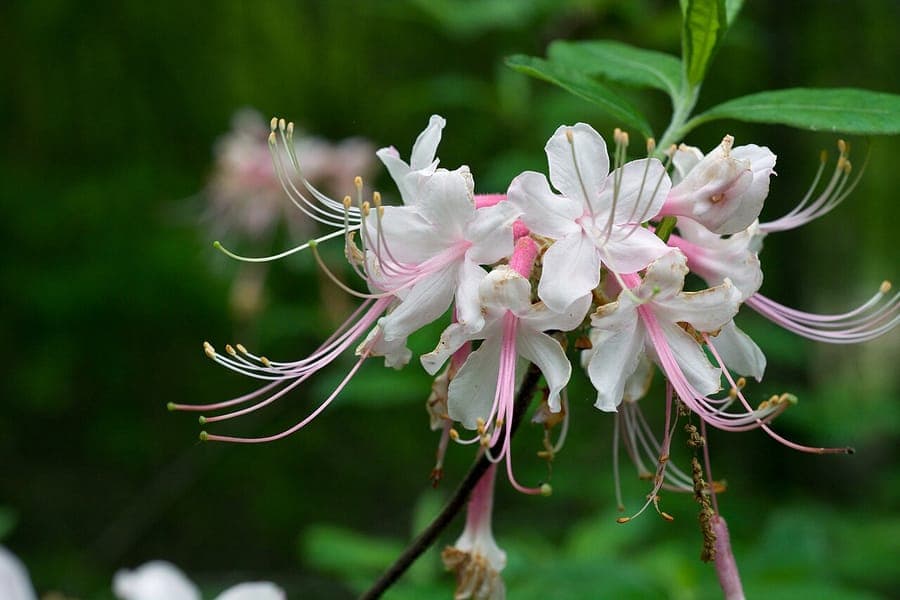
Eric Hunt / CC BY-SA 4.0, via Wikimedia Commons
Rhododendron canescens: complete guide
Rhododendron canescens
Want to see Rhododendron canescens: complete guide in your garden?
1 minute, no credit card
Overview
Rhododendron canescens, commonly called Hoary azalea, Piedmont azalea, or Southern pinxterbloom azalea, is a beautiful deciduous shrub native to the southeastern and central United States. Belonging to the Ericaceae family, this plant is celebrated for its spectacular spring bloom with whitish-pink flowers. Growing slowly to a moderate size, it's ideal for gardens with established space and creates a striking focal point year-round.
This has become a favorite shrub for landscape designers seeking a native plant that attracts wildlife while providing an extended blooming season. The Hoary azalea thrives in bird-friendly gardens and can be enjoyed for many years with proper care.
Appearance and Bloom
Rhododendron canescens develops as a multi-stemmed shrub with a dense, broadly spreading form. The foliage is oblong with a coarse texture, characteristic of azaleas in general. From April through May, the plant produces abundant flowers in lovely shades ranging from white to soft pink, often with yellow or orange highlights in the flower throat.
The blooms are highly conspicuous and attract birds, bees, and butterflies in abundance. Following the flowering period, small seed capsules develop, though these are not particularly showy. In autumn, the foliage provides additional seasonal interest with color changes.
Ideal Location
Hoary azalea performs best in partial shade to full sun conditions. In warmer climates, the plant appreciates some afternoon shade protection. Ensure the plant receives at least 4-6 hours of direct sunlight daily to achieve optimal flowering. Protect from strong winds and extremely hot exposures.
Plants can be grouped closely for dramatic visual impact or planted singly as landscape focal points. Either approach showcases the spring display beautifully.
Soil
Rhododendron canescens requires acidic soil with a pH range between 4.3 and 5.8. This is absolutely essential for healthy growth and abundant flowering. Provide well-draining soil enriched with organic matter such as peat moss or compost. The plant cannot tolerate heavy clay soils.
When planting, incorporate approximately 30-40% peat moss or specialized azalea soil into the planting hole. This maintains proper pH and improves drainage significantly. Adequate drainage is critical: waterlogged conditions cause root rot and plant decline.
Watering
During the growing season (spring through fall), Rhododendron canescens requires consistent moisture. Keep the soil evenly moist but never waterlogged. In dry periods, water deeply 2-3 times weekly depending on weather.
From August onward, reduce watering gradually to prepare the plant for dormancy. During winter months, less water is required, but roots must never dry out completely. A layer of mulch around the base helps retain moisture and keeps root zones cool during hot periods.
Free design
Want to see Rhododendron canescens: complete guide in your garden? Make a free design now.
Pruning
Rhododendron canescens requires minimal pruning when growing in suitable conditions. Remove any dead or damaged branches in spring immediately after flowering. This maintains plant vigor and appearance.
For shaping into a tidier form, prune gently right after bloom season ends. Avoid severe cutbacks, as azaleas grow slowly and respond poorly to drastic pruning. Older, overgrown specimens can be gradually rejuvenated over several seasons of careful pruning.
Maintenance Calendar
January-February: Inspect for winter damage. Add protective mulch layer. March-April: Growing season begins. Apply slow-release fertilizer. Prune after flowering. May-June: Vigorous growth period. Maintain consistent watering. Monitor for insects. July-August: Continue regular watering. Begin to reduce frequency after mid-August. September-October: Prepare for dormancy. Gradually reduce water applications. November-December: Winter dormancy. Apply winter mulch layer.
Winter Hardiness
Rhododendron canescens is reasonably cold-hardy for European gardens. It tolerates temperatures down to -15 to -20 degrees Celsius depending on location. In the Netherlands and Belgium, it grows well through moderate winters, though it may benefit from extra protection during severe freezes.
Wind protection helps prevent frost damage to emerging flower buds and new growth. During extreme winters, mulching around the base provides additional insulation.
Companion Plants
Rhododendron canescens integrates beautifully with other acid-loving plants. Excellent combinations include:
- Other azaleas and rhododendrons
- Kalmia (Mountain laurel)
- Hydrangea species
- Pieris (Andromeda)
- Blue spruces
- Japanese maples
- Winter-green understory plantings
Look for combinations that share preferences for light shade, acidic soil, and consistent moisture.
Closing
Rhododendron canescens is an excellent choice for gardeners seeking a native American shrub that brings their front yard to life. With spectacular spring blooms, slow-growing form, and wildlife-attracting qualities, this azalea fulfills multiple landscape roles beautifully.
Available through gardenworld.app for expert guidance and plant selection. For more information and professional plant combinations, visit gardenworld.app where you can design your ideal front yard with expert support.
Based on your preference for flowering shrubs and natural gardens, we also recommend exploring Rhododendron carolinianum and other native azalea species.
Want to see Rhododendron canescens: complete guide in your garden? Make a free design now.
Upload a photo, pick a style, and get a photorealistic design with plant list in under a minute.
No credit card required


Similar plants
Zenobia pulverulenta: complete guide
Zenobia pulverulenta
Everything about Zenobia pulverulenta (honeycup): siting, acid soil, pruning and the fragrant white bells, in this complete care guide.
Dwarf huckleberry: complete guide
Gaylussacia dumosa
Everything about dwarf huckleberry (Gaylussacia dumosa): acidic soil, partial shade, pruning and care for this compact North American berry shrub.
Drooping leucothoe: complete guide
Leucothoe fontanesiana
Everything about drooping leucothoe (Leucothoe fontanesiana): shade tolerance, soil, watering, pruning, hardiness and companion plants.