
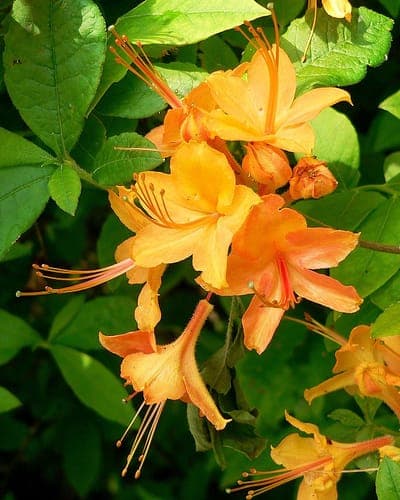
User:Arx Fortis / CC BY 2.5, via Wikimedia Commons
Flame Azalea: complete guide
Rhododendron calendulaceum
Want to see Flame Azalea: complete guide in your garden?
1 minute, no credit card
Overview
The Flame Azalea (Rhododendron calendulaceum) is an impressive North American native rhododendron from the Ericaceae family. This shrub is celebrated for its spectacular orange-red flowers that burn as brightly as flames. On gardenworld.app, we help you bring this true natural beauty to full bloom in your front garden.
Appearance and Bloom
The Flame Azalea grows as an upright shrub, typically 1.5 to 3 meters tall. The plant features oblong green leaves that appear prior to blooming. The leaves can take on yellow to orange-pink tones in autumn. From April to June, spectacular flowers emerge - large, trumpet-shaped flowers in intense orange to scarlet colors. The blooming is generous and dramatic, with the entire shrub appearing to burst into flames. This is truly a visual highlight for any garden.
Ideal Location
The Flame Azalea thrives best on sheltered sites with abundant light. In warm climates, partial shade offers protection against excessive heat. In more temperate regions, it can stand in full sun. Ensure the location is protected from strong winds that can damage delicate flowers.
Soil
The Flame Azalea requires acidic, well-draining soil with a pH between 4.5 and 6.0. A mixture of garden soil, heather soil, and sand works excellently. For container cultivation, use rhododendron potting soil. The plant is sensitive to waterlogging, so good drainage is essential. Organic-rich soil promotes the best growth.
Watering
During the growing season, water regularly to keep the soil moist. The plant is sensitive to prolonged drought, so avoid inconsistent watering. Regular misting promotes healthy foliage. In winter, reduce watering but do not let it dry out. During dry seasons, provide extra attention.
Free design
Want to see Flame Azalea: complete guide in your garden? Make a free design now.
Pruning and Maintenance
Remove spent flowers after blooming to keep the plant neat and encourage new growth. Spring pruning can control growth. Avoid heavy pruning as this can reduce next season's flowers. Remove dead branches immediately. Apply light feeding in April with acidic fertilizer.
Maintenance Calendar
In March, you can carefully remove dead wood. April to June is blooming time. After blooming, you can remove spent flowers. May to August, the plant grows actively. In September, you can prepare for winter. October to February is the dormancy period. June to August is the time for pest control.
Winter Hardiness
The Flame Azalea is winter-hardy in zones 5-9. In zone 4, it can survive with protection. Flower buds may suffer slight frost damage in exceptionally severe winters. Provide mulch protection around the root zone. Young plants may need additional frost protection in their first year.
Companion Plants
The Flame Azalea is part of natural garden schemes. Create beautiful combinations with native American plants such as other azaleas, hollies, and oak species. Ensure all companions have similar acid-loving soil requirements.
Conclusion
The Flame Azalea is a spectacular shrub for borders and natural gardens. With acidic soil and regular moisture, it grows and blooms abundantly. This American beauty brings fireworks of color to your front garden. Order today via gardenworld.app!
Ready for North American native beauty? Explore our collection on gardenworld.app and find more native shrubs. Our garden designers help you create the perfect naturalistic garden!
Want to see Flame Azalea: complete guide in your garden? Make a free design now.
Upload a photo, pick a style, and get a photorealistic design with plant list in under a minute.
No credit card required


Similar plants
Zenobia pulverulenta: complete guide
Zenobia pulverulenta
Everything about Zenobia pulverulenta (honeycup): siting, acid soil, pruning and the fragrant white bells, in this complete care guide.
Dwarf huckleberry: complete guide
Gaylussacia dumosa
Everything about dwarf huckleberry (Gaylussacia dumosa): acidic soil, partial shade, pruning and care for this compact North American berry shrub.
Drooping leucothoe: complete guide
Leucothoe fontanesiana
Everything about drooping leucothoe (Leucothoe fontanesiana): shade tolerance, soil, watering, pruning, hardiness and companion plants.