
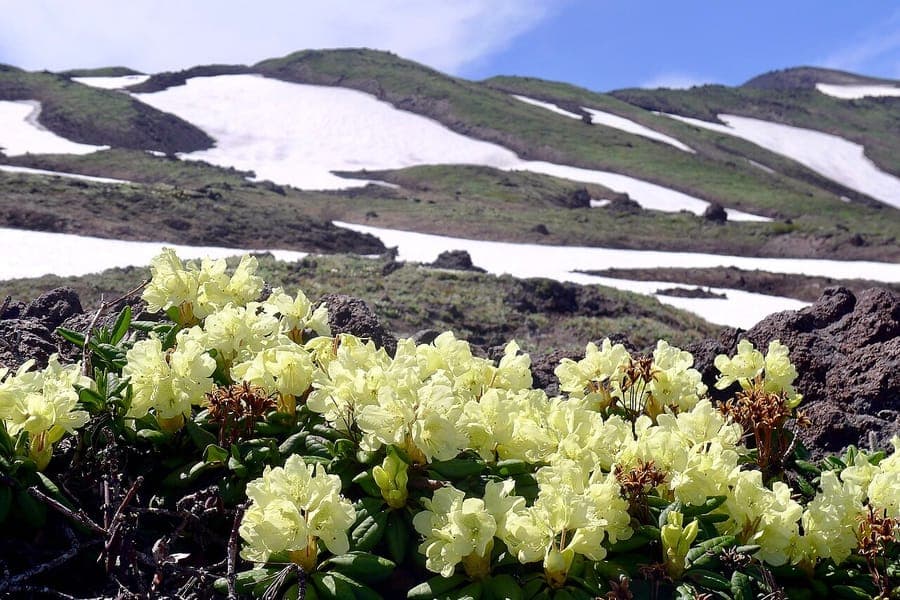
Dr. Alexey Yakovlev / CC BY-SA 2.0, via Wikimedia Commons
Golden Rhododendron: complete guide
Rhododendron aureum
Want to see Golden Rhododendron: complete guide in your garden?
1 minute, no credit card
Overview
The Golden Rhododendron (Rhododendron aureum) is an impressive, extremely hardy rhododendron from Siberia and the Russian Far East. This member of the Ericaceae family is renowned for its extreme cold hardiness and yellow flowers. On gardenworld.app, we help you bring this robust Asian shrub to full bloom even in cold climates.
Appearance and Growth
The Golden Rhododendron grows as a dense, compact shrub, typically 1 to 2 meters high. The plant features characteristic small green leaves arranged in rows along the branches. The leaves can develop a purple tint during the winter season. From May to June, delicate yellow flowers appear in clusters. The flowers possess a pleasant aroma. This is an extremely robust plant for challenging gardens.
Ideal Location
The Golden Rhododendron thrives best in sheltered locations with light to partial light. In colder climates, it can stand in full sun. In warmer climates, partial shade offers protection. Ensure the plant is protected from strong winds. The location must drain well to prevent winter moisture problems.
Soil
The plant prefers acidic, well-draining soil with a pH between 4.5 and 6.5. A mixture of garden soil, heather soil, and perlite works well. The plant is reasonably tolerant of poor soils but prefers organic-rich substrate. For container cultivation, use rhododendron soil with extra drainage.
Watering
During the growing season, water regularly to keep the soil moist. The plant is, however, tolerant of dry periods once established. In winter, reduce watering and ensure the soil does not become waterlogged. Regular misting promotes healthy foliage, especially in dry winters.
Free design
Want to see Golden Rhododendron: complete guide in your garden? Make a free design now.
Pruning and Maintenance
The Golden Rhododendron requires minimal maintenance. Remove spent flowers after blooming to keep the plant neat. Pruning is generally unnecessary, but you can carefully remove old branches. Apply light feeding in April with acidic fertilizer. Regularly check for pest management, especially in nurseries.
Maintenance Calendar
In March, you can remove dead wood. April to June is blooming time. After flowering, you can remove spent flowers. In July and August is growth period. In September, you can prepare for winter. October to February is dormancy period. December to February is critical for preventing snow damage.
Winter Hardiness
The Golden Rhododendron is extremely cold-hardy, certainly in zones 3-8. This is one of the hardest rhododendrons in cultivation. Flower buds may suffer slight frost damage in zones 3-4. Heavy snow load can damage branches from the weight. Ensure young plants receive wind protection during their first year.
Companion Plants
The Golden Rhododendron combines well with other Siberian native plants. You can successfully combine it with other hardy rhododendrons and kalmias. Ensure all companions have similar acidic soil and moisture requirements.
Conclusion
The Golden Rhododendron is a reliable, hardy shrub for extreme climates. With acidic soil and regular moisture, it grows and blooms robustly. This Siberian gem brings yellow flowers to cold gardens. Order today via gardenworld.app!
Ready for hardy exotic plants? Explore our selection on gardenworld.app and find more Siberian native species. Our experts help you create the perfect cold-hardy garden!
Want to see Golden Rhododendron: complete guide in your garden? Make a free design now.
Upload a photo, pick a style, and get a photorealistic design with plant list in under a minute.
No credit card required


Similar plants
Zenobia pulverulenta: complete guide
Zenobia pulverulenta
Everything about Zenobia pulverulenta (honeycup): siting, acid soil, pruning and the fragrant white bells, in this complete care guide.
Dwarf huckleberry: complete guide
Gaylussacia dumosa
Everything about dwarf huckleberry (Gaylussacia dumosa): acidic soil, partial shade, pruning and care for this compact North American berry shrub.
Drooping leucothoe: complete guide
Leucothoe fontanesiana
Everything about drooping leucothoe (Leucothoe fontanesiana): shade tolerance, soil, watering, pruning, hardiness and companion plants.