
Kurt Stüber [1] / CC BY-SA 3.0, via Wikimedia Commons
Tibetan Rhubarb: complete guide
Rheum officinale
Want to see Tibetan Rhubarb: complete guide in your garden?
1 minute, no credit card
Overview
Rheum officinale, commonly known as Tibetan Rhubarb or Chinese Rhubarb, is an impressive herbaceous perennial from the mountain regions of Central China (Hubei through Sichuan and Henan provinces). This imposing plant is traditionally used in Chinese medicine and is also a visually spectacular ornamental for larger gardens. With enormous, deeply-textured leaves and characteristic red petioles reaching 1.5 to 2.5 meters in height, this herb is exceptionally hardy to USDA zones 3-9.
Appearance and Bloom
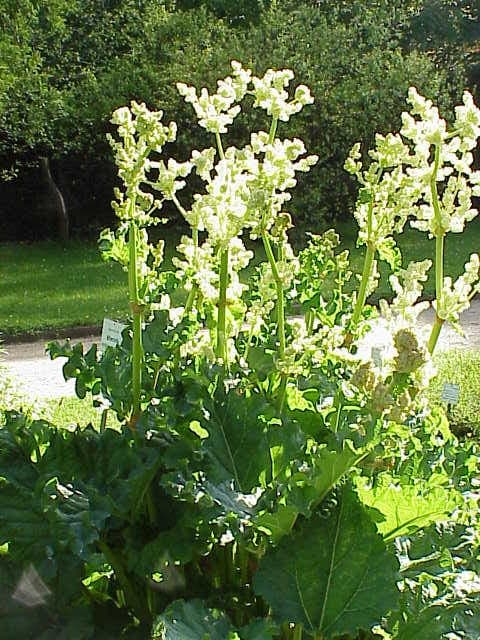
Tibetan Rhubarb is a massive herb with exceptionally large, thick, deeply-veined leaves reaching 60-90 cm long and 40-60 cm wide. The leaves display characteristic relief structure with deep, prominent veins. Petioles are pink to bright red, especially in spring when new growth emerges. In June-July, impressive floral displays of small yellowish-green flowers appear, followed by interesting seed capsules. Growth is very rapid, reaching full stature within 2-3 years. The entire plant imparts a tropical appearance despite being extremely cold-hardy.
Ideal Location
Tibetan Rhubarb thrives in full sun to partial shade (minimum 4-5 hours direct sunlight daily). A sheltered position is beneficial, especially against strong winds that may damage large leaves. Requires ample space, at least 1.5 meters in all directions. In warmer climates, afternoon shade benefits during intense heat. Plenty of vertical and horizontal space for leaf deployment.
Soil Requirements
Rheum officinale prefers moist, nutrient-rich soils with good organic content. Adding compost (5-10 cm) each season helps nutrition and moisture retention. This species thrives in heavier, more fertile soils than many other herbs. pH 6.5-7.5 is ideal. Deep, loose soils (40-50 cm) are important for the deep root system. Avoid stagnant water but maintain consistent moisture.
Free design
Want to see Tibetan Rhubarb: complete guide in your garden? Make a free design now.
Watering
Rheum officinale loves moist conditions and flowers more reliably with regular watering. Young plants (first 2 years) require at least 30-40 liters weekly during the growing season, more frequently in very hot weeks. Mature plants still prefer moist soil; provide water during droughts. Mulch (5-7 cm) helps retain moisture and regulate temperature. In autumn, reduce moisture slightly to prepare for winter dormancy.
Pruning
Minimal pruning required. Remove dead leaves and damaged leaf sections for neat appearance. Flower displays may be removed after seed set if size control is desired. The plant maintains its natural form quite well. No heavy pruning is recommended. Young plants can be gently shaped if desired.
Maintenance Calendar
APRIL-MAY: New leaf emergence; regular watering. JUNE-JULY: Flowering period; feeding beneficial. AUGUST-SEPTEMBER: Continued growth; adequate water. OCTOBER-NOVEMBER: Autumn dormancy; reduce moisture. DECEMBER-MARCH: Winter rest; minimal water. Spring pruning of dead matter as needed.
Winter Hardiness
Rheum officinale is exceptionally cold-hardy (USDA zones 3-9, withstanding -30 to -40C/-22 to -40F). This Alpine herb tolerates very severe winters without protection. Despite its tropical appearance, it grows readily in continental climates. Snow cover helps but is not essential. Very strong, deep roots render it highly resistant to frost damage.
Companion Plants
Combine with other large herbaceous plants: Gunnera (in moist zones), Heracleum mantegazzianum (Giant Hogweed), Brassicas. Underplant with shade-tolerant groundcovers. Structural plants like bamboo work well nearby. Position against background for maximum effect. Avoid direct nutrient competition.
Closing
Tibetan Rhubarb is a spectacular herbaceous plant for gardeners with space and passion for imposing specimens. With enormous leaves, red petioles, and historical medicinal value, it provides years of interest. Seeds and young plants are available from specialized nurseries. A truly distinctive focal point for large, structural gardens!
Want to see Tibetan Rhubarb: complete guide in your garden? Make a free design now.
Upload a photo, pick a style, and get a photorealistic design with plant list in under a minute.
No credit card required


Similar plants
Crosby's wild buckwheat: complete guide
Eriogonum crosbyae
Full guide to growing Eriogonum crosbyae: ideal site, soil, watering, winter hardiness and companion plants for this rare western wild buckwheat.
Spreading buckwheat: complete guide
Eriogonum effusum
Full guide to growing Eriogonum effusum: ideal site, soil, watering, winter hardiness and companion plants for this prairie subshrub from the American West.
Tall woolly buckwheat: complete guide
Eriogonum elatum
Full guide to Eriogonum elatum: siting, soil, watering, pruning and companion plants for this elegant white-flowered buckwheat from the western United States.