
Alvesgaspar / CC BY-SA 4.0, via Wikimedia Commons
Bridal broom: complete guide
Retama monosperma
Want to see Bridal broom: complete guide in your garden?
1 minute, no credit card
Overview
Retama monosperma, commonly known as bridal broom or bridal veil broom, is a stunning Mediterranean shrub native to southern Portugal, Spain, North Africa, and Greece. This elegant plant earns its romantic common name from its delicate white flowers that appear in spring. In its native habitat, it thrives on rocky slopes and arid hillsides, demonstrating exceptional drought tolerance and resilience.
Bridal broom is an excellent choice for modern gardens seeking low-maintenance plants with high ornamental value. The plant's silvery foliage and cascading white blooms create visual interest throughout the growing season, while its architecture provides winter structure.
Appearance and bloom
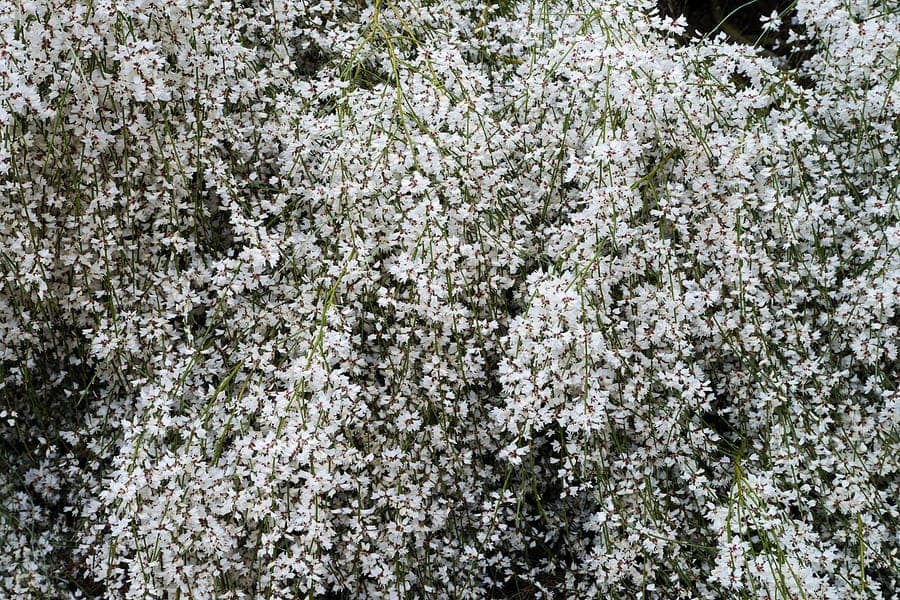
Retama monosperma develops as an airy, fountain-like shrub reaching 1-2 meters in height with a spread of approximately 1.5 meters. The plant's distinctive appearance comes from extremely fine, thread-like stems with minimal foliage, creating an almost transparent quality that allows light to pass through.
The spring bloom is the plant's crowning glory. From April through May, countless delicate white flowers appear in dense clusters along the slender stems. The blooms are sweetly scented and highly attractive to pollinators. Following flowering, single-seeded pods develop and mature to dark brown or black, explaining the botanical name "monosperma."
The fine foliage is silvery-green, contributing to the plant's ethereal appearance. While leaves gradually drop in autumn, the ornamental green stems remain decorative year-round, creating striking winter interest in the garden.
Ideal location
Bridal broom requires a sunny, warm, and sheltered position to thrive. Provide at least 6-8 hours of direct sunlight daily for optimal blooming. This plant is ideal for warm south-facing walls, raised beds, or rocky slopes where other plants struggle.
Protection from strong winds, particularly in winter, is important. In northern regions, position the plant against a south-facing wall. The shrub is not frost-hardy and performs best in warmer climate zones where it can receive consistent warmth.
Soil
Retama monosperma flourishes in well-draining, sandy, or gravelly soil. The plant tolerates poor soils exceptionally well and requires no enriched garden soil. It actually prefers nutrient-poor conditions for stronger growth.
Ensure excellent drainage to prevent waterlogging. If your soil is heavy clay, amend it with sand, gravel, or perlite for improved drainage. The ideal pH range is neutral to slightly acidic, though the plant is quite pH-tolerant.
Free design
Want to see Bridal broom: complete guide in your garden? Make a free design now.
Watering
One of bridal broom's greatest assets is its extreme drought tolerance. Once established, the plant requires virtually no supplemental watering. In fact, excessive water and fertilizer can result in weak growth and reduced flowering.
Water regularly during the first growing season after planting until the root system is fully established. After establishment, water only during prolonged drought periods. The plant tolerates sea winds and salinity better than most ornamentals.
Pruning
Pruning is not essential but can be beneficial for shape maintenance. Remove any dead or overgrown branches immediately after flowering. If you prefer a more compact form, light pruning after bloom is acceptable, but avoid cutting into old wood.
Avoid aggressive autumn or winter pruning. The plant needs time to recover and establish new growth. A gentle annual trim after flowering provides adequate maintenance.
Maintenance calendar
Spring: Assess frost damage. Water during dry spells. Fertilizing is unnecessary; a thin layer of compost can provide gentle nutrition. Summer: No maintenance required. Water only during extreme drought. Autumn: Observe gradual leaf drop. Minimize watering. Winter: Protect from frost with jute or burlap in very cold regions. Withhold water completely.
Winter hardiness
Bridal broom is not reliably frost-hardy and tolerates only brief freezes down to approximately -5 to -7 degrees Celsius. In cold regions, consider container cultivation for winter indoors, or treat the plant as an annual. In Mediterranean climates and warmer European zones, winter survival is excellent.
Protect the plant from severe frost and wind. A sheltered microclimate against a wall can provide adequate protection.
Companion planting
Bridal broom pairs beautifully with other Mediterranean plants such as rock roses (Helianthemum), thyme (Thymus), lavender (Lavandula), and cistus. These plants share identical preferences for drought and full sun.
Interesting combinations also emerge with grey-foliage plants like saltwort (Atriplex), silver sage (Salvia), and artemisia. Together, these create harmonious, low-maintenance hardscape effects.
On gardenworld.app, you will find designs that perfectly integrate this magnificent plant.
Conclusion
Retama monosperma deserves far greater attention in contemporary gardens. With its elegant form and minimal care requirements, it represents the future of conscious gardening. Once you experience the stunning white bloom in spring, you will understand why this plant earned its romantic common name.
Find quality specimens at specialty nurseries. Visit gardenworld.app for professional garden design advice.
Want to see Bridal broom: complete guide in your garden? Make a free design now.
Upload a photo, pick a style, and get a photorealistic design with plant list in under a minute.
No credit card required


Similar plants
Tall Silky Lupine: complete guide
Lupinus elatus
Tall silky lupine is a fast-growing Californian perennial with silvery foliage and blue-purple flower spikes, ideal for a prairie-style garden.
Garfield Lupine: complete guide
Lupinus garfieldensis
The Garfield lupine is a rare, fast-growing American perennial for alkaline, dry grassland gardens, with striking blue flower spikes.
Lupinus elegans: complete guide
Lupinus elegans
Lupinus elegans, the elegant lupine, is a spectacular blooming plant from Mexico with blue flower spikes. Care, cultivation and garden use.