
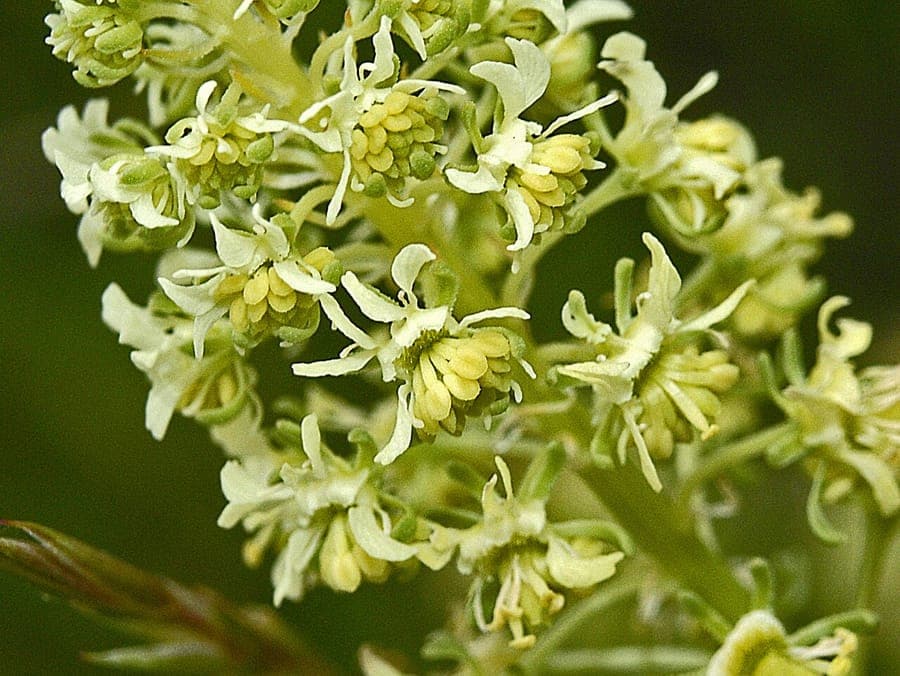
Hectonichus / CC BY-SA 3.0, via Wikimedia Commons
Rampion mignonette: complete guide
Reseda phyteuma
Want to see Rampion mignonette: complete guide in your garden?
1 minute, no credit card
Overview
Rampion mignonette (Reseda phyteuma), also known as corn mignonette, is a charming annual plant originating from the Mediterranean region. This refined plant produces elegant, tiny white flowers and serves as a valuable addition to Mediterranean and herb gardens. Smaller than its relative weld, rampion mignonette offers its own distinctive beauty and practical applications.
Distributed from Madeira through the Mediterranean and extending to parts of the Caucasus, rampion mignonette thrives where dry, sunny conditions prevail, making it perfect for arid garden corners.
Appearance & Bloom
Rampion mignonette grows as a compact plant, typically reaching 20 to 50 centimetres in height, displaying a more closed, bushy form than its larger cousin. The leaves are linear and slender, creating an airy appearance.
Flowers emerge from May through October in dense, short flower spikes. These are dainty white with yellowish-green centres, measuring only 3 to 4 millimetres across. Though individually tiny, the flowers appear in such abundance that the plant provides continuous colour for weeks.
The small seed capsules that follow contain abundant seeds for easy propagation.
Ideal Location
Rampion mignonette prefers full sun with a minimum of six hours daily. In partial shade, the plant survives but becomes less compact and flowers less prolifically.
Position your rampion mignonette prominently in borders where its elegant white blooms stand out against darker foliage or larger, more colourful plants. Also excellent for container cultivation on terraces or balconies.
Free design
Want to see Rampion mignonette: complete guide in your garden? Make a free design now.
Soil
Like its larger relative, rampion mignonette flourishes better on poor to moderate soils. Excessively rich soils encourage foliage growth at the expense of flowering. Chalky and dry soils prove ideal.
Excellent drainage remains essential. Heavy, waterlogged soils require amendment with grit or sand for optimal growth.
Watering
Rampion mignonette shows moderate drought tolerance. Water regularly during the growing season, especially during dry spells. Once established, reduce watering frequency.
Excessive moisture leads to poor plant growth. Allow the soil to dry slightly between waterings.
Pruning
Rampion mignonette requires minimal pruning. Deadhead spent flowers to encourage continued blooming. Shaping for form is usually unnecessary.
Maintenance Calendar
- May-June: Flowering begins to reveal itself
- July-August: Peak blooming period
- September-October: Continuous flowering continues
- November: Allow plants to decline and collect seeds
Winter Hardiness
Rampion mignonette shows moderate winter hardiness. In mild climates, plants may overwinter. In colder zones, gardeners typically treat it as an annual.
Companion Plants
Rampion mignonette combines perfectly with:
- Marjoram (Origanum vulgare)
- Sage (Salvia officinalis)
- Thyme (Thymus vulgaris)
- Weld (Reseda luteola)
- Lavender (Lavandula species)
Conclusion
Though modest in stature, rampion mignonette possesses considerable charm in Mediterranean and herb gardens. Its elegant white flowers and compact growth habit suit borders, containers and small garden spaces. This is a herb worthy of further exploration by enthusiasts of refined garden plants.
Discover more plant options on gardenworld.app and design your own ideal garden.
Want to see Rampion mignonette: complete guide in your garden? Make a free design now.
Upload a photo, pick a style, and get a photorealistic design with plant list in under a minute.
No credit card required

