
Dicklyon / CC BY-SA 4.0, via Wikimedia Commons
Ravenala madagascariensis: complete guide
Ravenala madagascariensis
Want to see Ravenala madagascariensis: complete guide in your garden?
1 minute, no credit card
Ravenala madagascariensis: Complete Guide
Overview
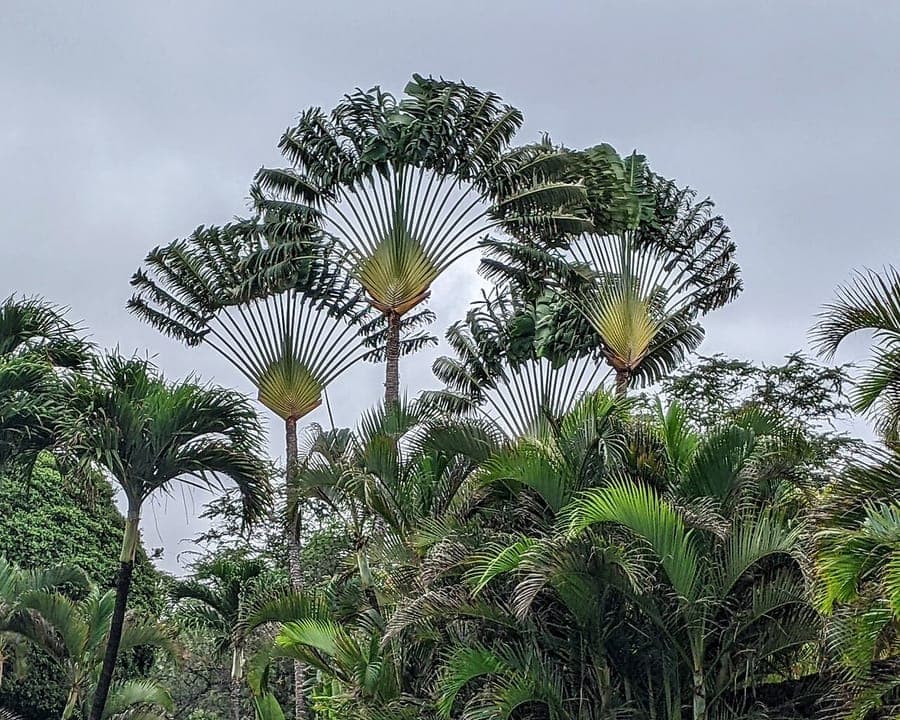
The traveler's palm (Ravenala madagascariensis) is an impressive tropical tree from Madagascar also known as "arbre du voyageur" (tree of the traveler). This large plant can grow up to 12-15 meters tall and is renowned for its unique, vase-shaped leaf arrangement. The leaves of this plant form a characteristic fan shape in a vertical plane, making it an architectural centerpiece for any garden.
Appearance and Bloom
Ravenala madagascariensis is a large, herbaceous plant with enormous, paddle-shaped leaves that can reach 3 meters long. The leaves grow in a vertically arranged fan, often positioned on the same axis, making it an incomparable architectural element. This arrangement was sometimes used to store water, hence the name "tree of the traveler."
The flowers are spectacular - large, orange-yellow flower spikes with blue anthers, attracting birds. These can be 40-50 cm long and appear on the side of the plant. After flowering, large blue seed capsules form.
Ideal Location
This tree thrives best in full sun to partial shade in warm climates. Provide at least 6-8 hours of direct sunlight daily. This plant works best as a specimen in large, outdoor gardens where its full height and leaf fan can be appreciated.
Soil
Ravenala madagascariensis requires well-draining, humus-rich soil. This is a plant very sensitive to excess moisture. Ensure excellent drainage and add plenty of compost or coconut fiber. In container culture, use a drainage-rich mix with perlite and charcoal.
Free design
Want to see Ravenala madagascariensis: complete guide in your garden? Make a free design now.
Watering
During the growing season (summer), water regularly but always allow some drying between waterings. Overwatering can lead to root rot. During winter, water much less. This plant prefers dry periods to wet feet.
Pruning
Minimal pruning required. Remove only dead or damaged leaves. Since this plant naturally has strong vertical planes, pruning is usually unnecessary. Old, withered leaves can be carefully removed to keep the plant looking neat.
Maintenance Calendar
APRIL-SEPTEMBER: Growing period - regular watering, monthly fertilizing. SEPTEMBER-OCTOBER: Preparation for rest, reduce watering. OCTOBER-MARCH: Rest period, minimal watering, no fertilizer. MARCH-APRIL: Return to growth, gradually increase watering.
Winter Hardiness
Ravenala madagascariensis is very frost-sensitive. This tree grows outdoors only in warm climates (minimum 15-18 degrees Celsius). In temperate Europe, grow mainly in large containers in warm greenhouses or conservatories. Very suitable for Mediterranean coastal zones and warm climate gardens.
Companion Plants
Combine with other tropical plants such as strelitzia (bird of paradise), musa (banana tree), phoenix palms. For contrast, add fine-leaved plants such as delicate palm species. In container culture, underplant with shade-tolerant plants.
Conclusion
The traveler's palm is a true showstopper for warm gardens and greenhouse enthusiasts. With its incomparable architectural leaf structure and spectacular flowers, it makes a true statement piece. Plant in full sun in very protected locations or in large containers. Available through specialized nurseries. Learn more at gardenworld.app/en.
Want to see Ravenala madagascariensis: complete guide in your garden? Make a free design now.
Upload a photo, pick a style, and get a photorealistic design with plant list in under a minute.
No credit card required


Similar plants
Strelitzia reginae: complete guide
Strelitzia reginae
Strelitzia reginae is a beautiful plant from the Strelitziaceae family. Discover everything about cultivation and care in this guide.
Canary Island date palm: complete guide
Phoenix canariensis
Phoenix canariensis is a magnificent palm tree from the Canary Islands with enormous fronds and elegant growth habit. Perfect for warm climates and large scale gardens.