
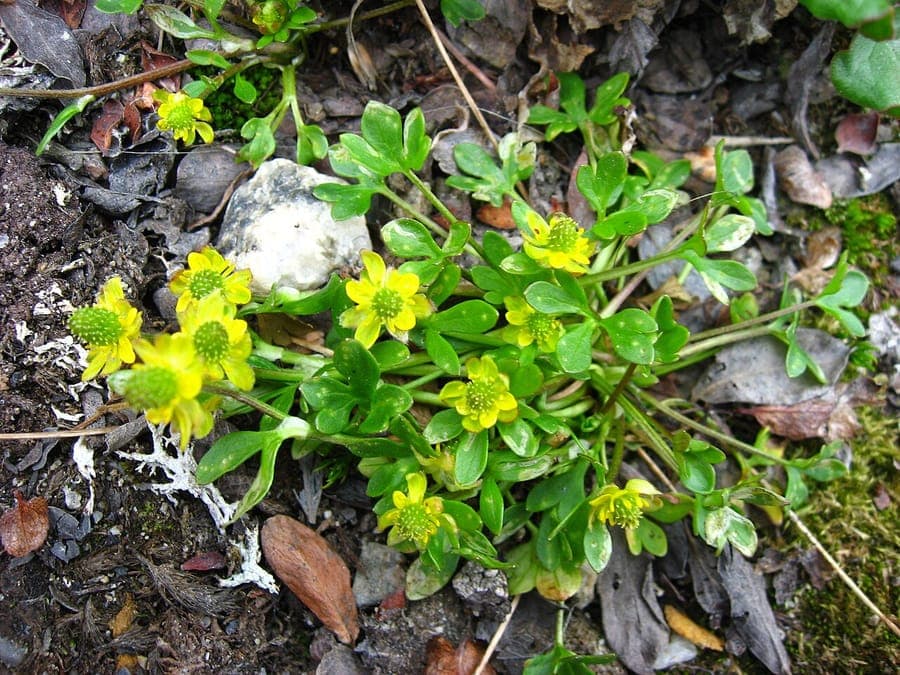
Kim Hansen / CC BY-SA 4.0, via Wikimedia Commons
High northern buttercup: complete guide
Ranunculus hyperboreus
Want to see High northern buttercup: complete guide in your garden?
1 minute, no credit card
Overview
The high northern buttercup (Ranunculus hyperboreus) is an impressive northern plant native to subarctic and subalpine regions of the northern hemisphere. This small herbaceous plant blooms with characteristic yellow flowers and grows in a sprawling form. In gardens of northern regions or alpine gardens, this plant offers interesting possibilities.
Although this plant grows wild in extremely cold climates, certain cultivars can be cultivated in special alpine and cold gardens.
Appearance and Bloom
The high northern buttercup is a small, herbaceous plant that grows close to the ground. The leaves are small and compound. In bloom, yellow flowers appear on short stems, creating a charming visual display. The blooming period is short, usually in summer.
The plant grows stoloniferous (via horizontal runners), allowing it to propagate and slowly expand. This pattern makes it suitable for certain alpine and arctic garden situations.
Ideal Location
The high northern buttercup grows best in locations with full sun. The plant prefers open, sunny positions in alpine or subarctic climates. In lower elevation climates, intense sun should be avoided.
The plant grows naturally in very cold climates. In European gardens, this can only succeed in very northern regions or special alpine gardens.
Free design
Want to see High northern buttercup: complete guide in your garden? Make a free design now.
Soil
The high northern buttercup prefers slightly acidic to neutral soils (pH 5.0 to 7.0). The plant grows naturally in alpine soils that drain well. In gardens, care must be taken for good drainage.
The plant grows naturally in moisture-retaining soils, so some moisture is desired.
Watering
The high northern buttercup prefers moisture-retaining soils. Provide regular watering, especially during the growing season. Dry periods should be avoided.
In alpine gardens where the plant naturally grows, natural rainfall is usually sufficient.
Pruning
The high northern buttercup requires no pruning. The plant grows low to the ground and maintains its form naturally.
Maintenance Calendar
May to July: Blooming period, check moisture.
August to September: Plant declines after blooming.
October to April: Plant is inactive during this period.
Winter Hardiness
The high northern buttercup is very frost-hardy in subarctic climates where it naturally grows. In European gardens, this plant is only suitable for very northern regions.
Companion Plants
In alpine gardens, this plant can be combined with other alpine plant species that prefer moisture-retaining, cold conditions.
Conclusion
The high northern buttercup is a specialized plant for very specific garden situations. It is primarily suitable for alpine gardens in northern regions. For regular gardens in lower elevations, this plant is not recommended. Consult specialized alpine nurseries for advice.
Want to see High northern buttercup: complete guide in your garden? Make a free design now.
Upload a photo, pick a style, and get a photorealistic design with plant list in under a minute.
No credit card required


Similar plants
Drummond's anemone: complete guide
Anemone drummondii
Discover Drummond's anemone (Anemone drummondii): a silvery-grey mountain plant for cool rock gardens and alpine troughs.
Korean clematis: complete guide
Clematis serratifolia
Clematis serratifolia is a hardy climber with fragrant yellow bell flowers in August-September. Pruning group 3, location and care tips.
Aquilegia brevistyla: complete guide
Aquilegia brevistyla
Discover Aquilegia brevistyla, the elegant North American columbine. Growing tips, shade tolerance, and design ideas for woodland and shadowed gardens.